Skip to content
#edge computing Open access

What Sets the Neural Resting Spectrum - Spectral computation from screened pair interactions

Aug 2026 · Zenodo (CERN European Organization for Nuclear Research)
Neural dynamics and brain function Functional Brain Connectivity Studies

Abstract

A resting cortical spectrum contains a narrow alpha peak, a weaker and narrow beta peak, and a broad component with no resolvable peak above them. Mechanistic accounts locate each rhythm in a time — a loop transit, or the decay of perisomatic inhibition — so one loop delivers one band, a second band needs a second mechanism, and the relative amplitude of the two is predicted by nothing. This note computes the spectrum instead. Alpha and beta are taken to be two internal states of a single bound object: a pair consisting of one excitatory and one inhibitory population transient, held together because each regenerates the other as it decays.Solving the two-body problem for that pair gives discrete states below a dissociation edge and a scattering sector above it, and the whole spectrum follows. Four numbers go in — two relaxation times and two frequencies, all calibrated in earlier work. The rest comes out: the ratio of the two line amplitudes, |Ψ2(0)|^2/|Ψ1(0)|^2= 0.11, so that beta must be at least five times weaker than alpha in power; a common absolute linewidth of 3.98 Hz for both lines; a continuum edge at 20.5 Hz, against 2ω0= 20.4 Hz from an independent route; and a scattering sector that is flat to one per cent from 25 to 90 Hz, so that within the model the shape of the broadband component — including the exponent of its 1/fχ fall-off — is carried by the drive rather than by the tissue, a reading that is testable and not yet tested. Against a reference decomposition of adult resting EEG the computed beta-to-alpha ratio of 0.11 meets a reconstructed 0.09, and a power-law drive reproduces the measured background from the edge to 90 Hz; below the edge the model has no broadband weight at all. Pursuing that shortfall is what produces the note’s largest claim. The one-body response of the transport framework cannot supply it — normalised to the background at 1 Hz it overshoots alpha by a factor of 144, because it is resonant rather than flat — but a second, slower pair species can. Taking the dendrite-targeting inhibitory time scale, an order of magnitude above the perisomatic one, and changing nothing else, the same eigenvalue problem returns bound states at 1.96 and 5.51 Hz with an edge at 5.70 Hz: delta and theta. The bands of the resting spectrum then appear as one pair problem indexed by one time, with each class of inhibitory interneuron supplying two discrete lines and a continuum above them — perisomatic giving alpha, beta and gamma, dendrite-targeting giving delta, theta and a continuum running up through the alpha range. Below about 1.5 Hz the account is still empty. The amplitude prediction presumes a contact measurement operator, and is shown to survive smearing in the relative coordinate only up to about 0.2 σ — a margin the note needs and cannot presently discharge, though the dark-state selection rule is immune to the same objection. What makes this computation possible is that the pair interaction is no longer posited. Screening the cortical connectivity kernel by the response of the surrounding tissue — Debye’s algebra, run with the sign an excitable driven medium demands — yields V (r) = −V0 K0(r/σ) with σ = ℓ(1 − y)^(−1/2), y being the ratio of correlation generation to one-body relaxation. Three consequences for tissue follow. The reach σ is not the basket-cell arborisation width but a state variable set by gain over adaptation, so the manipulation that unbinds beta is reversible within a session rather than structural. The binding scale contains no length at all, which makes the invariance of alpha across brain sizes a consequence of conserved biophysics rather than of conserved geometry. And the collapse of screening at y = 1 is a description of the loss of local containment, with a spectral signature — bands proliferating beneath a fixed edge — that pre-ictal recordings can be checked against. Two standing objections are untouched: there is no small parameter at g ≈ 42, and the framework still does not compute an absolute frequency. Keywords: computational neuroscience, neural oscillations, resting-state EEG, alpha rhythm, aperiodic component, excitation–inhibition balance, bound states; two-body problem, screening, correlation hierarchy, threshold networks, non-equilibrium physics.

View source

Similar papers

#computer vision Review Sep 2017

Agile Software Development Methods: Review and Analysis

Agile - denoting "the quality of being agile, readiness for motion, nimbleness, activity, dexterity in motion" - software development methods are attempting to offer an answer to the eager business community asking for lighter weight along with faster and nimbler software development processes. This is especially the case with the rapidly growing and volatile Internet software industry as well as for the emerging mobile application environment. The new agile methods have evoked substantial amount of literature and debates. However, academic research on the subject is still scarce, as most of existing publications are written by practitioners or consultants. The aim of this publication is to begin filling this gap by systematically reviewing the existing literature on agile software development methodologies. This publication has three purposes. First, it proposes a definition and a classification of agile software development approaches. Second, it analyses ten software development methods that can be characterized as being "agile" against the defined criterion. Third, it compares these methods and highlights their similarities and differences. Based on this analysis, future research needs are identified and discussed.

P. Abrahamsson, O. Salo, Jussi Ronkainen et al. · 728 citations · ⚡54
#machine learning Review Open access Oct 2014

Software development in startup companies: A systematic mapping study

Context: Software startups are newly created companies with no operating history and fast in producing cutting-edge technologies. These companies develop software under highly uncertain conditions, tackling fast-growing markets under severe lack of resources. Therefore, software startups present a unique combination of characteristics which pose several challenges to software development activities. Objective: This study aims to structure and analyze the literature on software development in startup companies, determining thereby the potential for technology transfer and identifying software development work practices reported by practitioners and researchers. Method: We conducted a systematic mapping study, developing a classification schema, ranking the selected primary studies according their rigor and relevance, and analyzing reported software development work practices in startups. Results: A total of 43 primary studies were identified and mapped, synthesizing the available evidence on software development in startups. Only 16 studies are entirely dedicated to software development in startups, of which 10 result in a weak contribution (advice and implications (6); lesson learned (3); tool (1)). Nineteen studies focus on managerial and organizational factors. Moreover, only 9 studies exhibit high scientific rigor and relevance. From the reviewed primary studies, 213 software engineering work practices were extracted, categorized and analyzed. Conclusion: This mapping study provides the first systematic exploration of the state-of-art on software startup research. The existing body of knowledge is limited to a few high quality studies. Furthermore, the results indicate that software engineering work practices are chosen opportunistically, adapted and configured to provide value under the constrains imposed by the startup context.

Nicolò Paternoster, Carmine Giardino, M. Unterkalmsteiner et al. · 394 citations · ⚡54

Related blog posts

Microsoft Research Blog Aug 31, 2026

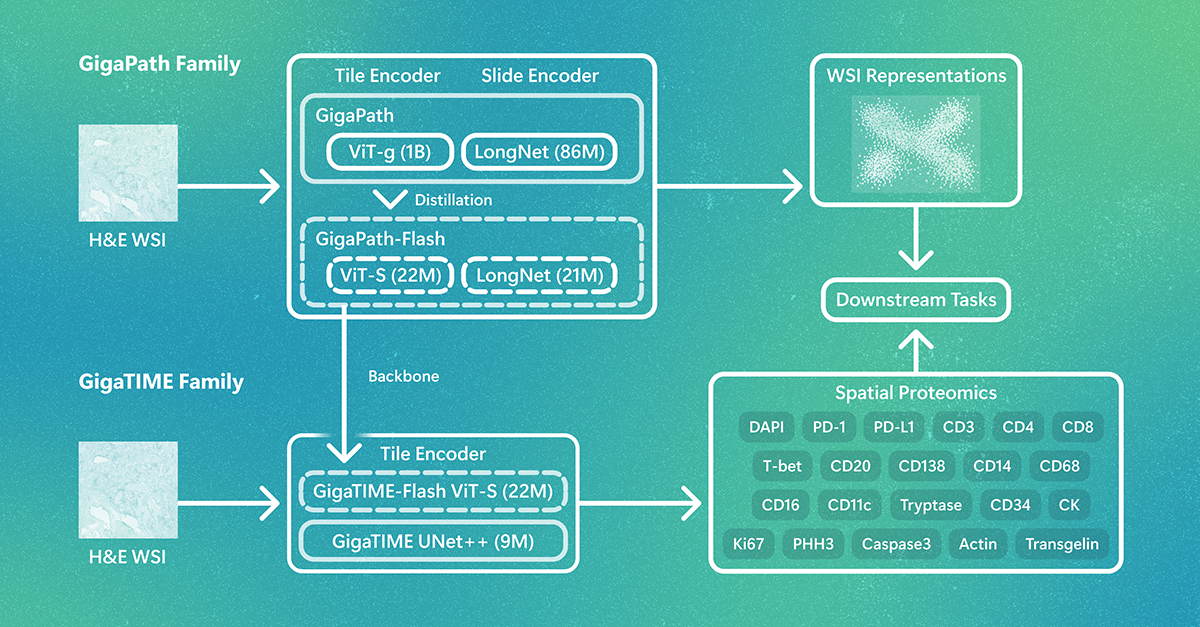
GigaPath-Flash and GigaTIME-Flash: Toward population-scale discovery with efficient pathology foundation models

What if pathology foundation models could do more with less? GigaPath-Flash and GigaTIME-Flash cut computational demands while maintaining strong performance, opening the door to larger studies and broader exploration. The post GigaPath-Flash and GigaTIME-Flash: Toward population-scale discovery with efficient pathology foundation models appeared first on Microsoft Research.

MIT News · Artificial Intelligence Aug 27, 2026

Looking beyond natural sequences

A new machine-learning framework aims to improve the success rate of computational protein design while moving away from results that reproduce sequences found in nature.
