Skip to content
#edge computing Open access

Well-connected community detection at extreme scale: shared- and distributed-memory parallel algorithms

Aug 2026 · Applied Network Science · 81 references
Complex Network Analysis Techniques

Abstract

Abstract Community detection algorithms such as Leiden frequently produce clusters thatare internally disconnected or poorly connected, limiting their utility indownstream network analysis. The Well-Connected Clusters (WCC) and ConnectivityModifier (CM) algorithms address this by post-processing any input clusteringto enforce a user-defined edge connectivity criterion through recursive minimumcut bisection. While prior work demonstrated shared-memory parallelimplementations of WCC and CM in Chapel on graphs with up to two billion edges,scalability remains constrained by single-node memory capacity and the cost ofgraph loading and subgraph construction, which together account for over 86%of total runtime on billion-edge inputs.This paper presents distributed-memory parallel implementations of WCC and CMin both C++ with MPI and Chapel with multi-locale execution. The centralcontribution is an architectural redesign that integrates subgraph generationinto the Leiden clustering step, eliminating graph loading and subgraphconstruction from the WCC and CM pipeline entirely. Each compute node receivesonly its assigned subgraph files and executes a fully independent pipelinewithout ever loading the full graph. Connected component computation isparallelized within each node and distributed across nodes via round-robinassignment, and memory-mapped I/O accelerates file loading throughout.Experiments on ten real-world networks spanning up to 2.1 billion edges showthat the C++ distributed implementation achieves up to an order of magnitudespeedup over the original baseline on graphs where both complete successfully.The Chapel distributed implementation is integrated into Arachne, anopen-source graph analytics framework built on the Arkouda platform, availableat https://github.com/Bears-R-Us/arkouda-njit. It successfully processesthe full benchmark suite including graphs on which all other implementationsfail, and delivers consistent 1.2\((\times)\)--2.1\((\times)\) speedups over theChapel shared-memory reference. Failures on a subset of large graphs aretraced to a known limitation in the VieCut minimum cut library and are thesubject of ongoing work.

View source

Similar papers

#computer vision Review Sep 2017

Agile Software Development Methods: Review and Analysis

Agile - denoting "the quality of being agile, readiness for motion, nimbleness, activity, dexterity in motion" - software development methods are attempting to offer an answer to the eager business community asking for lighter weight along with faster and nimbler software development processes. This is especially the case with the rapidly growing and volatile Internet software industry as well as for the emerging mobile application environment. The new agile methods have evoked substantial amount of literature and debates. However, academic research on the subject is still scarce, as most of existing publications are written by practitioners or consultants. The aim of this publication is to begin filling this gap by systematically reviewing the existing literature on agile software development methodologies. This publication has three purposes. First, it proposes a definition and a classification of agile software development approaches. Second, it analyses ten software development methods that can be characterized as being "agile" against the defined criterion. Third, it compares these methods and highlights their similarities and differences. Based on this analysis, future research needs are identified and discussed.

P. Abrahamsson, O. Salo, Jussi Ronkainen et al. · 728 citations · ⚡54
#machine learning Review Open access Oct 2014

Software development in startup companies: A systematic mapping study

Context: Software startups are newly created companies with no operating history and fast in producing cutting-edge technologies. These companies develop software under highly uncertain conditions, tackling fast-growing markets under severe lack of resources. Therefore, software startups present a unique combination of characteristics which pose several challenges to software development activities. Objective: This study aims to structure and analyze the literature on software development in startup companies, determining thereby the potential for technology transfer and identifying software development work practices reported by practitioners and researchers. Method: We conducted a systematic mapping study, developing a classification schema, ranking the selected primary studies according their rigor and relevance, and analyzing reported software development work practices in startups. Results: A total of 43 primary studies were identified and mapped, synthesizing the available evidence on software development in startups. Only 16 studies are entirely dedicated to software development in startups, of which 10 result in a weak contribution (advice and implications (6); lesson learned (3); tool (1)). Nineteen studies focus on managerial and organizational factors. Moreover, only 9 studies exhibit high scientific rigor and relevance. From the reviewed primary studies, 213 software engineering work practices were extracted, categorized and analyzed. Conclusion: This mapping study provides the first systematic exploration of the state-of-art on software startup research. The existing body of knowledge is limited to a few high quality studies. Furthermore, the results indicate that software engineering work practices are chosen opportunistically, adapted and configured to provide value under the constrains imposed by the startup context.

Nicolò Paternoster, Carmine Giardino, M. Unterkalmsteiner et al. · 394 citations · ⚡54

Related blog posts

Microsoft Research Blog Aug 31, 2026

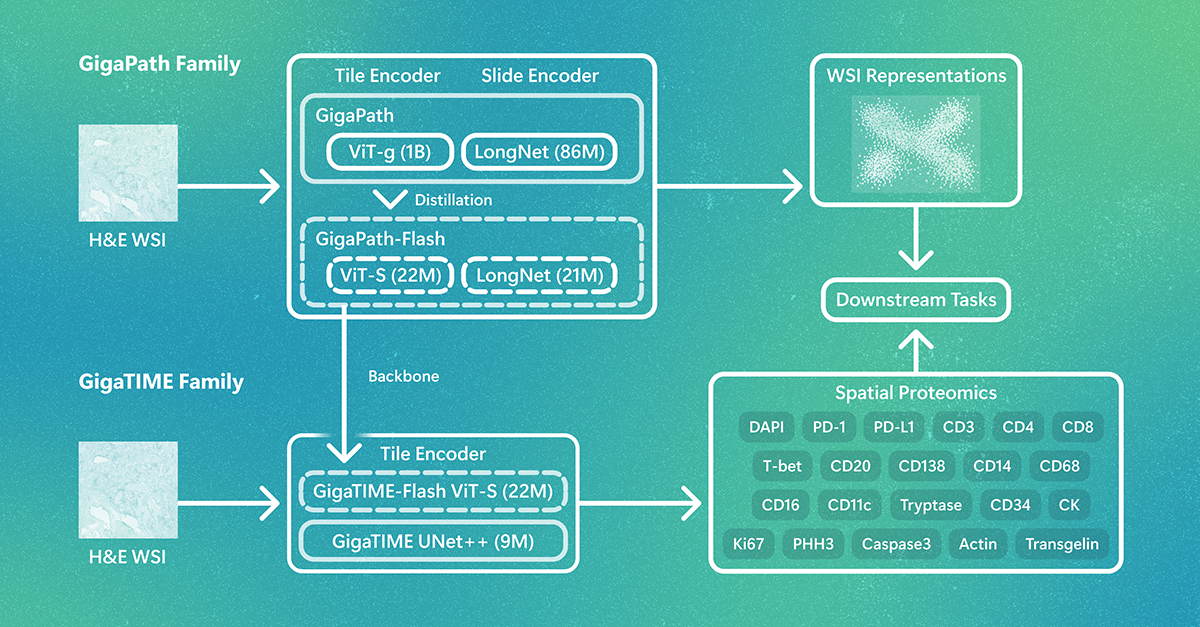
GigaPath-Flash and GigaTIME-Flash: Toward population-scale discovery with efficient pathology foundation models

What if pathology foundation models could do more with less? GigaPath-Flash and GigaTIME-Flash cut computational demands while maintaining strong performance, opening the door to larger studies and broader exploration. The post GigaPath-Flash and GigaTIME-Flash: Toward population-scale discovery with efficient pathology foundation models appeared first on Microsoft Research.

MIT News · Artificial Intelligence Aug 27, 2026

Looking beyond natural sequences

A new machine-learning framework aims to improve the success rate of computational protein design while moving away from results that reproduce sequences found in nature.
