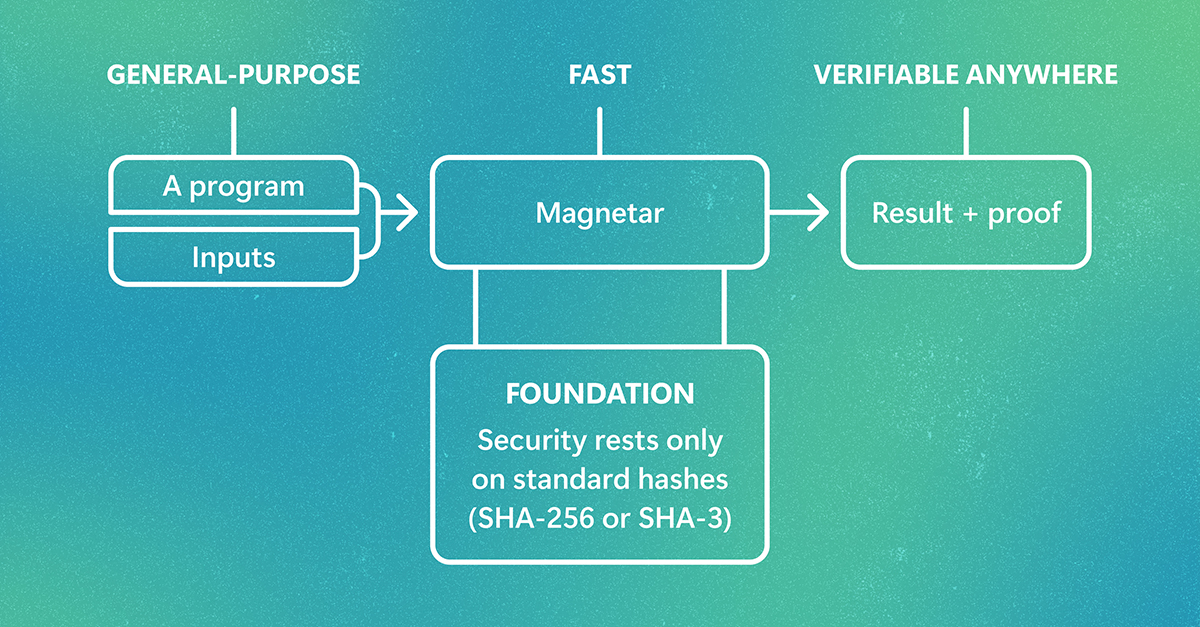
This work presents a fine-grained approach that overlaps expert compute with the second all-to-all via tile-level signaling and scheduling, making it practical for improving distributed MoE execution efficiency on multi-GPU systems.
Abstract
Mixture-of-Experts (MoE) architectures increase model capacity without proportionally increasing computation cost and have become a key building block for scaling large language models (LLMs) to trillion-parameter regimes. Efficient deployment of these MoE models relies on distributed execution across multiple GPUs, where each MoE layer involves two all-to-all communications: dispatching tokens to expert ranks and returning the expert outputs to their source ranks. Conventional MoE implementations launch this return all-to-all after expert compute completes, exposing communication latency on the critical path and reducing GPU utilization. We present a fine-grained approach that overlaps expert compute with the second all-to-all via tile-level signaling and scheduling. Our producer-consumer co-design combines: (1) a persistent per-rank computation kernel (producer) that covers all local experts on the rank to eliminate repeated kernel launch overhead and prioritizes remote-critical tiles, and (2) a persistent communication kernel (consumer) on a small dedicated partition of streaming multiprocessors (SMs) that issues segment-granular transfers as tiles become ready. Our co-design avoids intrusive changes to the underlying computation operators or communication primitives, making it practical for improving distributed MoE execution efficiency on multi-GPU systems. On a 4-A100 GPU platform, evaluated on three MoE models against four state-of-the-art MoE systems, our approach achieves up to 2.64x end-to-end speedup and 2.74x MoE-layer speedup. Compared with a conventional non-overlap baseline, our approach consistently improves both operator- and MoE-layer-level performance across varying GEMM shapes, router modes, and a broad range of producer/consumer SM partitions, while preserving correctness.

EPIC mitigates imbalance via performance-aware expert migration and runtime expert activation, and then improves communication with topology-adaptive transport kernels and fine-grained computation-communication overlap.
Jiamin Cao, Qingxu Li, Yaozhong Liu et al.· Proceedings of the ACM SIGCO...· 0 citations
SA-Scheduler is presented, a structure-derived bottleneck-aware scheduling framework for multitasking MCM-GPUs that determines chip placement without hardware modification or runtime bottleneck profiling, and provides a principled and scalable foundation for multitasking on future MCM-GPUs.
Tiejian Zhang, Guangda Zhang, Lu Wang et al.· ACM Transactions on Design A...· 0 citations
A ReRAM near-memory architecture that keeps expert weights resident behind high-bandwidth local reads and recovers occupancy with bounded core-local multicast pooling, coactivation-aware placement, and load-aware fetch, and sizes each communication level from induced demand is presented.
Kunming Shao, Ming Zeng, Xin Yuan et al.· 0 citations
The deployment of Mixture-of-Experts (MoE) models on production high-bandwidth superpods, such as NVIDIA's NVL72/576 and Huawei's CloudMatrix384, introduces critical challenges beyond raw interconnect bandwidth. While these systems provide unified global address spaces and high-bandwidth fabrics, their full potential for sparse MoE communication is hindered by three fundamental bottlenecks: (1) Strict execution serialization imposed by coarse-grained Bulk Synchronous Parallel (BSP) orchestration of interdependent communication phases; (2) Prohibitive synchronization overhead that fails to scale alongside high interconnect bandwidth; and (3) Severe load imbalance resulting from distance-agnostic scheduling of irregular token traffic. To eliminate these bottlenecks, we introduce UBEP (Unified-Bus Expert Parallelism), a production-ready communication library that rethinks MoE's All-to-All primitives for modern superpod architectures. Through large-scale experiments, UBEP reduces All-to-All latency by up to 52.4% and MoE inference Time Per Output Token (TPOT) by up to 11.1%.
Yipeng Liu, Chang Liu, Sitan Shen et al.· Proceedings of the ACM SIGCO...· 0 citations
SPICE is presented, a speculative prefetching framework for MoE offloading that combines lightweight expert prediction with confidence-aware CPU-GPU orchestration and achieves up to 3.12 speedup in Time Per Output Token (TPOT) with minimal quality loss, showing that effective MoE offloading requires not only predicting future experts, but also deciding which misses deserve approximation, which require exact recovery, and where exact residual work should execute.
In expert-parallel (EP) MoE serving, every layer synchronizes at the slowest GPU. Dispatchers balance token counts (EPLB, LPLB, UltraEP) or activated-expert counts (METRO), assuming expert time is linear in one. Measurements on two datacenter GPU generations show it is neither: below $n^* \approx 156$--$168$ tokens, HBM weight streaming dominates---cost attaches to $activated replicas$, not tokens; above it, grouped GEMM rounds tokens to 128-tile $M$-tiles, so $splitting$ an expert adds padded compute. A max-affine profile $t=\max(a+bG,\,c+\beta N)$ captures both regimes. Realistic decode batches hold hot experts in the linear regime and cold in the flat $simultaneously$; recorded batches show proxy dispatches differ by $1.4$--$1.6\times$ in modeled block time (p95 up to $1.7\times$), and $which$ proxy wins flips with the regime. We formalize per-batch dispatch as a fixed-charge makespan problem---NP-hard on two fully replicated GPUs, polynomial in degenerate limits---and present TEMPO, a makespan-aware dispatcher solving it in milliseconds off the critical path; its SGLang integration runs out-of-process and fuses dispatch with count collection into one in-graph kernel. Anchored by an 8-GPU Testbed A microbenchmark, TEMPO stays within $1\%$ of the best fixed baseline everywhere and wins by up to $15.5\%$ where regimes mix. End-to-end on Testbed B, Qwen3-235B (inside the win region) gains $4$--$6\%$ throughput and cuts p99 latency by $\sim 15.6\%$; DeepSeek-V3 (outside, communication-dominated) shows only mechanism cost. A phase diagram, not a universal win, is the claim: it predicts both outcomes before deployment.
Jie Li, Chen-Xin Jia, Jinliang Shen et al.· 0 citations