Vision-language-action (VLA) models built on pretrained vision-language models have demonstrated strong performance across diverse robotic manipulation tasks. However, VLA models that directly map current 2D observations to actions often lack sufficient spatial and temporal understanding, limiting their performance in precise and long-horizon manipulation. Recent methods enhance VLA models through geometric supervision and future-state prediction across the entire scene. However, these methods can suffer from redundant scene information, distracting the model from learning the geometry and dynamics relevant to the current interaction. To address this issue, we propose FOCAL-VLA, a framework that combines subtask-guided geometry distillation with implicit world modeling to learn representations of current spatial structure and future interaction dynamics. To focus geometric learning on the current subtask, we transfer geometric knowledge from VGGT to the VLA model by aligning geometry latents with features from subtask-relevant image regions. To capture the future 3D evolution of the current interaction, we incorporate implicit world modeling using Track4World features from current and future demonstration frames. The two complementary representations jointly guide action generation without running VGGT or Track4World at inference time. Experiments show that FOCAL-VLA outperforms baselines on both simulation benchmarks and real-world manipulation tasks. Project website: https://zhiyuan-gao.github.io/FOCAL-VLA/.

This publication proposes a definition and a classification of agile software development approaches and analyses ten software development methods that can be characterized as being "agile" against the defined criterion.
P. Abrahamsson, O. Salo, Jussi Ronkainen et al.· arXiv.org· 727 citations· ⚡54
The study shows that agile practices improve both informal and formal communication, but indicates that, in larger development situations involving multiple external stakeholders, a mismatch of adequate communication mechanisms can sometimes even hinder the communication.
M. Pikkarainen, Jukka Haikara, O. Salo et al.· Empirical Software Engineeri...· 401 citations· ⚡48
The results indicate that software engineering work practices are chosen opportunistically, adapted and configured to provide value under the constrains imposed by the startup context.
Nicolò Paternoster, Carmine Giardino, M. Unterkalmsteiner et al.· Information and Software Tec...· 394 citations· ⚡54
The possibility of inferring high-dimensional data inference in a model that consists of a prior and an auxiliary differentiable constraint given some additional information is considered, thereby allowing a range of potential applications in adapting models to new domains and tasks.
Alexandros Graikos, Esmeralda S. Whitammer, N. Jojic et al.· Neural Information Processin...· 316 citations· ⚡15
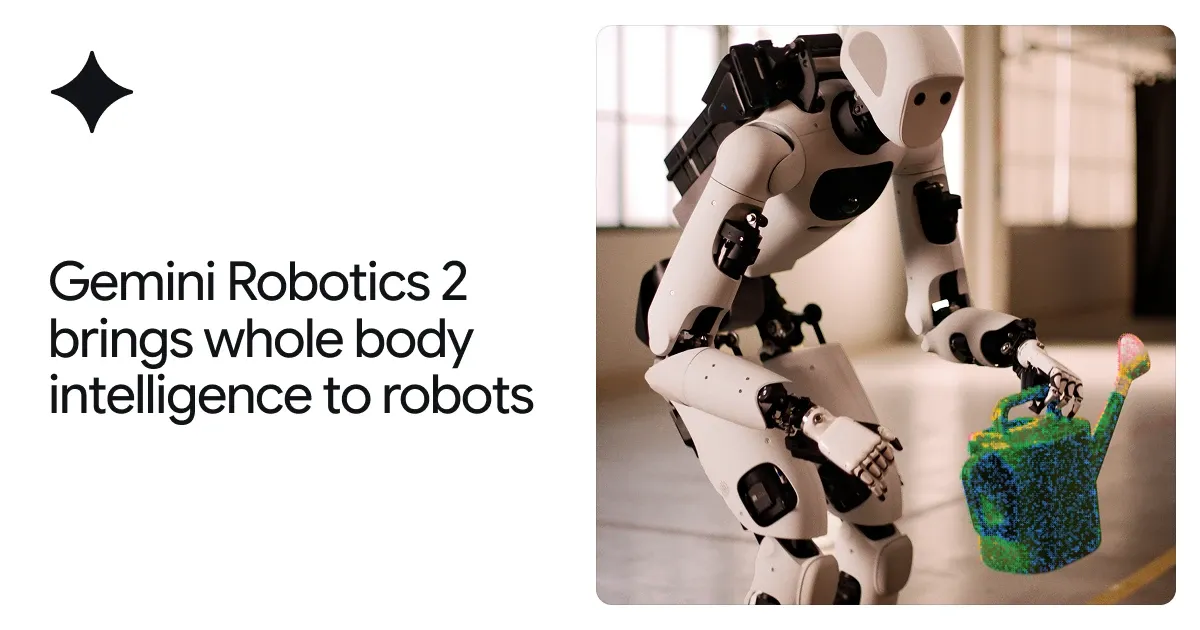
From feet to fingertips — we are teaching robots intelligent whole-body control, fine dexterity, and teamwork to complete a broad range of complex tasks.
Known for his clear and elegant writing style, Bertsekas shaped fields from control and optimization to large-scale computation and artificial intelligence.
We use cookies to run the site and, with your consent, for analytics and to show ads.
See our Cookie Policy.