Skip to content

SPeaR: Test-Time Adaptation with Steering Primitives for Realigning Representations

Sep 2026 · 0 citations · 35 references
Computer Science

TL;DR

SPeaR (Steering Primitive for Realigning Representations) is introduced, which inserts lightweight learnable modules at stage boundaries and optimizes them directly from the test stream, requiring neither source data nor supervised warm-up.

Abstract

Test-time adaptation (TTA) addresses distribution shift using only unlabeled test data. Existing methods typically adapt pretrained models by updating their parameters, limiting both what is adapted and where adaptation can occur within the network. We instead keep the pretrained network frozen and steer its intermediate representations. We introduce SPeaR (Steering Primitive for Realigning Representations), which inserts lightweight learnable modules at stage boundaries and optimizes them directly from the test stream, requiring neither source data nor supervised warm-up. Each primitive is optimized using a gated objective that reduces uncertainty only when adaptation is beneficial, along with a diversity regularizer to prevent collapse, and a multi-depth anchor to stabilize adaptation. We show that steering early representations is the most effective strategy, and that the same primitive transfers across convolutional and Transformer architectures. Across CIFAR-10-C, CIFAR-100-C, and ImageNet-C, SPeaR consistently matches or outperforms methods that adapt orders of magnitude more parameters, remains robust across a wide range of batch sizes, and preserves source-domain performance during continual adaptation.

View source

Similar papers

#small language model Preprint Sep 2026

Position Aware Layer Queries for Test Time Training in Vision Language Models

Test-Time Training (TTT) adapts models to incoming test samples (e.g. out-of-distribution, (OOD)) when conventional fine-tuning is infeasible. Existing TTT methods for Vision-Language Models (VLMs) create supervision from several augmented views, each requiring forward (and often backward) passes through the entire VLM...

Rajat Modi, P. Pathak, Xin Liang et al. · 0 citations
#machine learning Preprint Sep 2026

Representation Editing for Multimodal Test-Time Adaptation

This work proposes FourIer Representation Editor (FIRE), a novel multimodal TTA approach that directly edits semantically rich intermediate representations, and demonstrates the superiority of FIRE over existing multimodal TTA methods.

Long-Fei Huang, Xiang-Yu Wu, Yang Yang · 0 citations
#computer vision Preprint Oct 2026

Test-Time Adaptation of Quantized ViTs via Single-Pass Quantizer-Aligned Recalibration

Quantizer-Aligned Recalibration (QuAR), a single-pass TTA method tailored to quantized ViTs that neither backpropagates nor updates any model parameters is proposed, which achieves the highest mean accuracy among state-of-the-art backpropagates nor updates any model parameters.

Hyeong-Tae Cha, Young D. Kwon, Sung-Ju Lee · 0 citations
Conference Open access Sep 2026

On-Device Realistic Test-Time Adaptation via Bias-Resistant Statistical Alignment

Test-Time Adaptation (TTA) aims to adapt pretrained models to unseen test data, which is crucial for resource-constrained edge devices that must handle distribution shifts on the fly without human supervision. However, conventional TTA methods often fail in realistic scenarios characterized by continuous shifts and sev...

Hao-Jie Bai, Aiguo Chen, Rui-Ting Dai et al. · 0 citations
#machine learning Preprint Sep 2026

Not All Layers Need Tuning: Diagnosing and Directing Adaptation in Vision-Language-Action Models

Fine-tuning a Vision-Language-Action (VLA) model for a new deployment environment is expensive, yet most methods apply uniform-capacity adapters to every network region as if every region requires equal adjustment. This paper tests that assumption on five architecturally diverse VLAs (OpenVLA-OFT, $\pi_0$, SmolVLA, DTP...

Shahram Najam Syed, Arthur Jakobsson, Prayuj Sachdev et al. · 0 citations
Preprint Aug 2026

LongVU-TTT: Causal Test-Time Training for Visual Resampling in Long Video Understanding

LongVU-TTT is introduced, which inserts a convolutional Test-Time Training (TTT) resampler with causal fast-weight updates between the vision encoder and the LLM, and is stronger than attention- and fixed-state recurrent resamplers across three benchmarks.

Mahmoud Ahmed, Sameh Abdulah, Olatunji Ruwase et al. · 0 citations

Related blog posts

Microsoft Research Blog Aug 11, 2026

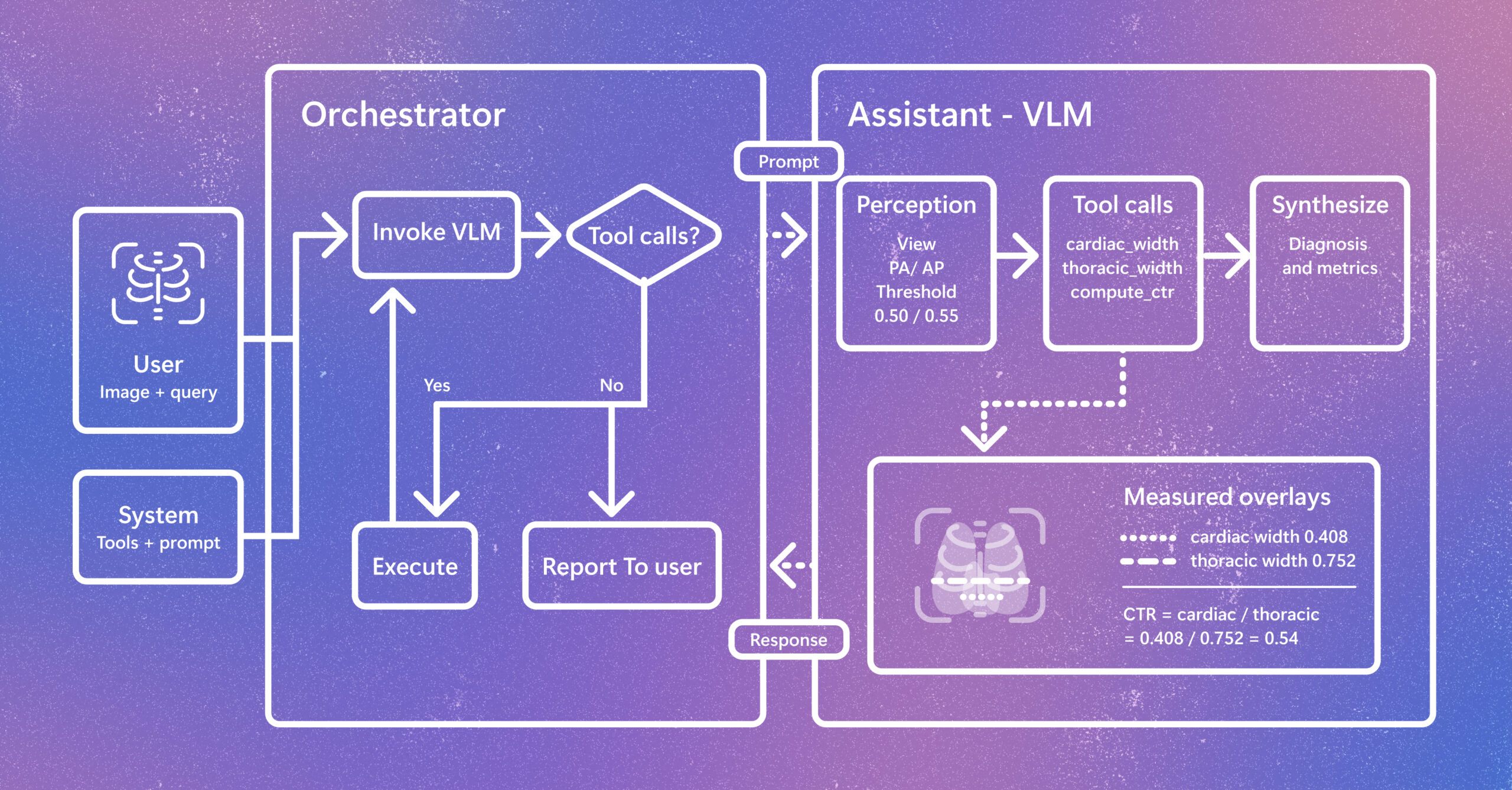
Introducing CARE-X: Towards Clinically Useful Radiology VLMs with Auxiliary Supervision, Reward-Aligned Learning, and Tool-Augmented Measurement

Radiology AI is evolving beyond report generation. CARE-X explores a unified approach that combines flexible reasoning, calibrated predictions, and measurement-based tools for chest X-ray interpretation. The post Introducing CARE-X: Towards Clinically Useful Radiology VLMs with Auxiliary Supervision, Reward-Aligned Learning, and Tool-Augmented Measurement appeared first on Microsoft Research.

We use cookies to run the site and, with your consent, for analytics and to show ads. See our Cookie Policy.