This work proposes a novel approach under the more realistic black-box threat model that utilizes concepts from reinforcement learning to optimize perturbations with a non-differentiable target model, and shows the success of reinforcement learning inspired black-box adversarial attack (RIBA) in generating adversarial perturbations using only a small number of queries to the target model.
Abstract
Neural networks, both convolution or transformer based, are essential for modern computer vision systems. However, they are vulnerable to small perturbations, almost imperceptible to humans, which significantly alter the model's prediction. These adversarial attacks are often considered to be a significant threat to the implementation of neural networks in safety-critical applications. Most attacks utilize the white-box threat model and therefore require full access to the target model, making them unrealistic to use in practice. We propose a novel approach under the more realistic black-box threat model that utilizes concepts from reinforcement learning to optimize perturbations with a non-differentiable target model. Reinforcement learning algorithms have already been optimized to be query efficient, making them an ideal starting point when designing black-box adversarial attacks. We show the success of our reinforcement learning inspired black-box adversarial attack (RIBA) in generating adversarial perturbations using only a small number of queries to the target model, by comparing it to state of the art attacks on different models on the Cifar10 and ImageNet data sets. RIBA takes $25.4\%$ fewer median queries to generate attacked images against a ResNet-18 on Cifar10 and $22.5\%$ fewer median queries to fool a Vit-B/16 model on ImageNet. Additionally, we demonstrate that RIBA can match the performance of white-box attacks on an adversarially trained model.
Most adversarial attacks on deep reinforcement learning (DRL) assume white-box access to the victim policy, which rarely holds in practice. This paper studies transfer-based black-box attacks on DRL: the attacker crafts observation perturbations on a white-box surrogate agent and feeds them to an unknown victim. We for...
Zexin Li, Rui-Li Yao, Yi-Ming Zeng et al.· 0 citations
Understanding adversarial attacks is crucial for the secure deployment of visual recognition systems. While ensemble attacks combine the strengths of transfer-based and query-based methods to generate highly transferable adversarial examples, their practicality is often limited in real-world scenarios where the number...
Zhun Zhang, Jian Wang, Shi-Ze Guo et al.· IEEE Transactions on Informa...· 0 citations
RL-FAT is proposed, a reinforcement-learning-inspired fair adversarial training framework that uses policy-gradient based feedback from adversarial predictions to improve adversarial robustness while promoting a more balanced robustness distribution across classes.
The defense effect of GVAT was generalized to other attacks under the transfer-based black-box setting, which showed that GVAT not only defended against the corresponding attacks that generated adversarial examples but also defended against other attacks.
ASA is proposed, a query-based black-box framework that searches over natural-language editing scenarios using a multimodal language model and a modern text-guided generative editor and uses a greedy explorer to compose only attack-improving scenarios.
Exploring how generative AI could make machine vision more accessible to businesses. The post GenEye in a Box: Making Machine Vision Something You Can Just Ask For appeared first on GPT-Lab.
Microsoft Research Blog· microsoft.comAug 11, 2026
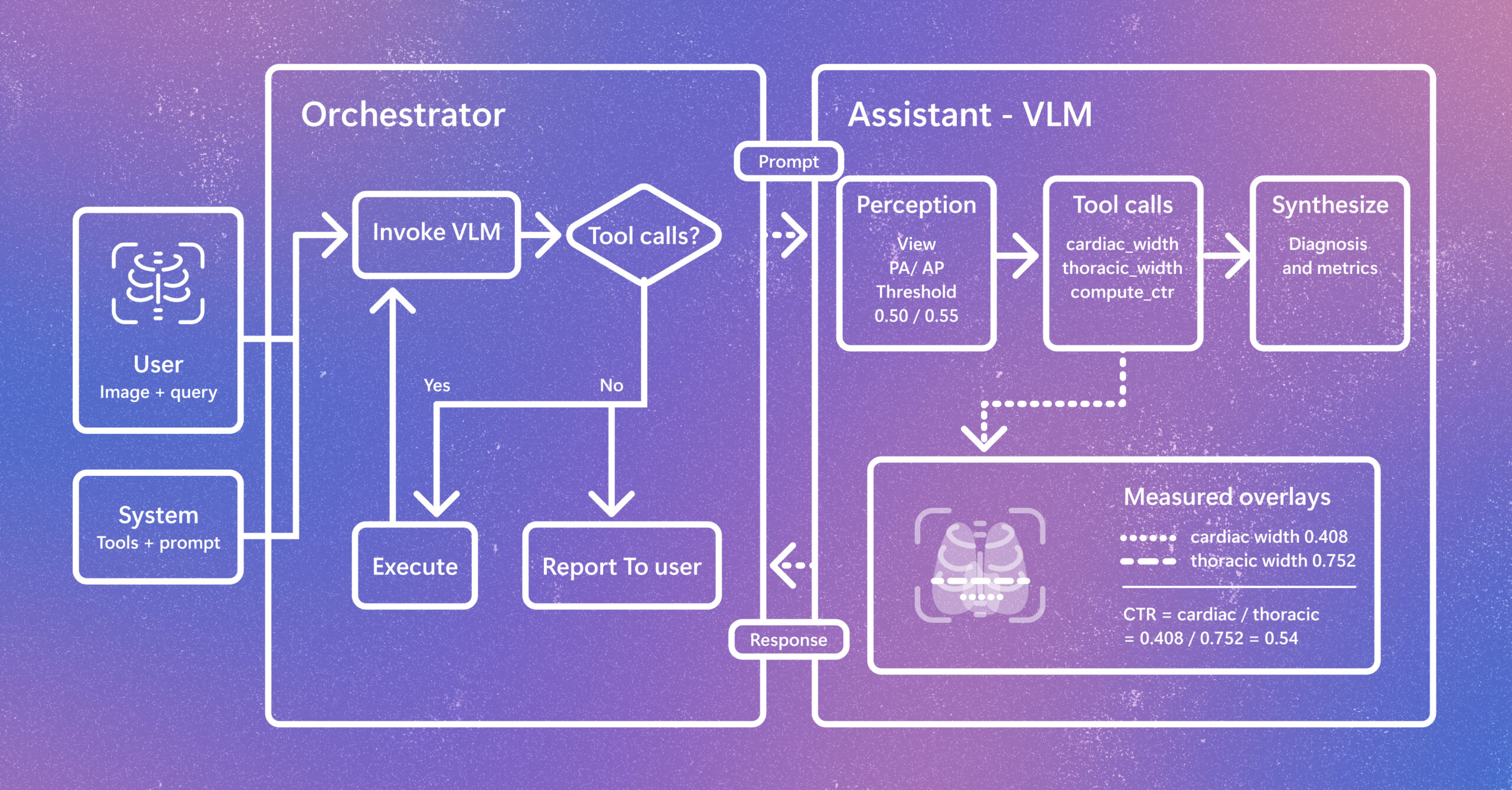
Radiology AI is evolving beyond report generation. CARE-X explores a unified approach that combines flexible reasoning, calibrated predictions, and measurement-based tools for chest X-ray interpretation. The post Introducing CARE-X: Towards Clinically Useful Radiology VLMs with Auxiliary Supervision, Reward-Aligned Learning, and Tool-Augmented Measurement appeared first on Microsoft Research.