Ask Before It Tells: Benchmark-to-Robot Body-Cue Transfer for a Question-First Bedside Robot
Dongsik Yoon
Sep 2026
RoboticsHuman-computer Interaction
Abstract
Body-cue recognition can support assistive robots, but benchmark accuracy does not guarantee reliable behavior under a robot-camera viewpoint. We present Nuni, a bedside robot prototype that treats a detected distress cue as a reason to ask rather than a reason to alert. We compare two X3D-UGT RGB appearance classifiers, which reach 97.7% and 94.8% six-way accuracy on NTU RGB+D, with a pose-centric hybrid pipeline on 28 single-actor scripted clips recorded from the robot camera. The hybrid path achieved 0.71 six-way macro recall, versus 0.25 and 0.29 for the fine-tuned and from-scratch RGB variants. More importantly for interaction, it produced a question-triggering distress cue in 12/16 distress clips and would have prompted unnecessarily in 2/8 normal clips; the RGB variants yielded a question-triggering cue in only 2/16 and 3/16 distress clips. We separately tested the question-first controller through event injection. All 13 state-transition trials passed: valid responses caused stand-down, two unanswered prompts produced one alert, and three boundary conditions were handled correctly. These results are a preliminary technical evaluation, not a user study or medical validation, but they show how interaction policy can limit the consequences of uncertain perception.
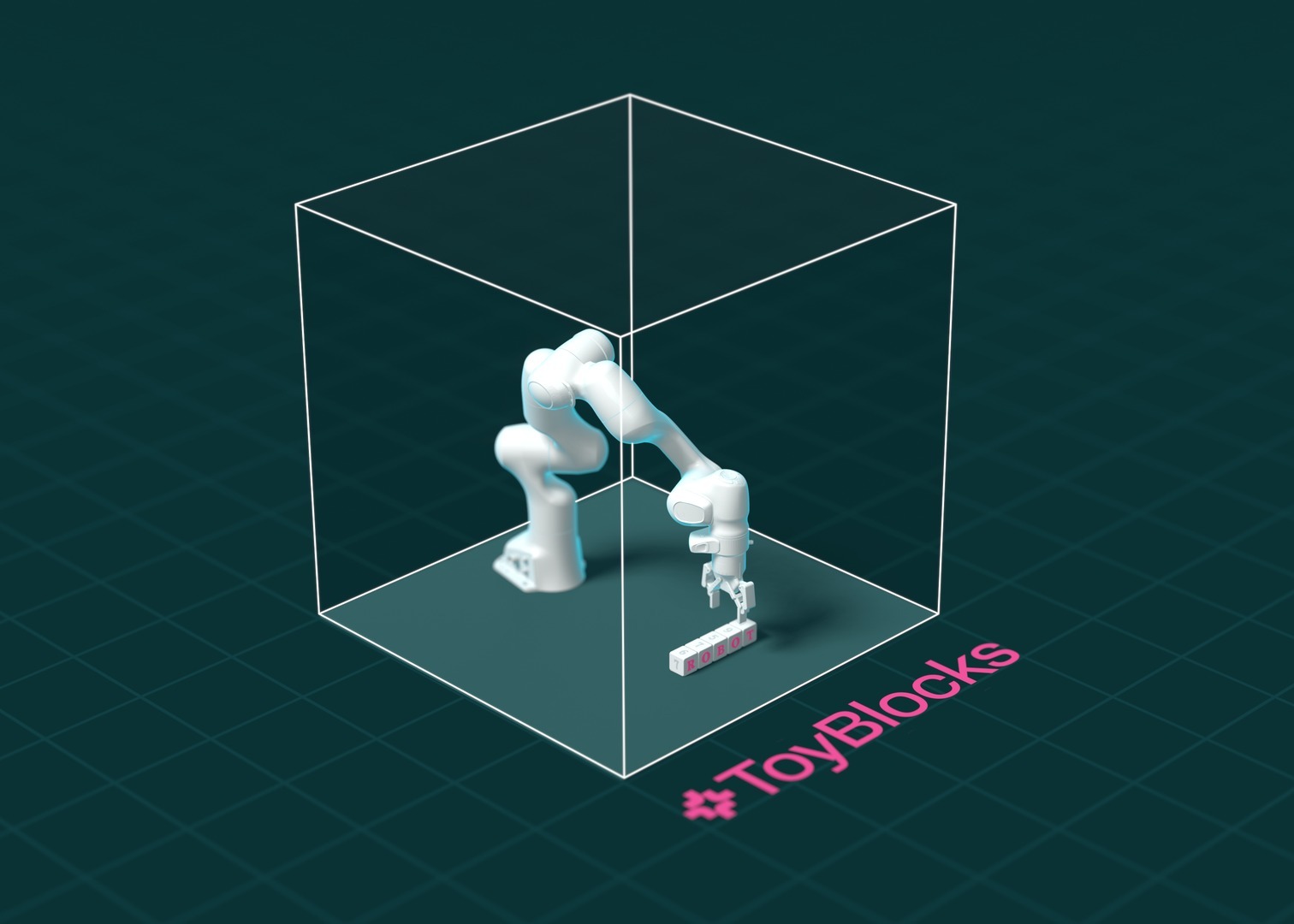
This paper investigates developing real-world perception for active agents, proposes Gibson Environment for this purpose, and showcases a set of perceptual tasks learned therein.
F. Xia, Amir Zamir, Zhi-Yang He et al.· 2018 IEEE/CVF Conference on...· 1,069 citations· ⚡112
This publication proposes a definition and a classification of agile software development approaches and analyses ten software development methods that can be characterized as being "agile" against the defined criterion.
P. Abrahamsson, O. Salo, Jussi Ronkainen et al.· arXiv.org· 727 citations· ⚡54
The study shows that agile practices improve both informal and formal communication, but indicates that, in larger development situations involving multiple external stakeholders, a mismatch of adequate communication mechanisms can sometimes even hinder the communication.
M. Pikkarainen, Jukka Haikara, O. Salo et al.· Empirical Software Engineeri...· 401 citations· ⚡48
The results indicate that software engineering work practices are chosen opportunistically, adapted and configured to provide value under the constrains imposed by the startup context.
Nicolò Paternoster, Carmine Giardino, M. Unterkalmsteiner et al.· Information and Software Tec...· 394 citations· ⚡54
AI agents can generate code at a scale that’s hard for humans to review line-by-line. PDD Kit helps ensure the code is doing what the developer intended by creating formal specifications and testing against them. It converts developer intent into a Verus specification, proves AI-generated code meets it for every input, and uses tests where proofs aren't practical. Developers review intent, not every line. The post Formally verifying agent-written full-stack web apps with PDD Kit appeared first o…
MIT News · Artificial Intelligence· news.mit.eduNov 5, 2026
A new system identifies and corrects unreliable object descriptions stored in a robot’s memory, improving the robot’s ability to interact with its environment.