Teaching Reinforcement Learning and Humanoid Robotics to High-School Students: An Expert-Validated Curriculum Design on a Low-Cost Open Platform
Yuanzhe DongJie CaoShuman Wang
Sep 2026
Artificial IntelligenceRobotics
Abstract
Lower cost open source robots and reinforcement learning (RL) simulation tools create new opportunities for precollege students to engage with contemporary robotics. However, translating a complete research workflow, spanning mechanical assembly, electrical setup, simulation, policy learning, system identification, and physical deployment, into a coherent course for novice learners remains challenging. We present an integrated robotics course framework that organizes these activities around a shared robotic artifact. The framework combines parallel disciplinary tracks, sequencing based on technical dependencies, progressive integration of simulation and hardware, layered performance checkpoints, and structures for balancing collaborative work with individual accountability. We illustrate the framework through a high school curriculum organized around a robot project in which pairs of students assemble an open source humanoid robot, train a walking policy in simulation, and deploy it on the physical platform. The framework was developed through an iterative design process that included formative review by five experts in robotics research, engineering, secondary STEM education, and curriculum design. Expert feedback highlighted three central design tensions: authenticity versus cognitive load, system integration versus timely visible progress, and team construction versus individual accountability. These tensions informed the final framework presented in this paper. This work offers a structured approach for adapting robotics research workflows into interdisciplinary precollege courses; future classroom studies are needed to examine implementation and student learning.

This paper investigates developing real-world perception for active agents, proposes Gibson Environment for this purpose, and showcases a set of perceptual tasks learned therein.
F. Xia, Amir Zamir, Zhi-Yang He et al.· 2018 IEEE/CVF Conference on...· 1,069 citations· ⚡112
GAOKAO-Bench is introduced, an intuitive benchmark that employs questions from the Chinese GAOKAO examination as test samples, including both subjective and objective questions that contribute a robust evaluation benchmark for future large language models and offers valuable insights into the advantages and limitations...
Xiaotian Zhang, Chun-yan Li, Yi Zong et al.· arXiv.org· 216 citations· ⚡17
An algorithm is proposed which leverages disentangled semantic factors to generate adversarial perturbation by altering controlled semantic attributes to fool the learner towards various "adversarial" targets.
Haonan Qiu, Chaowei Xiao, Lei Yang et al.· arXiv.org· 208 citations· ⚡17
This work proposes a HALO that directly maximizes the utility of generations instead of maximizing the log-likelihood of preferences, and suggests that the best loss depends on the inductive biases most appropriate for a given setting, an oft-overlooked consideration.
This work investigates the possibilities of using LLMs in a resume screening setting via a document retrieval framework that simulates job candidate selection and finds that the MTEs are biased, significantly favoring White-associated names in 85% of cases and female-associated names in only 11.1% of cases.
This work shows that orders of magnitude enhancement in performance could be obtained by a combination of hardware improvements and tight quantum-HPC integration and introduces high-performance architectures for quantum-probabilistic computing with custom-designed accelerators to tackle today's industry-scale classical...
Masoud Mohseni, Artur Scherer, K. Johnson et al.· arXiv.org· 121 citations· ⚡9
Related blog posts
MIT News · Artificial Intelligence· news.mit.eduJul 30, 2026
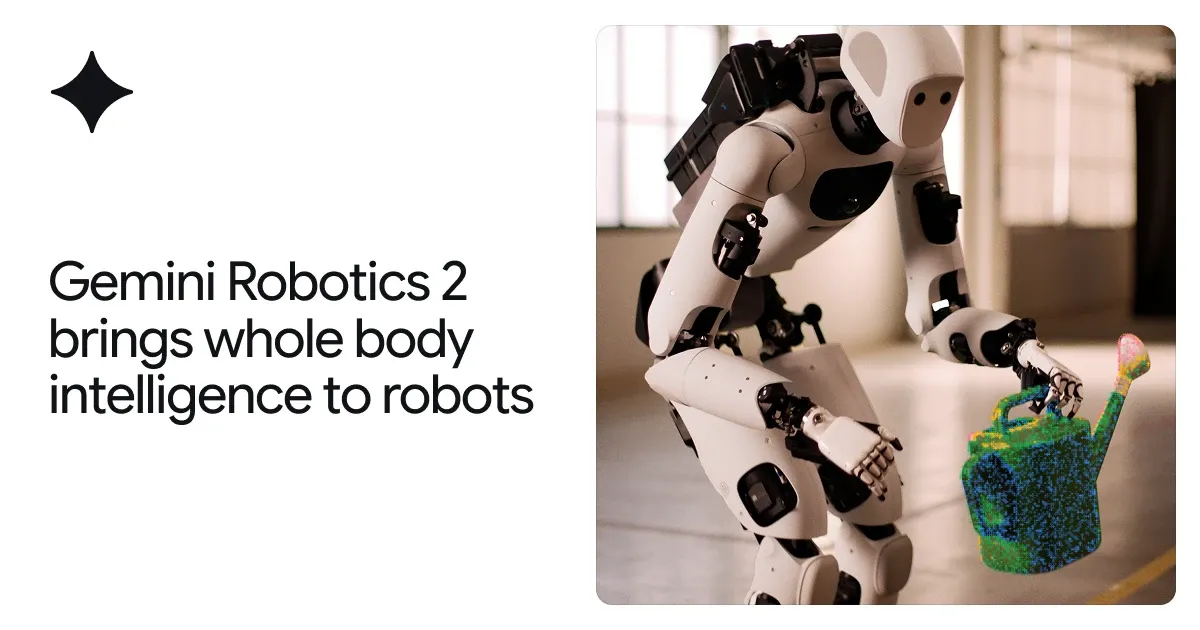
From feet to fingertips — we are teaching robots intelligent whole-body control, fine dexterity, and teamwork to complete a broad range of complex tasks.