ClusterFewshot is proposed, a strategy that combines semantic structuring with utility-aware scoring to construct representative and effective few-shot demonstration sets and substantially reduces optimization cost across multiple benchmarks.
Abstract
The performance of large language model (LLM) workflows often depends on selecting a small set of in-context demonstrations to guide model behavior on new tasks. Recent methods improve this process by augmenting prompts with successful reasoning paths. However, their demonstration selection relies on random sampling or metric-based rankings, overlooking the semantic structure of the task. We propose ClusterFewshot, a strategy that combines semantic structuring with utility-aware scoring to construct representative and effective few-shot demonstration sets. Evaluated within DSPy-based pipelines, ClusterFewshot substantially reduces optimization cost across multiple benchmarks, while consistently improving accuracy relative to prior bootstrap-based methods in both standalone prompt tuning and hybrid prompt-weight optimization.
The cluster loop yields the strongest held-out rubric on both evaluator tasks from a commercial search vertical, and is the only method robustly positive on both.
Jinyoung Kim, N. Corp, Sun Kim et al.· 0 citations
A lightweight GLiClass-based router is introduced, a lightweight GLiClass-based router that assigns a suitability score to each inference-time model label without autoregressive generation, and a released 0.6B-parameter checkpoint combines a Qwen3 decoder with a shallow bidirectional scorer.
Ihor Stepanov, Aleksandr Smechov, Mykhailo Shtopko et al.· 0 citations
While Large Language Models (LLMs) possess rich world knowledge and impressive generalization capabilities, their direct application to tabular data classification is hindered by high inference costs and limited interpretability. In contrast, decision trees are fast and transparent but often underperform in low-data re...
Yue Qiu, Ze-Kang Du, Yi-Qun Diao et al.· 0 citations
Uncertainty quantification (UQ) is essential for the safe deployment of large language models (LLMs). Existing methods, from verbalized confidence to ones requiring multiple generations, are often zero-shot and produce scores quantifying uncertainty without the need for labelled data. Nonetheless, in practice one must...
S. Mbacke, Mouloud Belbahri, G. Loaiza-Ganem· 0 citations
Retrieval-Augmented Generation (RAG) has become a cornerstone in software engineering for enhancing Large Language Models (LLMs) with domain-specific knowledge. However, adapting retrievers to evolving code repositories remains challenging due to the noise and redundancy inherent in massive code corpora. Standard fine-...
Yuxuan Chen, Ming-Wei Liu, Guang-Sheng Ou et al.· 0 citations
Related blog posts
Microsoft Research Blog· microsoft.comOct 22, 2026
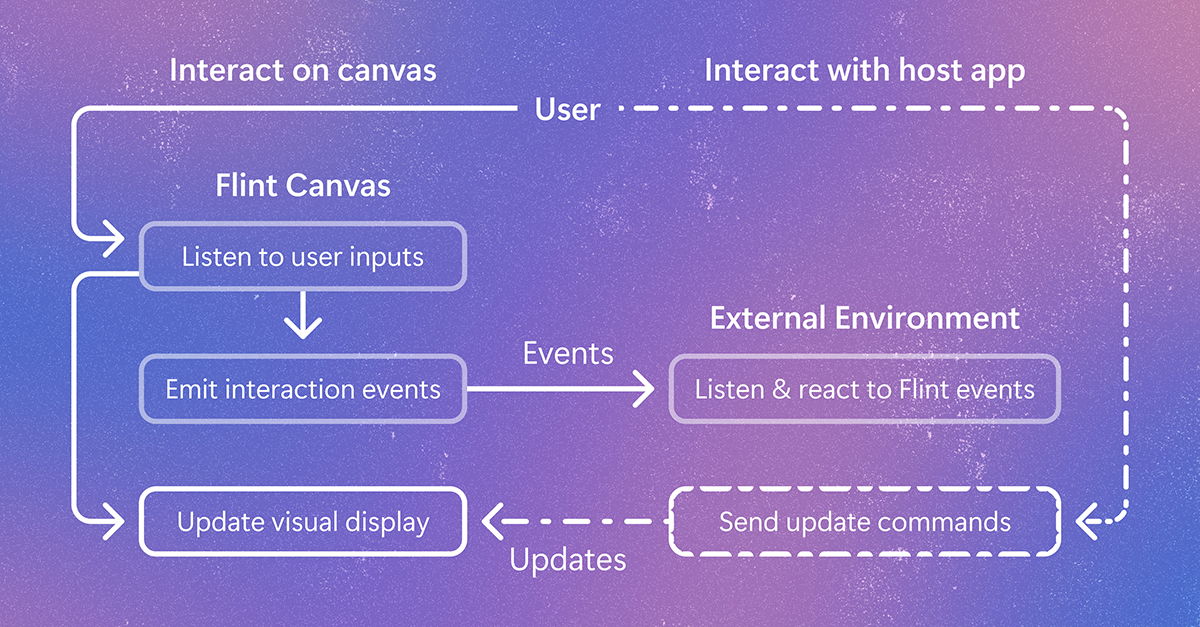
Flint-interactive gives AI agents a language for creating interactive visualizations. Click a chart, filter data, highlight related content, and explore beyond the view the author originally chose. The post Flint-interactive: A language for creating interactive data visualizations appeared first on Microsoft Research.
A new computational approach reveals how cells communicate to assemble into tissues. This could accelerate stem cell engineering, improve disease models, and inform therapies.
Microsoft Research Blog· microsoft.comOct 15, 2026
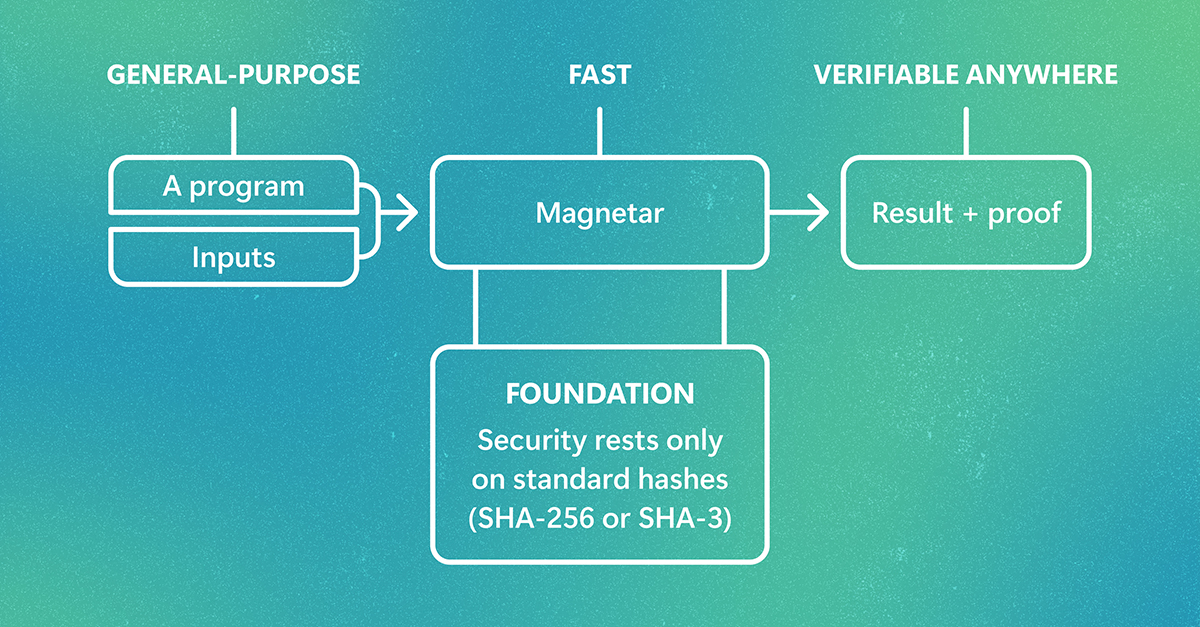
Zero-knowledge proofs can verify computing results without rerunning workloads or exposing sensitive data. Magnetar helps bring them into the mainstream with support for standard programming languages, major speed gains, and quantum-resistant security. The post Proof-based general-purpose computing with Magnetar appeared first on Microsoft Research.
We use cookies to run the site and, with your consent, for analytics and to show ads.
See our Cookie Policy.