This paper builds upon the large-scale dataset pairing MetOp radiances with ERA5 PBLH labels, and presents the best-performing architecture found: a dual-encoder Transformer whose masked-input handling lets it operate in all weather conditions.
Abstract
Estimating the Planetary Boundary Layer Height (PBLH) from satellite observations is a challenging regression problem due to the indirect relationship between top-of-atmosphere radiances and near-surface atmospheric structure. Progress has been limited both by the lack of architectures capable of handling the multimodal, spatially incomplete nature of satellite overpasses, and by the scarcity of suitable datasets. In this paper, we build upon the large-scale dataset pairing MetOp radiances with ERA5 PBLH labels that we introduced in our previous work, making three contributions. First, we establish a benchmark across eight approaches spanning pixel-wise regression, swath-wise sequence models, and convolutional and Transformer models operating on the full orbital passage. Second, we quantify what the resulting model actually relies on, using grouped Shapley decomposition over the input blocks. Third, we present the best-performing architecture found: a dual-encoder Transformer whose masked-input handling lets it operate in all weather conditions. The proposed model achieves MAE = 155.8 m on the held-out global test set, outperforming all baselines on every evaluation subset. On 30 out-of-distribution granules acquired on two days overlapping the TEAMx observational campaign, it achieves MAE = 165.3 m, outperforming a pixel-wise baseline trained on the same data (MAE = 197 m).

Highlights What are the main findings? Off-the-shelf pretrained super-resolution models (ESRGAN, SwinIR) applied directly to Landsat-to-Sentinel-2 upscaling do not outperform bicubic interpolation on pixel-wise metrics, remaining statistically indistinguishable from it (Nemenyi post hoc), thereby revealing a domain ada...
Juan Valdés-Quintero, R. D. Vásquez-Salazar, J. C. Parra et al.· Italian National Conference...· 0 citations
Monthly gravity-field solutions derived from satellite laser ranging (SLR) and Doppler Orbitography and Radiopositioning Integrated by Satellite (DORIS) provide an observational record that extends well before the GRACE era but resolve only a limited range of spatial wavelengths. In this study, we implement deep learni...
Adrien Joliat, Jun-Yang Gou, Ellen Poli et al.· GRACE/GRACE-FO Science Team...· 0 citations
Among adaptation strategies, LoRA matches or surpasses full fine-tuning on crater detection and IMP segmentation while using far fewer trainable parameters, whereas full fine-tuning performs best for ice prospectivity regression.
Paolo Fraccaro, Gabrielle Nyirjesy, Daniela Szwarcman et al.· 0 citations
Accurate sub-daily soil moisture (SM) retrievals from satellite observations remain a major challenge due to sparse temporal sampling and retrieval uncertainties. This study introduces a localized convolutional neural network (CNN-l) framework designed to enhance SM estimates from Advanced SCATterometer (ASCAT) obser...
L. A. Dinh, Filipe Aires, V. Pellet· Earth Observation· 0 citations
This work marks the first global machine learning-based empirical MF models that directly capture atmospheric asymmetry, offering a flexible and physically consistent alternative to traditional models in space geodesy.
Zhen-Yi Zhang, B. Soja· Journal of Geodesy· 1 citation
Exploring how generative AI could make machine vision more accessible to businesses. The post GenEye in a Box: Making Machine Vision Something You Can Just Ask For appeared first on GPT-Lab.
Microsoft Research Blog· microsoft.comAug 11, 2026
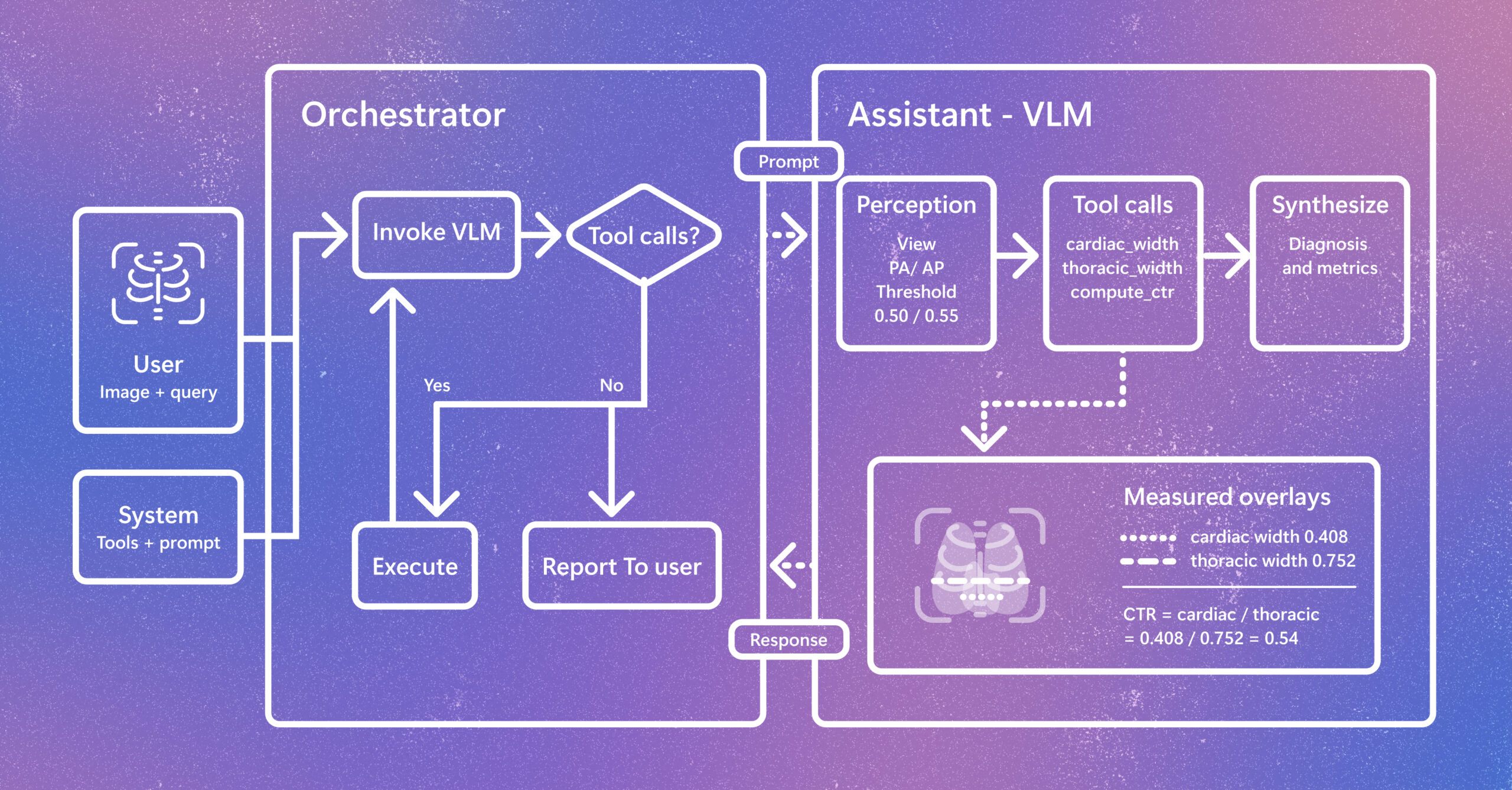
Radiology AI is evolving beyond report generation. CARE-X explores a unified approach that combines flexible reasoning, calibrated predictions, and measurement-based tools for chest X-ray interpretation. The post Introducing CARE-X: Towards Clinically Useful Radiology VLMs with Auxiliary Supervision, Reward-Aligned Learning, and Tool-Augmented Measurement appeared first on Microsoft Research.
Assistant Professor Benjamin Lindquist studies how engineers deliberately injected randomness into early AI, giving rise to deep-learning models that sometimes hallucinate.
We use cookies to run the site and, with your consent, for analytics and to show ads.
See our Cookie Policy.