Skip to content
#edge computing Open access

Bit-sliced quantization for robust memristor-based compute-in-memory

Sep 2026 · npj Unconventional Computing · Vol 3 · 0 citations · 57 references
Advanced Memory and Neural Computing

Abstract

The escalating computational demand of modern AI is increasingly constrained by the data-movement overhead of von Neumann architectures, motivating memristor-based compute-in-memory (CIM) as an energy-efficient alternative. Yet extending CIM to reliable analog computation remains difficult because practical memristor arrays exhibit limited conductance resolution and stochastic device fluctuations, causing severe performance loss when conventional uniform quantization is directly deployed. Here we present bit-sliced quantization (BSQ), a hardware–software co-design framework for robust analog CIM inference. BSQ combines distribution-aware non-uniform post-training quantization, hardware-aligned noise injection, and crossbar-compatible bit-slice mapping onto stable binary device states. This design aligns model representation with device physics while avoiding costly retraining. We evaluate BSQ on three tasks with increasing complexity: handwritten digit classification, sentiment analysis, and large language model reasoning. Under programming noise, BSQ improves accuracy by +16.0% on 2-bit digit classification, +0.5% on 3-bit sentiment classification, and up to +20.08% on 3-bit LLM reasoning benchmarks. These results show that physically aligned quantization is critical for dependable analog inference, and establish BSQ as a practical route toward robust and scalable edge AI on memristor CIM hardware.

Read PDF

Similar papers

#computer vision Review Sep 2017

Agile Software Development Methods: Review and Analysis

This publication proposes a definition and a classification of agile software development approaches and analyses ten software development methods that can be characterized as being "agile" against the defined criterion.

P. Abrahamsson, O. Salo, Jussi Ronkainen et al. · 727 citations · ⚡54
#computer vision Jun 2008

The impact of agile practices on communication in software development

The study shows that agile practices improve both informal and formal communication, but indicates that, in larger development situations involving multiple external stakeholders, a mismatch of adequate communication mechanisms can sometimes even hinder the communication.

M. Pikkarainen, Jukka Haikara, O. Salo et al. · 401 citations · ⚡48
#machine learning Review Open access Oct 2014

Software development in startup companies: A systematic mapping study

The results indicate that software engineering work practices are chosen opportunistically, adapted and configured to provide value under the constrains imposed by the startup context.

Nicolò Paternoster, Carmine Giardino, M. Unterkalmsteiner et al. · 394 citations · ⚡54

Related blog posts

Microsoft Research Blog Sep 29, 2026

Introducing Quine: An AI research system designed for the complexity of biology

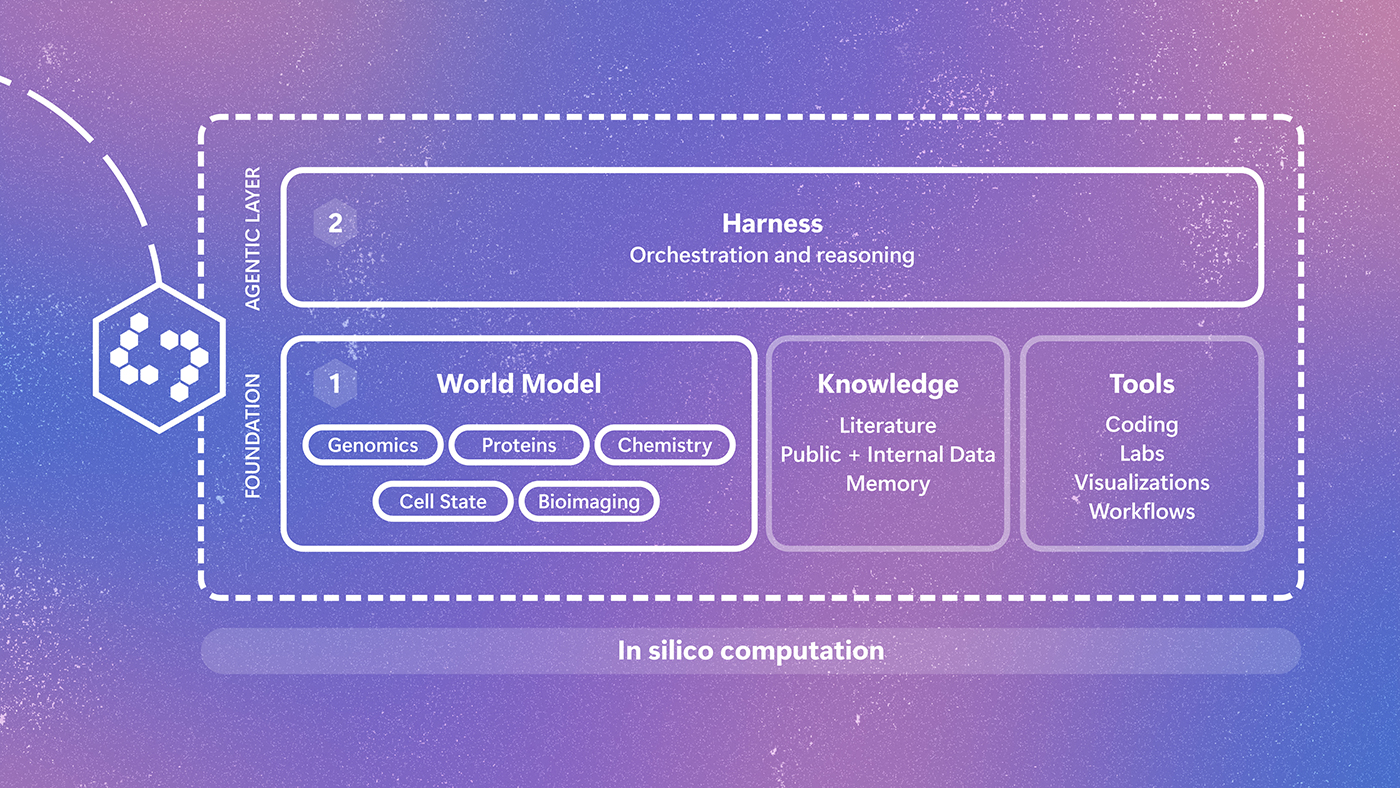
Biology doesn't operate in silos, and neither should the AI representation of it. Quine is an early-stage research effort to create a multimodal world model of biology. By connecting insights across biological scales and modalities, Quine helps scientists computationally search a space far larger than intuition allows and prioritize hypotheses before they reach the lab. Experimental results provide important feedback, helping researchers sharpen future research directions. The post Introducing Q…

We use cookies to run the site and, with your consent, for analytics and to show ads. See our Cookie Policy.