May 2026· arXiv.org· Vol abs/2605.05236· 0 citations· 42 references
Computer Science
TL;DR
A topology-driven Multi-Agent Reinforcement Learning (TD-MARL) framework to coordinate multi-robot systems to avoid entanglement is proposed and the full simulation experiments show that the method is better than the current advanced deep reinforcement learning (DRL) method in terms of convergence and anti-winding effect.
Abstract
In the field of precision manufacturing in complex constrained environments, the role of soft robots is increasingly prominent, and the realization of anti-winding control based on multi-intelligent body reinforcement learning has become a research hotspot. One of the core problems at present is to coordinate multiple robots to complete the unwinding operation in a highly constrained environment. The existing distributed training framework faces some observability challenges in high-density barrier and unstable environments, resulting in poor learning results. This paper proposes a topology-driven Multi-Agent Reinforcement Learning (TD-MARL) framework to coordinate multi-robot systems to avoid entanglement. Specifically, the critical network adopts centralized learning, so that each intelligent body can perceive the strategies of other intelligent bodies by sharing the topological state, thus alleviating the training instability caused by complex interactions; eliminating the demand for communication resources between robots through distributed execution, Upgrade system reliability; the integrated topological security layer uses topological invariants to accurately assess and mitigate the risk of entanglement to avoid the strategy from falling into local difficulties. Finally, the full simulation experiments carried out in the real simulation environment show that the method is better than the current advanced deep reinforcement learning (DRL) method in terms of convergence and anti-winding effect.
This paper investigates developing real-world perception for active agents, proposes Gibson Environment for this purpose, and showcases a set of perceptual tasks learned therein.
F. Xia, Amir Zamir, Zhi-Yang He et al.· 2018 IEEE/CVF Conference on...· 1,069 citations· ⚡112
GAOKAO-Bench is introduced, an intuitive benchmark that employs questions from the Chinese GAOKAO examination as test samples, including both subjective and objective questions that contribute a robust evaluation benchmark for future large language models and offers valuable insights into the advantages and limitations...
Xiaotian Zhang, Chun-yan Li, Yi Zong et al.· arXiv.org· 216 citations· ⚡17
An algorithm is proposed which leverages disentangled semantic factors to generate adversarial perturbation by altering controlled semantic attributes to fool the learner towards various "adversarial" targets.
Haonan Qiu, Chaowei Xiao, Lei Yang et al.· arXiv.org· 208 citations· ⚡17
This work proposes a HALO that directly maximizes the utility of generations instead of maximizing the log-likelihood of preferences, and suggests that the best loss depends on the inductive biases most appropriate for a given setting, an oft-overlooked consideration.
This work investigates the possibilities of using LLMs in a resume screening setting via a document retrieval framework that simulates job candidate selection and finds that the MTEs are biased, significantly favoring White-associated names in 85% of cases and female-associated names in only 11.1% of cases.
This work shows that orders of magnitude enhancement in performance could be obtained by a combination of hardware improvements and tight quantum-HPC integration and introduces high-performance architectures for quantum-probabilistic computing with custom-designed accelerators to tackle today's industry-scale classical...
Masoud Mohseni, Artur Scherer, K. Johnson et al.· arXiv.org· 121 citations· ⚡9
Related blog posts
MIT News · Artificial Intelligence· news.mit.eduJul 30, 2026
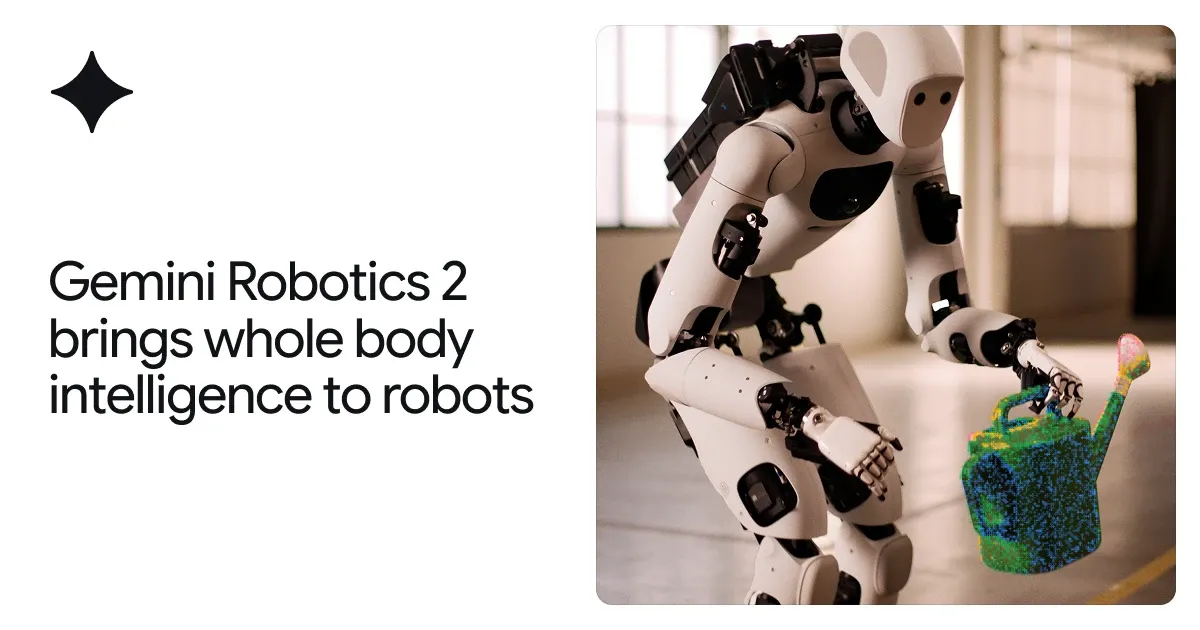
From feet to fingertips — we are teaching robots intelligent whole-body control, fine dexterity, and teamwork to complete a broad range of complex tasks.

