A novel pattern-guided mixture-of-experts that expands model capacity through sparse activation and uses shallow patch similarities to constrain deep-layer routing, guiding expert specialization across heterogeneous time series and an implicit quantile network head that predicts arbitrary quantiles to characterize predictive distributions, enhancing probabilistic forecasting flexibility.
Abstract
Time series foundation models (TSFMs) enable cross-domain forecasting, but their development as general-purpose forecasters remains constrained by underexplored training potential and limited architectural versatility. To address these challenges, we introduce Aurora-X, a billion-scale TSFM with a progressive curriculum and a unified architecture. We first use channel-independent pretraining to learn temporal patterns, then introduce cross-variable dependencies, varied context and horizon lengths, and future covariates if available during midtraining. Variable-resolution post-training further enables an adjustable temporal span per token at inference. With fixed model weights, this supports longer histories under a fixed token budget or fewer tokens for the same history, enabling test-time scaling. With a versatile architecture, Aurora-X supports cross-variable modeling, covariate conditioning, and parallel decoding of future patches for probabilistic forecasting. These are supported by a novel pattern-guided mixture-of-experts that expands model capacity through sparse activation and uses shallow patch similarities to constrain deep-layer routing, guiding expert specialization across heterogeneous time series. Furthermore, we propose an implicit quantile network head that predicts arbitrary quantiles to characterize predictive distributions, enhancing probabilistic forecasting flexibility. Comprehensive experiments on GIFT-Eval, TIME, FEV-Bench, TFB, and DAG-Bench demonstrate state-of-the-art forecasting performance against pretrained TSFMs and task-specific supervised models.
Time series foundation models (TSFMs) have advanced primarily through architectural innovation, while training regimes for large-scale heterogeneous corpora remain under-explored. As a result, pre-training distributions are often poorly controlled with respect to domain imbalance, context requirements, prediction horiz...
Hongjie Xia, Yiding Liu, Yi-Fan Hu et al.· 4 citations
In this report, we release Tabby, a long context probabilistic time series foundation model, together with a complete and open recipe of how it was built. Tabby adopts an encoder-only patch Transformer architecture and concentrates the contributions on the data and the training procedure. The pretraining corpus combine...
Shi-Feng Xie, Bahaeddine Abdessalem, Ze-Hao Xiao et al.· 1 citation
Time series foundation models (TSFMs) are pretrained on heterogeneous collections containing billions of observations, yet their training windows are typically sampled without estimating whether they provide useful learning signal. We introduce a static data-selection framework that scores each window with a reference...
Time Series Foundation Models (TSFMs) currently provide state-of-the-art results in forecasting tasks. They are available out-of-the-box and rely on in-context learning to make their predictions, which makes the quality of their performance highly sensitive to the user-selected lookback, covariates, horizon and trainin...
Chloé Hashimoto-Cullen, Amaury Durand, Laurent Bozzi et al.· 0 citations
We study the adaptation of pretrained language models to univariate time-series forecasting through a parameter-efficient transfer learning framework, with the goal of understanding which design choices drive effective cross-modal transfer. While language models operate on discrete textual tokens, time series consist o...
Tamanna S. Kumavat, Georg Brunner, Kyriakos Flouris· 0 citations
Related blog posts
MIT News · Artificial Intelligence· news.mit.eduOct 2, 2026
Martin Trust Center Managing Director Bill Aulet introduces Dear Dreamer, a free platform for middle and high school students who want to learn about entrepreneurship.
Microsoft Research Blog· microsoft.comSep 30, 2026
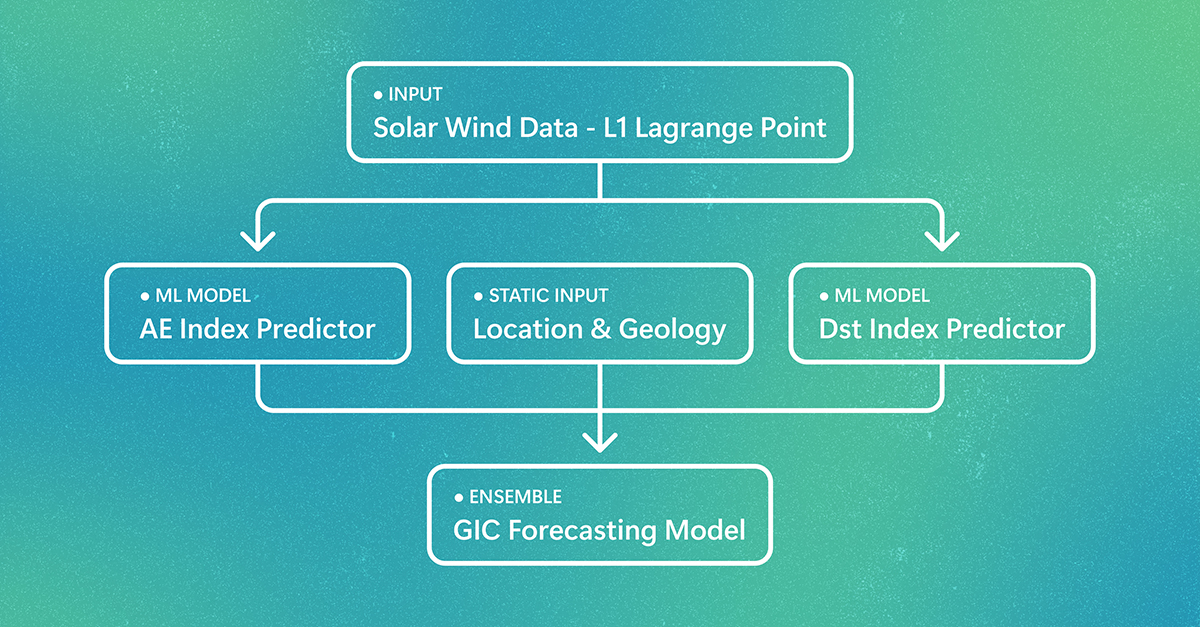
Extreme space-weather events can damage power systems on Earth and degrade GPS accuracy and satellite operations. A new machine learning system can predict where damage is likely to occur 30-60 minutes before a storm arrives. The post Forecasting space weather risks on power grids appeared first on Microsoft Research.
We use cookies to run the site and, with your consent, for analytics and to show ads.
See our Cookie Policy.