Two robustness notions are formalized, each mechanism by ablation is validated by ablation, and how often the multi-source precondition holds on sanctions designations and software supply-chain provenance is measured.
Abstract
LLM agents increasingly take privileged, often irreversible structured actions, such as paying an invoice. They assemble each action from action-critical fields in documents and tool outputs that an adversary can corrupt, and indirect prompt injection can drive the model itself to extract attacker-chosen values. Current defenses gate on a source's trust label or certify free-text answer quality. None certifies the integrity of a coupled, policy-bound structured action under a corruption budget that accounts for shared upstream sources. We characterize when such an action is safely certifiable and give the maximally live safe certifier. It admits an action only when each field clears the rule its evidence structure supports: a bounded corruption radius over corruption-distinct evidence classes, counted by a minimum hitting set so that re-publishing or laundered copies cannot manufacture a quorum, deterministic reconciliation for complementary fields, and a trusted anchor where the evidence leaves a field single-sourced. We formalize two robustness notions, validate each mechanism by ablation, and measure how often the multi-source precondition holds on sanctions designations (70,966 entities) and software supply-chain provenance (450 packages). Under upper-bound proxies, genuine corroboration is a minority phenomenon in both, and naive attestation counting overstates it, since witnesses that look independent collapse to two corruption-distinct domains once shared origin is counted. Across five current models in a real agent loop, a realistic injection fools every model but one and a naive agent then executes the fraudulent action on most attacks. The certifier admits no unsafe action and recovers the correct value where corroboration permits, while action-gating and provenance baselines are broken in every world of our harness by some attack in its space.
Multi-agent LLM systems increasingly automate tasks involving agents with different levels of privilege, creating a security risk in which a compromised low-privilege agent can influence a higher-privilege agent and trigger an unauthorized action. We study attack propagation in a four-agent LangGraph pipeline comprisin...
Tanzim Hossain Safin, Sharif Noor Zisad, S. Shatabda et al.· 0 citations
This paper proposes a split-control architecture in which an untrusted planner emits typed security intents, a deterministic governor checks each intent against safety, resource, temporal-stability, and proportionality invariants, and only admitted actions are bound to signed receipts and compiled into pre-installed eB...
Ijaz Ahmad, Ijaz Ahmad, Flavio Esposito et al.· IEEE Conference on Communica...· 0 citations
A policy algebra is proposed that defines the reliability envelope within which agent capability may be exercised and provides researchers and practitioners with formal correctness conditions, executable decision semantics, and trace evidence for building agents that are not only capable, but reliably capable.
Bhaskar Tripathi, Anurag Kumar, R. Kumar et al.· 0 citations
A conditional decision-preservation proposition: successful local admission implies that a specified synchronous policy would authorize the same action at the admission point, provided approval is sound, all policy dependencies are represented and current, observations are faithful, and consumption is atomic.
This work constructs a concrete prompt-injection attack that succeeds despite all constituent agents individually operating CaMeL, and introduces multi-CaMeL, an agent-to-agent communication protocol that preserves provenance across agent boundaries by separating trusted natural-language instructions from untrusted dat...
James Peters-Gill, Avi Semler, Henning Bartsch et al.· 3 citations
KITA is presented, a review-to-authorization architecture that keeps the user's personal secret signing key and every threshold signing-key share outside all LLM processes and establishes execution-bound authorization integrity.
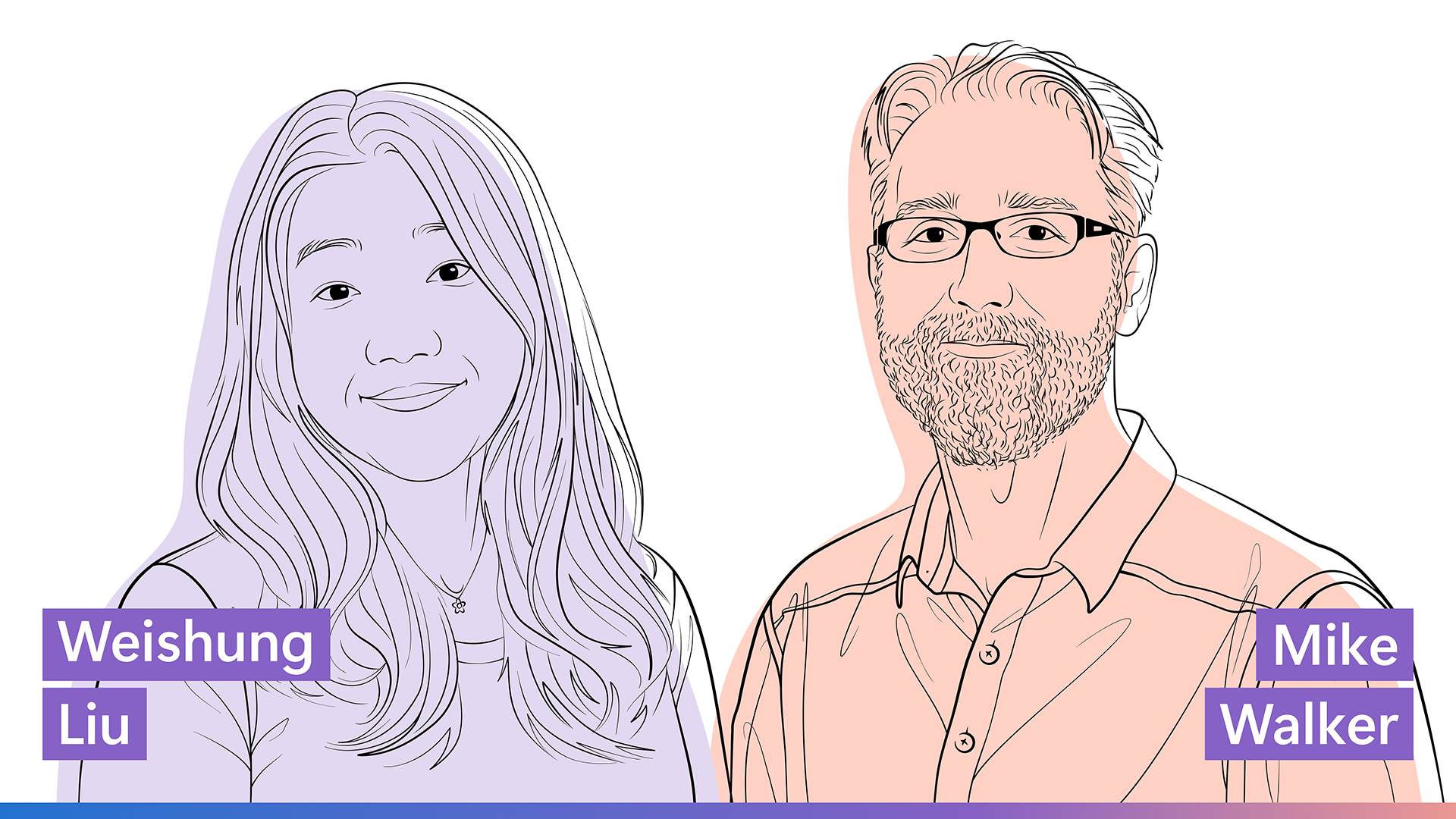
Research Manager Mike Walker reflects on a career spanning hacker culture, cybersecurity, and AI, sharing lessons about trust, teamwork, leadership, and why solving difficult problems requires curiosity, judgment, agility—and an understanding of the rules. The post Learn the rules: The hacker mindset appeared first on Microsoft Research.
MIT News · Artificial Intelligence· news.mit.eduOct 13, 2026
Machine-learning networks can learn without detailed instructions from a designer. Those that do may offer insight into how the brain reorganizes itself during learning.
MIT News · Artificial Intelligence· news.mit.eduSep 29, 2026
Professor Sherry Turkle’s new book, “Artificial Intimacy,” offers a withering critique of chatbots and the antisocial dynamics she believes they encourage.