We study whether benchmarks reliably guide model selection as developers adapt to evaluation feedback across multiple criteria. We find that the worst-case test-set size needed to estimate the best score among $k$ adaptively chosen models, under any convex combination of the criteria, grows exponentially with the number of criteria, reaching the $\Theta(\sqrt{k})$ cost of answering $k$ adaptive statistical queries with only $O(\log k)$ criteria, at fixed accuracy and confidence. In attacks on multi-task large language model benchmarks with five to ten criteria, feedback restricted to nondominated task profiles produces large reused-to-held-out score gaps and frequent false winners. These results challenge a prominent explanation for prior observed reliable benchmark reuse---that developers mainly respond to convincing improvements over the current best---in rich-feedback settings, while leaving open how often ordinary model development encounters this vulnerability.
It is found that Llama 3 delivers comparable quality to leading language models such as GPT-4 on a plethora of tasks, and performs competitively with the state-of-the-art on image, video, and speech recognition tasks.
This paper investigates developing real-world perception for active agents, proposes Gibson Environment for this purpose, and showcases a set of perceptual tasks learned therein.
F. Xia, Amir Zamir, Zhi-Yang He et al.· 2018 IEEE/CVF Conference on...· 1,069 citations· ⚡112
This publication proposes a definition and a classification of agile software development approaches and analyses ten software development methods that can be characterized as being "agile" against the defined criterion.
P. Abrahamsson, O. Salo, Jussi Ronkainen et al.· arXiv.org· 727 citations· ⚡54
The study shows that agile practices improve both informal and formal communication, but indicates that, in larger development situations involving multiple external stakeholders, a mismatch of adequate communication mechanisms can sometimes even hinder the communication.
M. Pikkarainen, Jukka Haikara, O. Salo et al.· Empirical Software Engineeri...· 401 citations· ⚡48
The results indicate that software engineering work practices are chosen opportunistically, adapted and configured to provide value under the constrains imposed by the startup context.
Nicolò Paternoster, Carmine Giardino, M. Unterkalmsteiner et al.· Information and Software Tec...· 394 citations· ⚡54
Related blog posts
MIT News · Artificial Intelligence· news.mit.eduNov 6, 2026
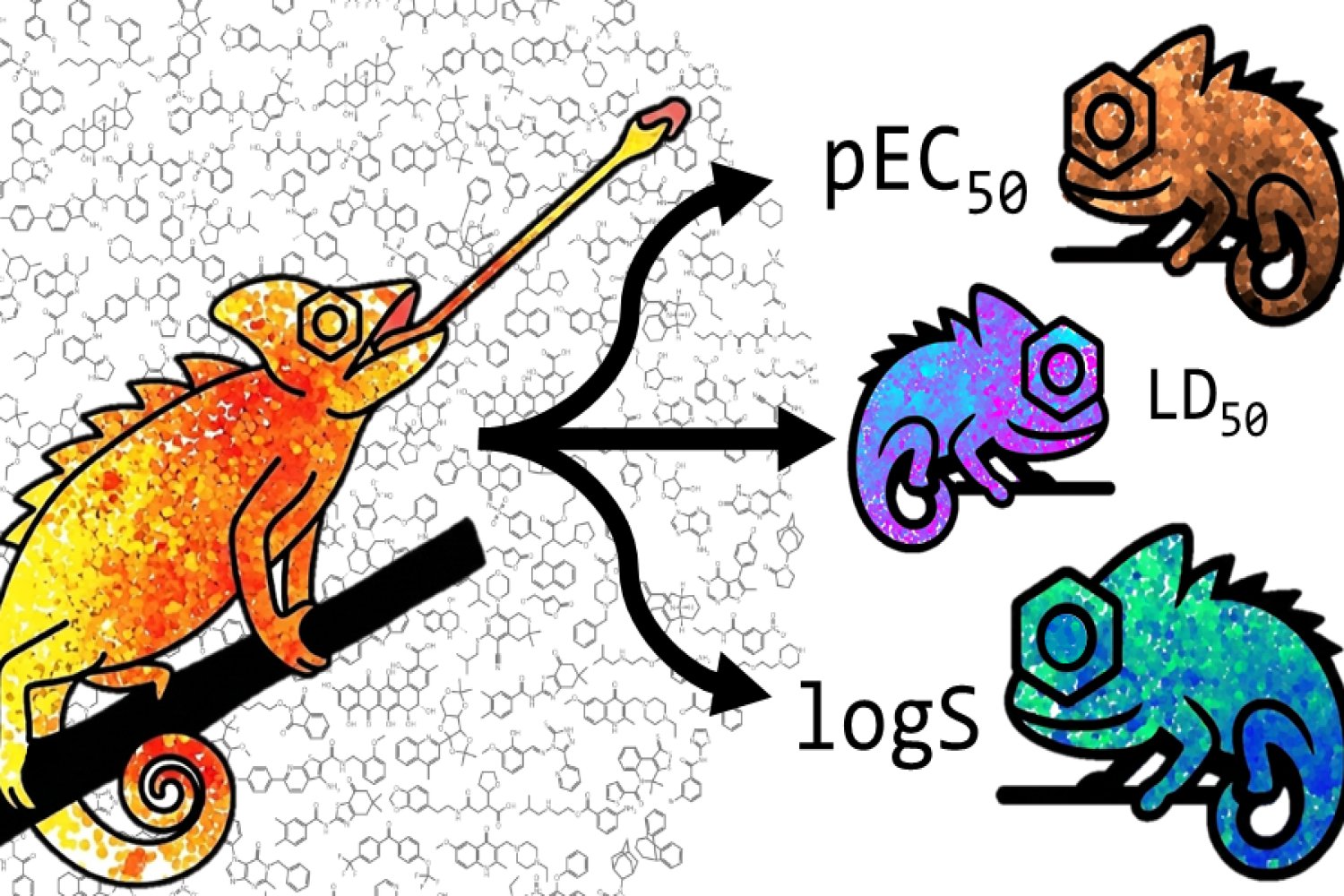
A machine-learning approach called CheMeleon provides a practical way to develop new drugs or other molecules with much less detailed, expensive experimentation.
Learn how Google DeepMind and GovTech Singapore uses lightweight on-device Gemma models to intercept conversational scams in private chats with zero cloud data egress.