What determines the unavoidable sample cost of learning cyclic causal structure? For cyclic linear non-Gaussian models, we study exact condensation recovery from observational data: identifying the strongly connected component (SCC) partition and all edges between components. We establish the first information-theoretic lower bounds on sample complexity for this target. For $p$ variables, maximum SCC size $s_{\max}$, and maximum external-parent count $d_B$, any estimator requires order $s_{\max}\log(ep/s_{\max})+d_B\log(ep/d_B)$ samples in the worst case over a regular model class. These bounds distinguish the costs of SCC membership and external-parent selection. Under principal invertibility and without correlation faithfulness, we establish a population block-exogeneity principle that identifies unknown root SCCs through residual independence and inclusion minimality. A sparse-adjustment characterization shows that small adjustment sets suffice to identify SCCs and their direct external parents, without regressing on all previously recovered variables. These characterizations yield BlockExo, which attains a structurally matching sample bound without knowing $s_{\max}$ or $d_B$ under suitable conditions. Simulations support the structural dependence of our sample bound and demonstrate BlockExo's sample-efficient recovery in comparisons with other methods for cyclic causal discovery.
It is found that Llama 3 delivers comparable quality to leading language models such as GPT-4 on a plethora of tasks, and performs competitively with the state-of-the-art on image, video, and speech recognition tasks.
This paper investigates developing real-world perception for active agents, proposes Gibson Environment for this purpose, and showcases a set of perceptual tasks learned therein.
F. Xia, Amir Zamir, Zhi-Yang He et al.· 2018 IEEE/CVF Conference on...· 1,069 citations· ⚡112
This publication proposes a definition and a classification of agile software development approaches and analyses ten software development methods that can be characterized as being "agile" against the defined criterion.
P. Abrahamsson, O. Salo, Jussi Ronkainen et al.· arXiv.org· 727 citations· ⚡54
The study shows that agile practices improve both informal and formal communication, but indicates that, in larger development situations involving multiple external stakeholders, a mismatch of adequate communication mechanisms can sometimes even hinder the communication.
M. Pikkarainen, Jukka Haikara, O. Salo et al.· Empirical Software Engineeri...· 401 citations· ⚡48
The results indicate that software engineering work practices are chosen opportunistically, adapted and configured to provide value under the constrains imposed by the startup context.
Nicolò Paternoster, Carmine Giardino, M. Unterkalmsteiner et al.· Information and Software Tec...· 394 citations· ⚡54
Related blog posts
MIT News · Artificial Intelligence· news.mit.eduNov 6, 2026
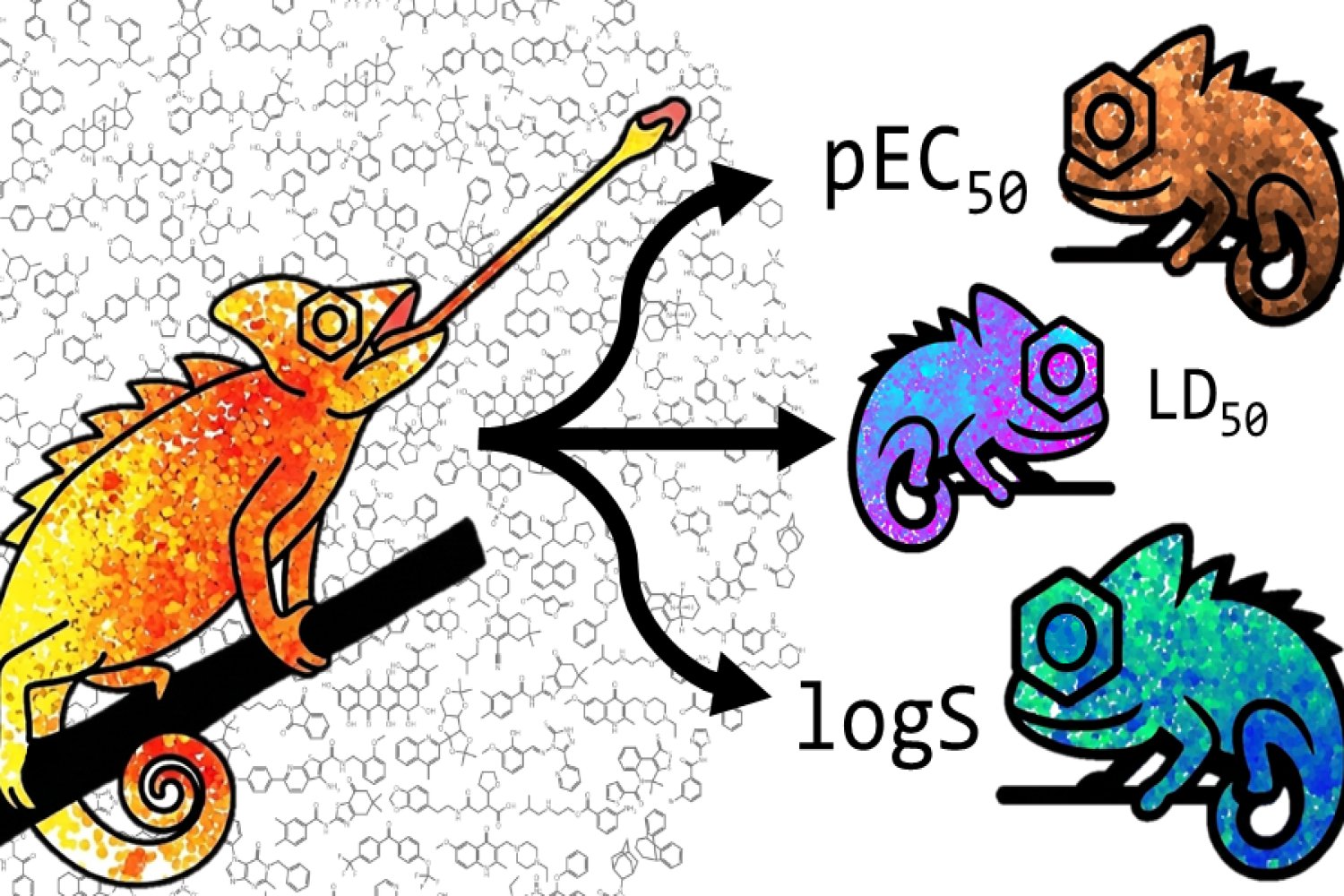
A machine-learning approach called CheMeleon provides a practical way to develop new drugs or other molecules with much less detailed, expensive experimentation.
Learn how Google DeepMind and GovTech Singapore uses lightweight on-device Gemma models to intercept conversational scams in private chats with zero cloud data egress.