Skip to content

Beyond Selection: Token Parameterization for Extreme Visual Token Compression

Sep 2026 · 0 citations · 46 references
Computer Science

TL;DR

Braco is a lightweight four-step coder that combines transform-basis truncation, input-independent basis-coordinate embeddings, budget-dependent orthogonal re-parameterization, and learned spatial residual tokens from lightweight pooling that forms the favorable empirical accuracy-efficiency frontier under compression.

Abstract

Visual-token compression is effective for improving the efficiency of vision-language models, but under extreme compression budgets, token pruning can break visual grounding while learned resamplers increase parameter count, attention cost, and training complexity. We revisit compression through a token parameterization lens, separating (i) basis transformation and structured truncation (retained subspace/compressibility) from (ii) coordinate organization (optimization and cross-modal alignment). This view yields two coupled objectives, compressibility and learnability, which we formalize as unified functionals. Guided by these objectives, we design Braco, a lightweight four-step coder that combines transform-basis truncation, input-independent basis-coordinate embeddings, budget-dependent orthogonal re-parameterization, and learned spatial residual tokens from lightweight pooling. Experiments show that Braco forms the favorable empirical accuracy-efficiency frontier under $23\times$--$64\times$ compression and remains competitive at $144\times$, reaching 95.2% accuracy while reducing prefill FLOPs by 84.2%--86.7% relative to the uncompressed upper bound. Against prior methods, Braco matches or improves accuracy while achieving up to approximately 36% end-to-end speedup and using $16.6\times$/$78.8\times$ lower compressor latency/FLOPs.

View source

Similar papers

#computer vision Review Sep 2017

Agile Software Development Methods: Review and Analysis

This publication proposes a definition and a classification of agile software development approaches and analyses ten software development methods that can be characterized as being "agile" against the defined criterion.

P. Abrahamsson, O. Salo, Jussi Ronkainen et al. · 727 citations · ⚡54
#computer vision Jun 2008

The impact of agile practices on communication in software development

The study shows that agile practices improve both informal and formal communication, but indicates that, in larger development situations involving multiple external stakeholders, a mismatch of adequate communication mechanisms can sometimes even hinder the communication.

M. Pikkarainen, Jukka Haikara, O. Salo et al. · 401 citations · ⚡48
#machine learning Review Open access Oct 2014

Software development in startup companies: A systematic mapping study

The results indicate that software engineering work practices are chosen opportunistically, adapted and configured to provide value under the constrains imposed by the startup context.

Nicolò Paternoster, Carmine Giardino, M. Unterkalmsteiner et al. · 394 citations · ⚡54

Diffusion models as plug-and-play priors

The possibility of inferring high-dimensional data inference in a model that consists of a prior and an auxiliary differentiable constraint given some additional information is considered, thereby allowing a range of potential applications in adapting models to new domains and tasks.

Alexandros Graikos, Esmeralda S. Whitammer, N. Jojic et al. · 316 citations · ⚡15

Related blog posts

Microsoft Research Blog Aug 11, 2026

Introducing CARE-X: Towards Clinically Useful Radiology VLMs with Auxiliary Supervision, Reward-Aligned Learning, and Tool-Augmented Measurement

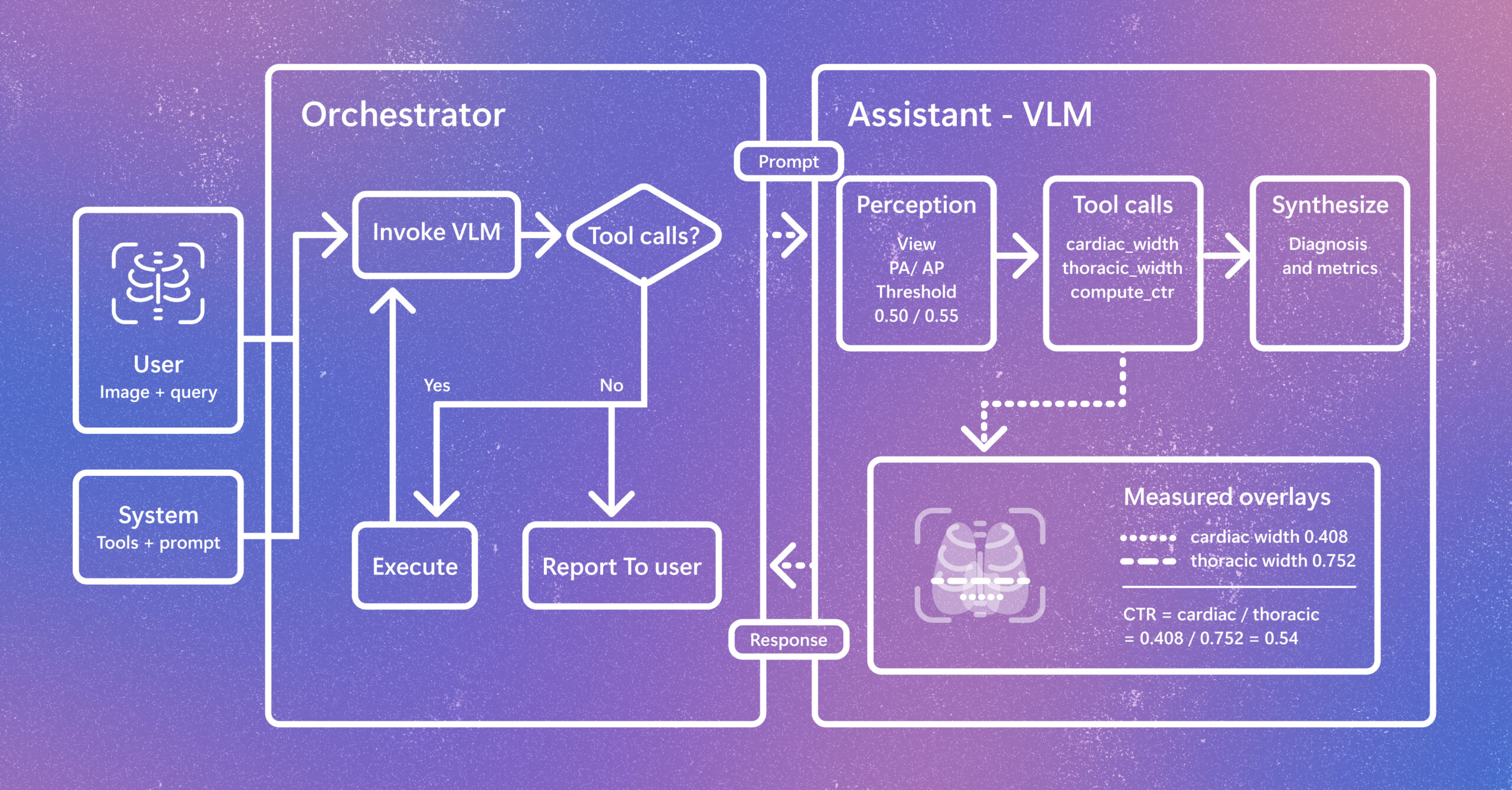
Radiology AI is evolving beyond report generation. CARE-X explores a unified approach that combines flexible reasoning, calibrated predictions, and measurement-based tools for chest X-ray interpretation. The post Introducing CARE-X: Towards Clinically Useful Radiology VLMs with Auxiliary Supervision, Reward-Aligned Learning, and Tool-Augmented Measurement appeared first on Microsoft Research.

We use cookies to run the site and, with your consent, for analytics and to show ads. See our Cookie Policy.