Skip to content

Bridging Generative and Discriminative Noisy-Label Learning via Direction-Agnostic EM Formulation.

Aug 2023 · IEEE Transactions on Pattern Analysis and Machine Intelligence · Vol PP · 2 citations · 85 references
Computer Science Medicine

TL;DR

This work proposes a single-stage, EM-style framework for generative noisy-label learning that is direction-agnostic and avoids explicit image synthesis, and introduces Partial-Label Supervision (PLS), an instance specific prior over clean labels that balances coverage and uncertainty, improving data-dependent regularization.

Abstract

Although noisy-label learning is often approached with discriminative methods for simplicity and speed, generative modeling offers a principled alternative by capturing the joint mechanism that produces features, clean labels, and corrupted observations. However, prior work typically (i) introduces extra latent variables and heavy image generators that bias training toward reconstruction, (ii) fixes a single data-generating direction (Y →X or X →Y), limiting adaptability, and (iii) assumes a uniform prior over clean labels, ignoring instance-level uncertainty. Here, we propose a single-stage, EM-style framework for generative noisy-label learning that is direction-agnostic and avoids explicit image synthesis. First, we derive a single Expectation Maximization (EM) objective whose E-step specializes to either causal orientation without changing the overall optimization objective. Second, we replace the intractable p(X | Y) with a dataset-normalized discriminative proxy computed using a discriminative classifier on the finite training set, retaining the structural benefits of generative modeling at much lower cost. Third, we introduce Partial-Label Supervision (PLS), an instance specific prior over clean labels that balances coverage and uncertainty, improving data-dependent regularization. Across standard vision and natural language processing (NLP) noisy label benchmarks, our method achieves state-of-the-art accuracy, lower transition-matrix estimation error, and substantially less training computation than current generative and discriminative baselines. Code: https://github.com/lfb-1/GNL.

View source

Similar papers

#computer vision Review Sep 2017

Agile Software Development Methods: Review and Analysis

This publication proposes a definition and a classification of agile software development approaches and analyses ten software development methods that can be characterized as being "agile" against the defined criterion.

P. Abrahamsson, O. Salo, Jussi Ronkainen et al. · 727 citations · ⚡54
#computer vision Jun 2008

The impact of agile practices on communication in software development

The study shows that agile practices improve both informal and formal communication, but indicates that, in larger development situations involving multiple external stakeholders, a mismatch of adequate communication mechanisms can sometimes even hinder the communication.

M. Pikkarainen, Jukka Haikara, O. Salo et al. · 401 citations · ⚡48
#machine learning Review Open access Oct 2014

Software development in startup companies: A systematic mapping study

The results indicate that software engineering work practices are chosen opportunistically, adapted and configured to provide value under the constrains imposed by the startup context.

Nicolò Paternoster, Carmine Giardino, M. Unterkalmsteiner et al. · 394 citations · ⚡54

Diffusion models as plug-and-play priors

The possibility of inferring high-dimensional data inference in a model that consists of a prior and an auxiliary differentiable constraint given some additional information is considered, thereby allowing a range of potential applications in adapting models to new domains and tasks.

Alexandros Graikos, Esmeralda S. Whitammer, N. Jojic et al. · 316 citations · ⚡15

Trajectory Balance: Improved Credit Assignment in GFlowNets

It is proved that any global minimizer of the trajectory balance objective can define a policy that samples exactly from the target distribution, and empirically demonstrate the benefits of the trajectories balance objective for GFlowNet convergence, diversity of generated samples, and robustness to long action sequenc...

Esmeralda S. Whitammer, Moksh Jain, Emmanuel Bengio et al. · 302 citations · ⚡60

Related blog posts

Microsoft Research Blog Aug 11, 2026

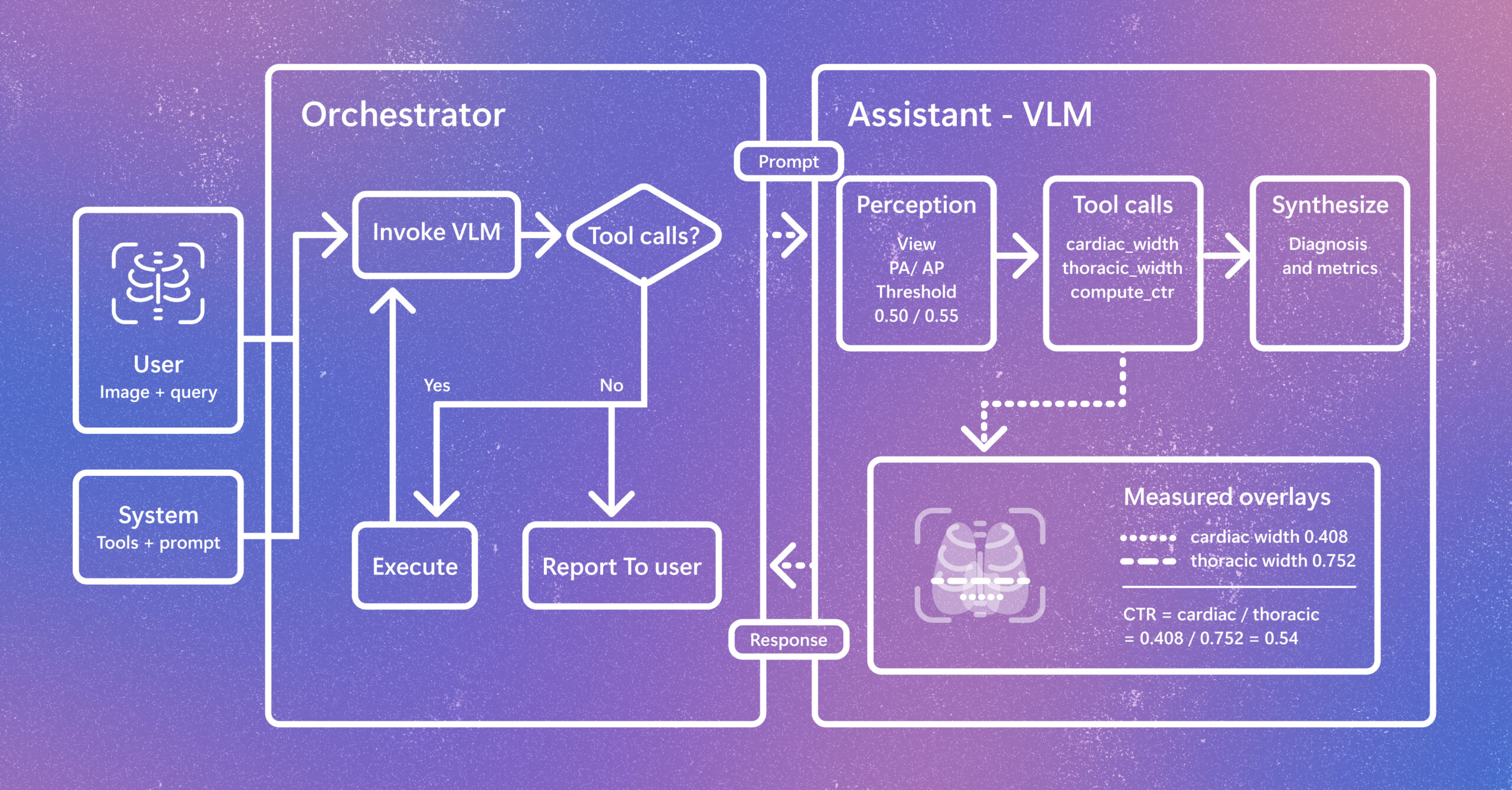
Introducing CARE-X: Towards Clinically Useful Radiology VLMs with Auxiliary Supervision, Reward-Aligned Learning, and Tool-Augmented Measurement

Radiology AI is evolving beyond report generation. CARE-X explores a unified approach that combines flexible reasoning, calibrated predictions, and measurement-based tools for chest X-ray interpretation. The post Introducing CARE-X: Towards Clinically Useful Radiology VLMs with Auxiliary Supervision, Reward-Aligned Learning, and Tool-Augmented Measurement appeared first on Microsoft Research.

Microsoft Research Blog Oct 6, 2026

What AI gets wrong and what failure teaches us

Jennifer Neville did not want to go into computer science—but that’s exactly where she landed. Neville discusses the starts and stops that led to her professional sweet spot and her work identifying “surprising failures” making it hard for AI to handle complexity.  The post What AI gets wrong and what failure teaches us appeared first on Microsoft Research.

We use cookies to run the site and, with your consent, for analytics and to show ads. See our Cookie Policy.