Skip to content

Less Data, Faster Convergence: Goal-Driven Data Optimization for Multimodal Instruction Tuning

Mar 2026 · arXiv.org · Vol abs/2603.12478 · 0 citations · 82 references
Computer Science

TL;DR

Goal-Driven Data Optimization (GDO) is presented, a framework that computes six sample descriptors for each candidate and constructs optimized 1$\times$ training subsets for different goals that enables faster convergence with fewer training samples under a fixed training protocol.

Abstract

Multimodal instruction tuning is often compute-inefficient because training budgets are spread across large mixed image-video pools whose utility is highly uneven. We present Goal-Driven Data Optimization (GDO), a framework that computes six sample descriptors for each candidate and constructs optimized 1$\times$ training subsets for different goals. Under a fixed one-epoch Qwen3-VL-8B-Instruct training and evaluation recipe on 8 H20 GPUs, GDO uses far fewer training samples than the Uni-10x baseline while converging faster and achieving higher accuracy. Relative to the fixed 512k-sample Uni-10x baseline, GDO reaches the Uni-10x reference after 35.4k samples on MVBench, 26.6k on VideoMME, 27.3k on MLVU, and 34.7k on LVBench, while improving Accuracy by +1.38, +1.67, +3.08, and +0.84 percentage points, respectively. The gains are largest on MVBench and MLVU, while LVBench improves more modestly, consistent with its ultra-long-video setting and the mismatch between that benchmark and the short-video/image-dominant training pool. Across MinLoss, Diverse, Temp, and Temp+, stronger temporal emphasis yields steadily better long-video understanding behavior. Overall, GDO provides a goal-driven data optimization framework that enables faster convergence with fewer training samples under a fixed training protocol. Code is available at https://github.com/rujiewu/GDO.

View source

Similar papers

#artificial intelligence Conference Open access Jun 2018

Gibson Env: Real-World Perception for Embodied Agents

This paper investigates developing real-world perception for active agents, proposes Gibson Environment for this purpose, and showcases a set of perceptual tasks learned therein.

F. Xia, Amir Zamir, Zhi-Yang He et al. · 1,069 citations · ⚡112
#computer vision Review Sep 2017

Agile Software Development Methods: Review and Analysis

This publication proposes a definition and a classification of agile software development approaches and analyses ten software development methods that can be characterized as being "agile" against the defined criterion.

P. Abrahamsson, O. Salo, Jussi Ronkainen et al. · 727 citations · ⚡54
#computer vision Jun 2008

The impact of agile practices on communication in software development

The study shows that agile practices improve both informal and formal communication, but indicates that, in larger development situations involving multiple external stakeholders, a mismatch of adequate communication mechanisms can sometimes even hinder the communication.

M. Pikkarainen, Jukka Haikara, O. Salo et al. · 401 citations · ⚡48
#machine learning Review Open access Oct 2014

Software development in startup companies: A systematic mapping study

The results indicate that software engineering work practices are chosen opportunistically, adapted and configured to provide value under the constrains imposed by the startup context.

Nicolò Paternoster, Carmine Giardino, M. Unterkalmsteiner et al. · 394 citations · ⚡54

Diffusion models as plug-and-play priors

The possibility of inferring high-dimensional data inference in a model that consists of a prior and an auxiliary differentiable constraint given some additional information is considered, thereby allowing a range of potential applications in adapting models to new domains and tasks.

Alexandros Graikos, Esmeralda S. Whitammer, N. Jojic et al. · 316 citations · ⚡15

Related blog posts

Microsoft Research Blog Aug 11, 2026

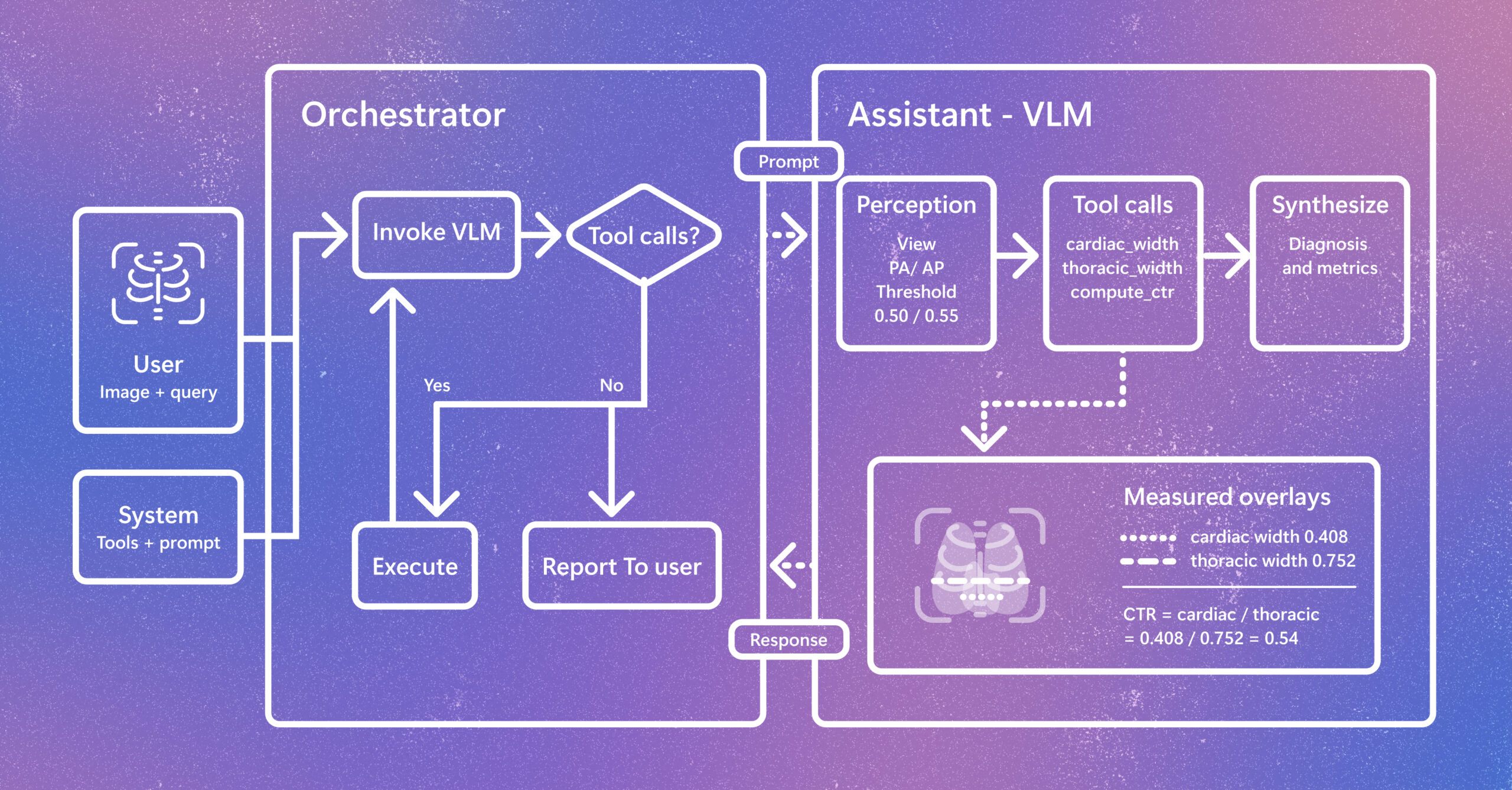
Introducing CARE-X: Towards Clinically Useful Radiology VLMs with Auxiliary Supervision, Reward-Aligned Learning, and Tool-Augmented Measurement

Radiology AI is evolving beyond report generation. CARE-X explores a unified approach that combines flexible reasoning, calibrated predictions, and measurement-based tools for chest X-ray interpretation. The post Introducing CARE-X: Towards Clinically Useful Radiology VLMs with Auxiliary Supervision, Reward-Aligned Learning, and Tool-Augmented Measurement appeared first on Microsoft Research.

MIT News · Artificial Intelligence Oct 23, 2026

Q&A: How AI came to model the “messy” human mind

Assistant Professor Benjamin Lindquist studies how engineers deliberately injected randomness into early AI, giving rise to deep-learning models that sometimes hallucinate.

We use cookies to run the site and, with your consent, for analytics and to show ads. See our Cookie Policy.