Skip to content

Answer Is Cheap, Show Me the Evidence! Augmenting Automated Vulnerability Assessment with Evidence

Aug 2026 · Proceedings of the ACM on software engineering. · 0 citations
Computer Science

Abstract

Software vulnerability (SV) assessment helps prioritize remediation by characterizing reported vulnerabilities. Existing automated methods predict assessment results from SV reports (SVRs), but often overlook information in rich text, such as screenshots and code snippets, as well as contextual information about vulnerable projects. They also focus on prediction accuracy without providing explanations or supporting evidence, limiting their practical use when analysts must validate imperfect predictions. We propose EAVA, a framework that uses large language models (LLMs) to assess SVs and provide supporting evidence. EAVA employs specialized LLM agents to process rich-text content and project information, and builds a dedicated assessment model through a two-stage training pipeline. It first uses supervised instruction tuning on automatically annotated reasoning trajectories to inject domain knowledge, and then applies reinforcement learning to improve intrinsic reasoning. EAVA also retrieves similar historical vulnerabilities as supplementary evidence. Experiments on a newly collected SVR dataset show that EAVA outperforms the strongest baseline by 5.3 to 35.2 percent across multiple metrics. Ablation studies confirm the effectiveness of assessment-specific model training and information enrichment. A user study with security experts further demonstrates that the evidence provided by EAVA is useful and practical for real-world SV assessment.
View source

Similar papers

#machine learning Review Open access Oct 2014

Software development in startup companies: A systematic mapping study

The results indicate that software engineering work practices are chosen opportunistically, adapted and configured to provide value under the constrains imposed by the startup context.

Nicolò Paternoster, Carmine Giardino, M. Unterkalmsteiner et al. · 394 citations · ⚡54
#machine learning Review Open access Jun 2014

Why Early-Stage Software Startups Fail: A Behavioral Framework

This state-of-practice investigation was performed using a literature review followed by a multiple-case study approach and presents how inconsistency between managerial strategies and execution can lead to failure by means of a behavioral framework.

Carmine Giardino, Xiaofeng Wang, P. Abrahamsson · 175 citations · ⚡19
#machine learning Review Open access Oct 2016

“Failures” to be celebrated: an analysis of major pivots of software startups

This study conducts a case survey study based on the secondary data of the major pivots happened in 49 software startups, and demonstrates that customer need pivot is the most common among all pivot types.

Sohaib Shahid Bajwa, Xiaofeng Wang, Anh Nguyen-Duc et al. · 127 citations · ⚡15
#machine learning Review Open access May 2016

Key Challenges in Software Startups Across Life Cycle Stages

It is found that what perceived as biggest challenges by software startups do vary across different life cycle stages, even though its significance decreases when the learning focuses of the startups move from problem to solution and their products mature.

Xiaofeng Wang, Henry Edison, Sohaib Shahid Bajwa et al. · 62 citations · ⚡6

Related blog posts

Microsoft Research Blog Sep 30, 2026

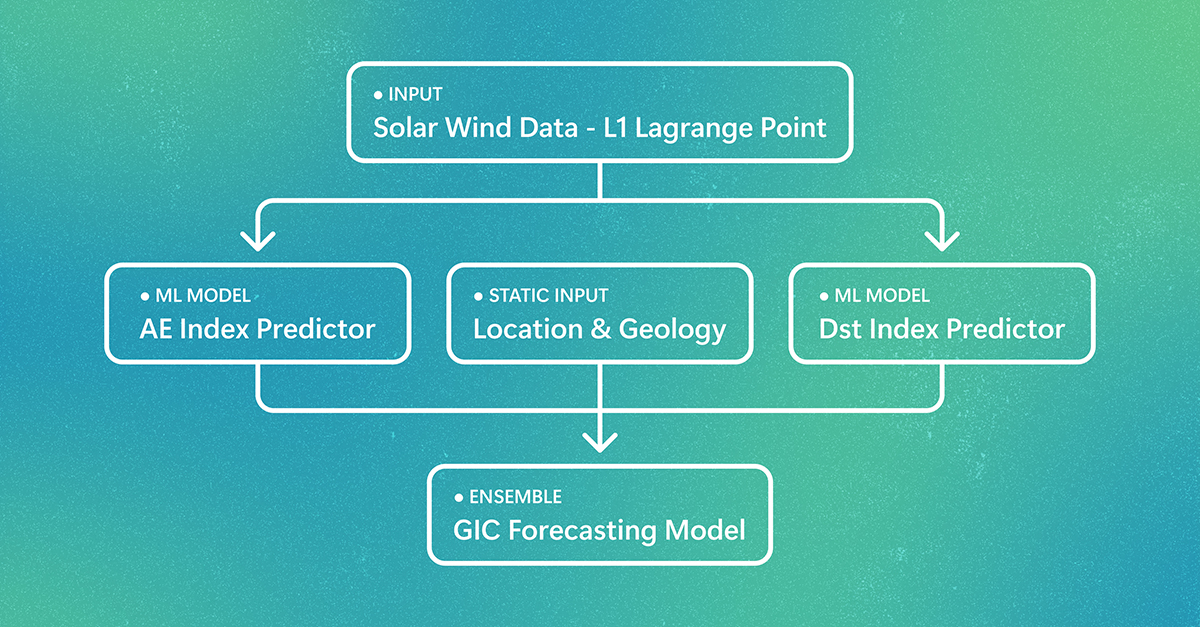
Forecasting space weather risks on power grids

Extreme space-weather events can damage power systems on Earth and degrade GPS accuracy and satellite operations. A new machine learning system can predict where damage is likely to occur 30-60 minutes before a storm arrives. The post Forecasting space weather risks on power grids appeared first on Microsoft Research.

We use cookies to run the site and, with your consent, for analytics and to show ads. See our Cookie Policy.