Skip to content

Everything Is a VisionBlock: Conversational Authoring over Git-Versioned Content for Spatial Computing

Aug 2026 · 0 citations · 21 references
Computer Science

TL;DR

The VisionBlock system is presented, which splits an application into an engine -- a generic binary with a fixed set of capabilities -- and themes: complete applications expressed as trees of VisionBlocks, units of declarative content the engine renders.

Abstract

Spatial applications compile their content into shipped binaries, so every change costs a build-and-redeploy cycle. We present the VisionBlock system, which splits an application into an engine -- a generic binary with a fixed set of capabilities (render panels, volumes, and immersive scenes; fetch data; run gestures) -- and themes: complete applications expressed as trees of VisionBlocks, units of declarative content the engine renders. Themes are data: creating, changing, or publishing one never touches the binary. Authoring is a chat -- each turn produces a VisionBlock's next version -- and versioning is plain git. The model is five-dimensional: dimensions 1-3 are space (panel, volume, room); dimension 4 is time (git history -- revert to roll back, branch to try variants); dimension 5 is the principal (the per-user domain: the same path resolves differently per person). The engine renders one point, (x, y, z, version, principal). One consequence follows per non-spatial axis: iteration collapses to chat turns and reverts; ownership and permission are properties of content; and together they make applications items -- grantable, forkable, sellable subtrees, an economy of apps inside one binary. A blockchain explorer, a document reader, an immersive showroom all run on the same engine; none requires a deploy to change. This paper presents the design; a production implementation is underway, and a subsequent version will report implementation and evaluation.

View source

Similar papers

Preprint Sep 2026

Composition, Not Conversation: VLMs Lose the Scene, Not the Thread

Vision-language models (VLMs) increasingly reason over visual evidence that is cropped, segmented, retrieved, or revealed over time. Yet most VQA benchmarks present the complete image and question at once. We ask what models lose when the same information is fragmented. We introduce Layered-VQA, with 93 scenes and 300...

L. D. M. S. Sai Teja, Ufaq Khan, N. G. Krishna et al. · 0 citations
#artificial intelligence Review Oct 2026

One Figure, Every Canvas: Editable Flowchart Relayout via Agentic Pipeline

Pipeline figures in ML papers must be repurposed across many canvases, including paper columns, 16:9 slides, portrait posters, 1:1 social teasers, 9:16 phone previews. Each format imposes a different aspect ratio on the same computational graph, where any silently broken connection misrepresents the method. We formulat...

Shih-Cheng Tseng, Chih-Hsuan Chen, Ryan Yang et al. · 0 citations
Preprint Oct 2026

vLLM-Omni Technical Report: A Unified Serving Runtime for Omni-Modality Generation

Interaction with intelligent systems is expanding beyond text-centric chatbots and coding agents. Speech-native assistants, visual generation and editing, world-model environments, and robot action loops require models that emit text, audio, images, video, and actions. These models differ in execution pattern: multi-st...

vLLM-Omni Team · 0 citations
#artificial intelligence Review Sep 2026

PACE: Precise AI Cinematic Expression

PACE (Precise AI Cinematic Expression), a typed representation for the plan: the screenplay evidence, the characters, props and locations it needs, where each subject stands, and what the camera does.

Bing Duan, Qiang Guo, Lin-Pu Li et al. · 0 citations
Preprint Aug 2026

Can We Read the Mind of an Audio LLM? A Verbalizable, Multilingual Middle-Layer Workspace

Reading a base Qwen3-Omni with a logit lens at the audio-token positions, it is found that the answer to a spoken question becomes legible - in words - in the model's middle layers, before it emits any token.

Jia-Jun Fan, Jing-Yuan Li, Prashanth Gurunath Shivakumar et al. · 0 citations
Preprint Aug 2026

BIMScript: Material-Aware Structured Scene Programs for BIM Ingestion

BIMScript validates direct ingestion into a BIM authoring tool end to end with a working add-in and its IFC4 export, and the same program's language form is designed to support LLM-driven, sustainability-aware reasoning over the built asset.

P. Naikade, Thomas B. Moeslund, A. Møgelmose · 0 citations

Related blog posts

MIT News · Artificial Intelligence Oct 7, 2026

Discovering the value of humanistic inquiry

Students in MIT’s Concourse program delve deeply into the human condition, debate challenging questions, and learn to develop judgment about issues that can’t be quantified.

Microsoft Research Blog Oct 6, 2026

What AI gets wrong and what failure teaches us

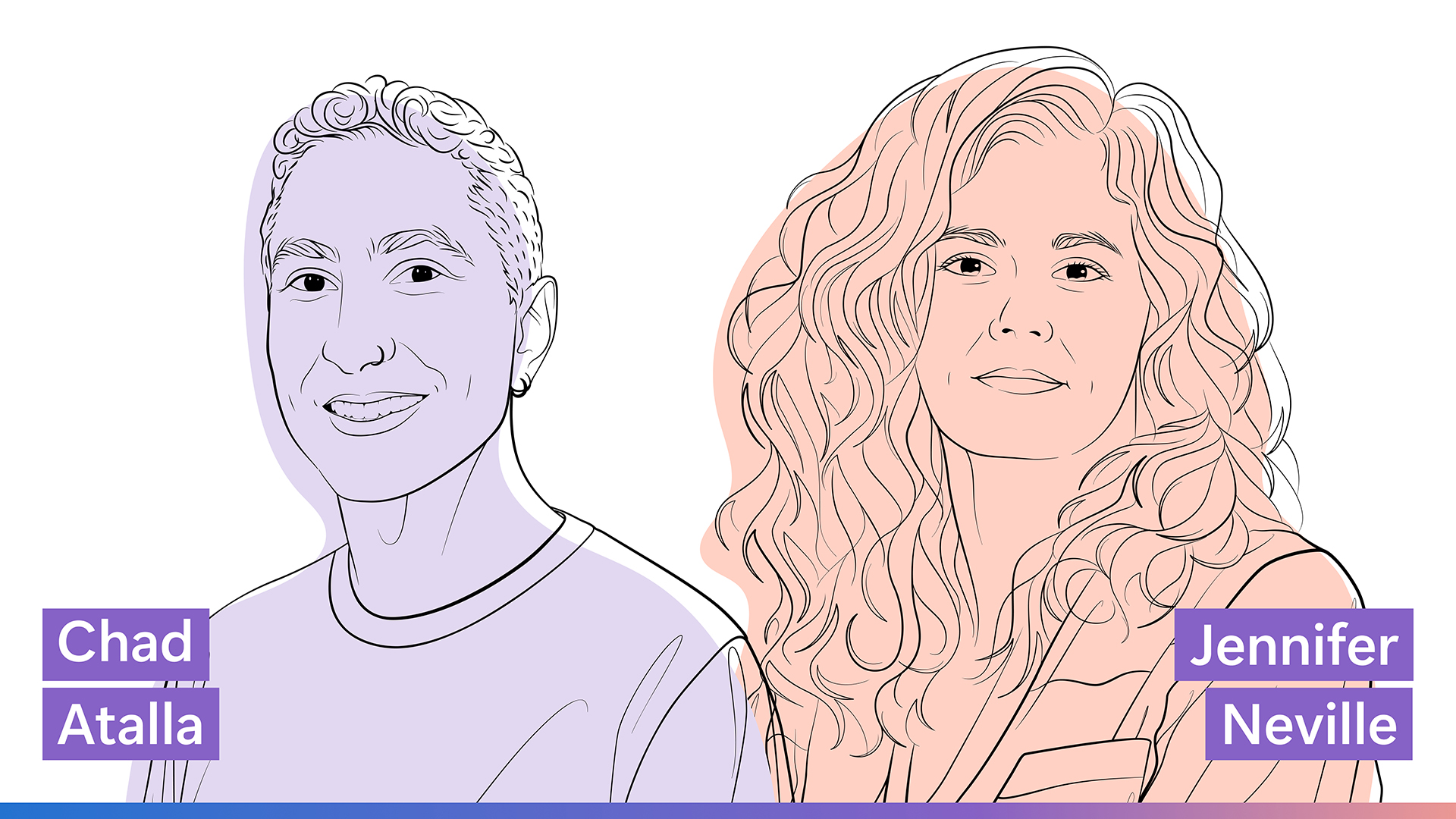
Jennifer Neville did not want to go into computer science—but that’s exactly where she landed. Neville discusses the starts and stops that led to her professional sweet spot and her work identifying “surprising failures” making it hard for AI to handle complexity.  The post What AI gets wrong and what failure teaches us appeared first on Microsoft Research.

MIT News · Artificial Intelligence Sep 30, 2026

This game-playing AI is the new champ at Stratego

Able to defeat top-ranked human players and more efficient than other models, the new system could help decision-makers in military maneuvers or business negotiations.

We use cookies to run the site and, with your consent, for analytics and to show ads. See our Cookie Policy.