Skip to content

Agentic Workflow for Automated Systematic Literature Review: A Case Study on Generative AI Applications in the Oil and Gas Industry

Sep 2026 · GOTECH · 0 citations · 9 references

Abstract

The rapid expansion of generative AI across the oil and gas applications has created an urgent need for structured review on emerging research trends. However, traditional systematic literature reviews (SLRs) are time-consuming and difficult to scale as the volume of AI publications grows every day. This paper proposes a novel agentic, multi-agent workflow that automates the SLR process and evaluates the maturity of generative AI applications in the upstream sector, while enabling the review to be continuously updated with newer publications. The methodology begins with defining domain-specific research questions and performing a targeted keyword search. A set of inclusion/exclusion criteria is implemented within a Python-built agentic pipeline. The system uses ReAct-based reasoning agents, content-routing for task specialization, and an orchestrator-worker architecture that coordinates paper screening, abstract interpretation, and classification. Validation gates and an evaluator-optimizer loop ensure consistency, minimize hallucination, and maintain reproducibility. The workflow follows a hybrid human-in-the-loop design, where screening and interpretation are automated by the agentic system, while technical rigor and domain relevance are validated and reviewed manually. The workflow processed 200+ initial records, automatically shortlisted papers relevant to the upstream industry, and categorized them into methodological clusters including Transformers, Large Language Models (LLMs), Retrieval-Augmented Generation (RAG), AI Agents, Variational Autoencoders, Diffusion Models, and Hybrid Architectures. Comparative analysis revealed that generative AI is most mature in knowledge retrieval and operations advisory, while applications in reservoir management and well-construction planning remain in early development. The automated pipeline reduced manual efforts, demonstrating significant efficiency gains over traditional review methods. Beyond improving efficiency, the framework establishes a scalable and continuously updatable foundation for monitoring the rapid evolution of generative AI research in the oil and gas industry. The results also highlighted the need for careful data governance, model traceability, and responsible deployment practices to ensure reliable adoption. This paper implemented an agentic AI workflow for conducting a systematic literature review of generative AI applications in the oil and gas industry. The results demonstrated that multi-agent systems can significantly accelerate the review process and provide a scalable, continuously updatable foundation for future research assessments in digital oilfield innovation.

View source

Similar papers

#computer vision Open access Jun 2016

Software Development in Startup Companies: The Greenfield Startup Model

The results are packaged in the Greenfield Startup Model (GSM), which explains the priority of startups to release the product as quickly as possible, and the need to shorten time-to-market, by speeding up the development through low-precision engineering activities.

Carmine Giardino, Nicolò Paternoster, M. Unterkalmsteiner et al. · 178 citations · ⚡14
#computer vision Open access Oct 2016

Software Startups - A Research Agenda

Software startup companies develop innovative, software-intensive products within limited timeframes and with few resources, searching for sustainable and scalable business models.

M. Unterkalmsteiner, P. Abrahamsson, Xiaofeng Wang et al. · 157 citations · ⚡17
#machine learning Review Open access Oct 2016

“Failures” to be celebrated: an analysis of major pivots of software startups

This study conducts a case survey study based on the secondary data of the major pivots happened in 49 software startups, and demonstrates that customer need pivot is the most common among all pivot types.

Sohaib Shahid Bajwa, Xiaofeng Wang, Anh Nguyen-Duc et al. · 127 citations · ⚡15
#computer vision Review Open access May 2015

A survey study on major technical barriers affecting the decision to adopt cloud services

The comparison of adopter and non-adopter sample reveals three potential adoption inhibitor, security, data privacy, and portability, which underlines the importance of the technical and security perspectives for research investigating the adoption of technology.

Nattakarn Phaphoom, Xiaofeng Wang, S. Samuel et al. · 111 citations · ⚡8
#computer vision Conference Open access Dec 2013

Affordable and Energy-Efficient Cloud Computing Clusters: The Bolzano Raspberry Pi Cloud Cluster Experiment

The ongoing work building a Raspberry Pi cluster consisting of 300 nodes is presented, with potential use cases being an inexpensive and green test bed for cloud computing research and a robust and mobile data center for operating in adverse environments.

P. Abrahamsson, S. Helmer, Nattakarn Phaphoom et al. · 110 citations · ⚡7
#computer vision Review Open access May 2017

Are Software Startups Applying Agile Practices? The State of the Practice from a Large Survey

The findings show that speed related agile practices are used to a greater extent in comparison to quality practices, and that software startups who adopt the Lean Startup approach do not sacrifice quality for speed more than other startups do.

Jevgenija Pantiuchina, Marco Mondini, Dron Khanna et al. · 84 citations · ⚡4

Related blog posts

MIT News · Artificial Intelligence Sep 30, 2026

This game-playing AI is the new champ at Stratego

Able to defeat top-ranked human players and more efficient than other models, the new system could help decision-makers in military maneuvers or business negotiations.

Microsoft Research Blog Sep 29, 2026

Introducing Quine: An AI research system designed for the complexity of biology

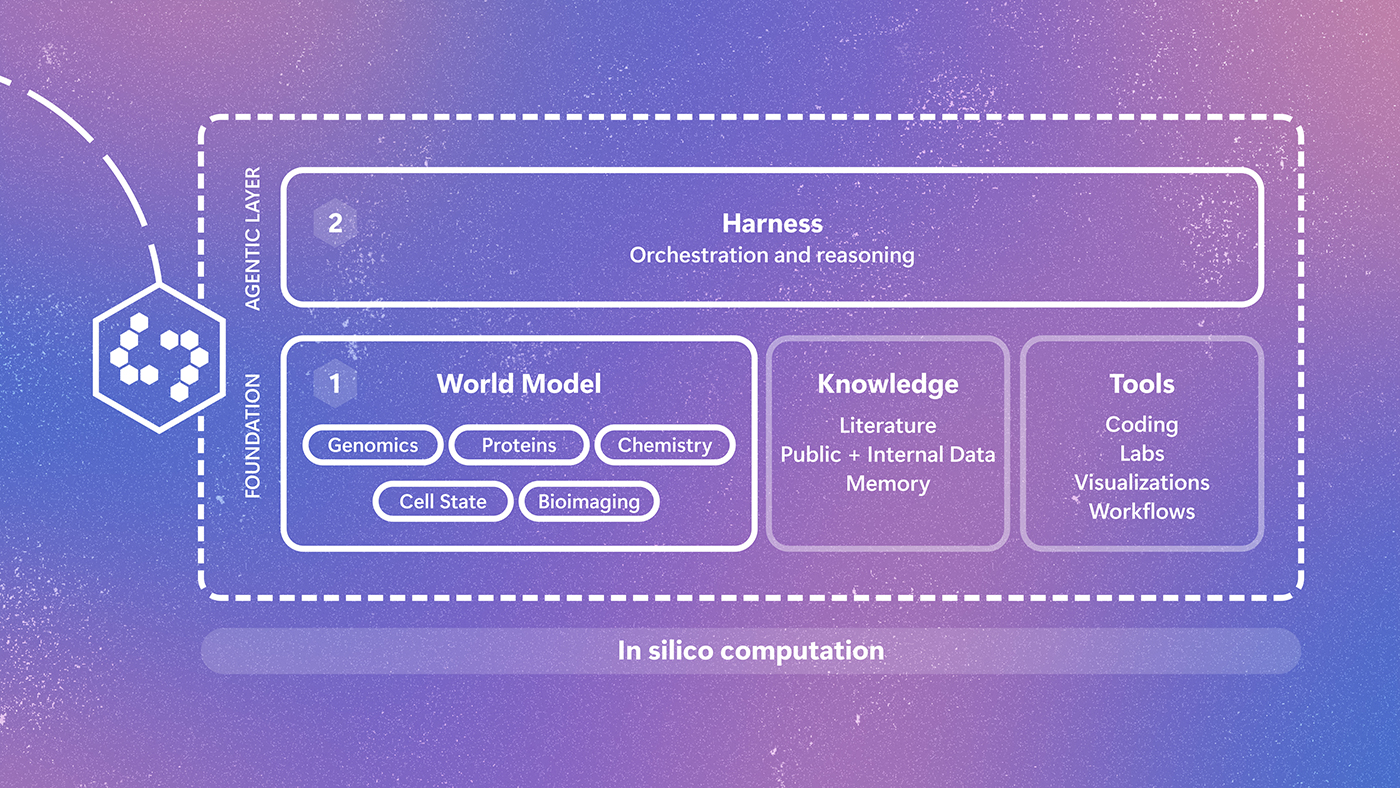
Biology doesn't operate in silos, and neither should the AI representation of it. Quine is an early-stage research effort to create a multimodal world model of biology. By connecting insights across biological scales and modalities, Quine helps scientists computationally search a space far larger than intuition allows and prioritize hypotheses before they reach the lab. Experimental results provide important feedback, helping researchers sharpen future research directions. The post Introducing Q…

We use cookies to run the site and, with your consent, for analytics and to show ads. See our Cookie Policy.