Hybrid Convolutional Neural Network–Bidirectional Gated Recurrent Unit with Dual Attention and Reinforcement Learning for Rolling Element Bearing Fault Diagnosis
Sep 2026· Zenodo (CERN European Organization for Nuclear Research)
Machine Fault Diagnosis Techniques
Abstract
The diagnosis of rolling element bearing faults is of most importance for the reliable and safe operation of rotating machinery. An adaptive selection of fault features based on a hybrid convolutional neural network (CNN)-bidirectional gated recurrent unit (BiGRU) framework with dual attention and reinforcement learning (RL) is investigated. First, the CNN learns the local vibration features from raw one-dimensional signals. Second, the BiGRU learns the bidirectional temporal dependencies from the learned features. Then, the channel attention and temporal attention further refine the learned features to be more informative feature channels and diagnostically significant temporal states. Finally, an RL-based probabilistic masking policy adaptively suppresses redundant latent features through sparse feature selection. Therefore, the proposed framework combines adaptive latent-feature sparsification, bidirectional temporal modeling, dual-level attention refinement and local feature extraction in a unified end-to-end architecture. In the experimental study on a laboratory vibration dataset with five bearing conditions, the proposed framework achieved 99.31% accuracy under the primary evaluation protocol. As a separate and more reliable assessment of generalization across independent original recordings, a five-fold source-level cross-validation procedure was performed, with a mean test accuracy of 90.38% ± 6.27%.The generalization ability of the proposed approach was also validated by the accuracy of 99.57% obtained in the cross data validation using the benchmark dataset of Case Western Reserve University (CWRU). The results demonstrate the diagnostic capability of the proposed framework while maintaining practical computational characteristics and incorporating adaptive feature selection.
The results indicate that software engineering work practices are chosen opportunistically, adapted and configured to provide value under the constrains imposed by the startup context.
Nicolò Paternoster, Carmine Giardino, M. Unterkalmsteiner et al.· Information and Software Tec...· 394 citations· ⚡54
This state-of-practice investigation was performed using a literature review followed by a multiple-case study approach and presents how inconsistency between managerial strategies and execution can lead to failure by means of a behavioral framework.
Carmine Giardino, Xiaofeng Wang, P. Abrahamsson· International Conference on...· 175 citations· ⚡19
This study conducts a case survey study based on the secondary data of the major pivots happened in 49 software startups, and demonstrates that customer need pivot is the most common among all pivot types.
Sohaib Shahid Bajwa, Xiaofeng Wang, Anh Nguyen-Duc et al.· Empirical Software Engineeri...· 127 citations· ⚡15
It is found that roles of MVPs in startups were not fully aware by entrepreneurs, and entrepreneurs should consider a systematic approach to fully explore the value of MVP, as a multiple facet product (MFP).
Anh Nguyen-Duc, P. Abrahamsson· International Conference on...· 93 citations· ⚡9
It is found that what perceived as biggest challenges by software startups do vary across different life cycle stages, even though its significance decreases when the learning focuses of the startups move from problem to solution and their products mature.
Xiaofeng Wang, Henry Edison, Sohaib Shahid Bajwa et al.· International Conference on...· 62 citations· ⚡6
A comprehensive overview of how enhanced sampling methods are reshaping the field, with a particular focus on the data-driven construction of collective variables, is provided.
Kai Zhu, Enrico Trizio, Jintu Zhang et al.· Chemical Reviews· 58 citations
Related blog posts
MIT News · Artificial Intelligence· news.mit.eduOct 27, 2026
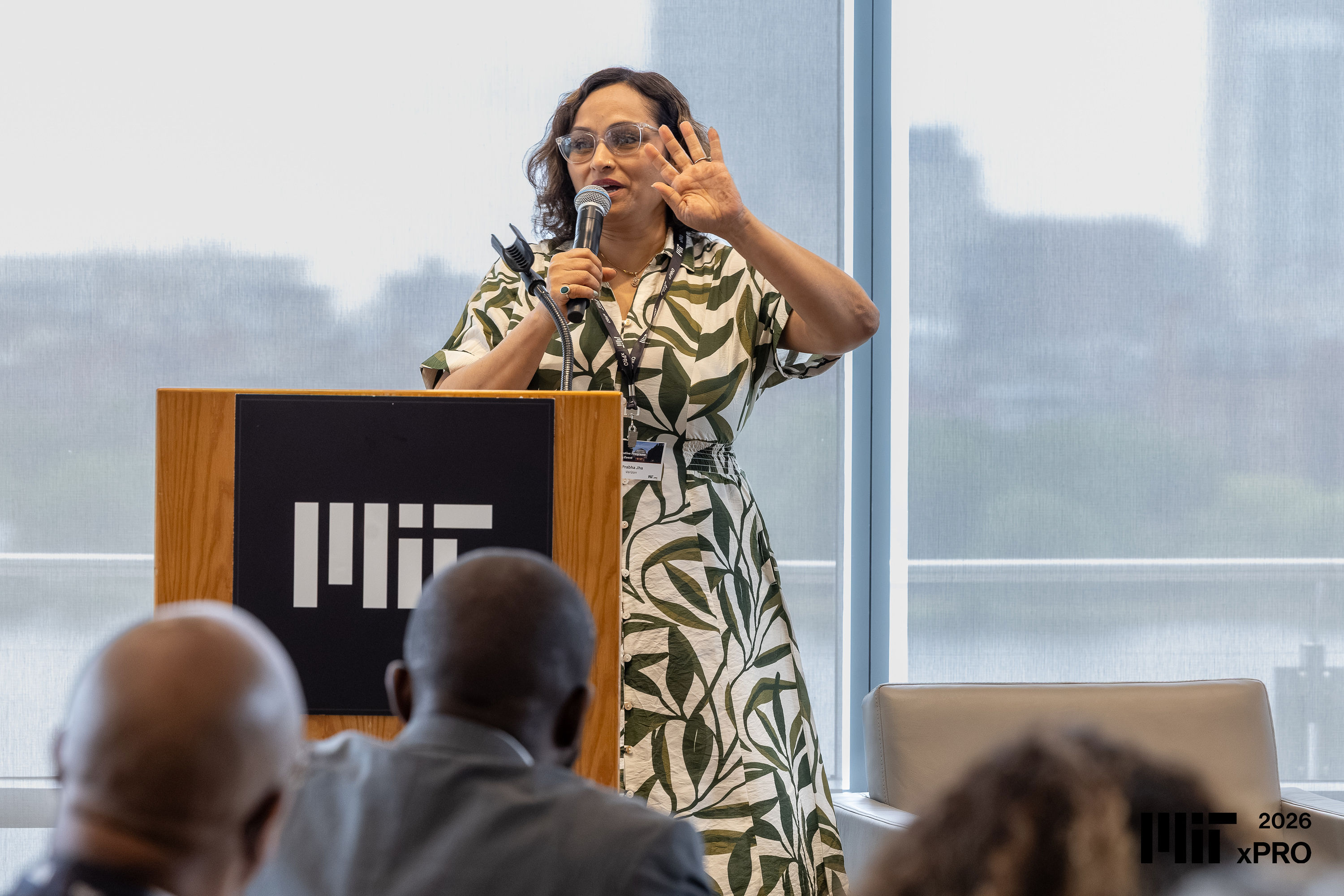
Prabha Jha used her experience with MIT Open Learning’s program for senior executives to develop AI solutions for her employer, Verizon, and to write a book.
Assistant Professor Benjamin Lindquist studies how engineers deliberately injected randomness into early AI, giving rise to deep-learning models that sometimes hallucinate.

