A stochastic few-step generator whose FID does not degrade as the sampling budget grows from 4 to 50 NFE, and the same recipe transfers to text-to-image generation.
Abstract
Distributional Diffusion Models (DDMs) replace the standard mean-prediction denoiser with a \emph{distributional} denoiser trained via a scoring rule objective, learning a stochastic approximation to $p(x_1 \mid x_t)$ rather than its conditional mean. However, scaling DDMs to modern image-generation settings faces two obstacles: (i) multi-particle training incurs overhead that scales with the number of particles, (ii) DDMs use globally fixed scoring rule hyperparameters, forcing a single trade-off across sampling budgets. We mitigate these limitations by deferring particle expansion to late transformer layers, and the hyperparameter trade-off by introducing time-dependent scoring rule schedules informed by the dynamical regimes of~\citet{Biroli2024}. Combined with a DiT-based latent setup, these changes make DDM training practical on class-conditional ImageNet-$256^2$, achieving 4.48 FID at 4 steps and 2.38 at 50 steps with DiT-XL/2, from a single model trained from scratch in one stage, without a teacher, self-distillation or JVPs. The result is a stochastic few-step generator whose FID does not degrade as the sampling budget grows from 4 to 50 NFE, and the same recipe transfers to text-to-image generation. Code and pre-trained models available at https://github.com/CompVis/iDDM.

Simplex Diffusion Models (SDMs) are proposed, a framework that lifts the diffusion process to the probability simplex to represent beliefs over categories and can carry uncertainty across denoising steps, which mitigates information collapse.
Justin Deschenaux, Alexandre Galashov, Andrew Campbell et al.· arXiv.org· 2 citations
FluxLite is introduced, a lightweight, training-free proposal-control framework for discrete diffusion, identifying a tilted-path coverage factor that governs robustness to score error, together with finite-particle convergence for a fixed controlled Feynman-Kac recursion.
Yinuo Ren, Haoxuan Chen, Grant M. Rotskoff et al.· arXiv.org· 1 citation
IDRF, a framework for reward fine-tuning of few-step masked discrete diffusion generators, view few-step generation as a finite-horizon Markov decision process and optimize reward with a clipped policy-gradient objective over the student's trajectories.
V. Gromadskii, David Li, Samson Gourevitch et al.· 1 citation
This work rethink the ELBO under the Location-Scale Noise Model and finds that it naturally induces a Gaussian negative log likelihood objective for the estimators and inherently defines a joint training objective that unifies recent diffusion paradigms for probabilistic forecasting.
Wei-Wei Ye, Dong-Yuan Li, Hang-Chen Liu et al.· 0 citations
The approach aligns the score-training objective with the sampling grid, allowing statistical estimation and numerical discretization errors to be analyzed together, and establishes finite-sample guarantees for conditional diffusion models learned from data and implemented with finitely many denoising steps.
Overparameterization remains beneficial when paired with regularization: in the random-features theory and in U-Net experiments, optimally regularized large models---via a ridge penalty or early stopping, respectively---outperform any unregularized models.
Raphaël Urfin, Tony Bonnaire, Giulio Biroli et al.· arXiv.org· 0 citations
Related blog posts
MIT News · Artificial Intelligence· news.mit.eduOct 28, 2026
Professor Paris Smaragdis develops computers with superhuman hearing for applications like speech recognition, music understanding, and environmental monitoring.
Exploring how generative AI could make machine vision more accessible to businesses. The post GenEye in a Box: Making Machine Vision Something You Can Just Ask For appeared first on GPT-Lab.
Microsoft Research Blog· microsoft.comAug 11, 2026
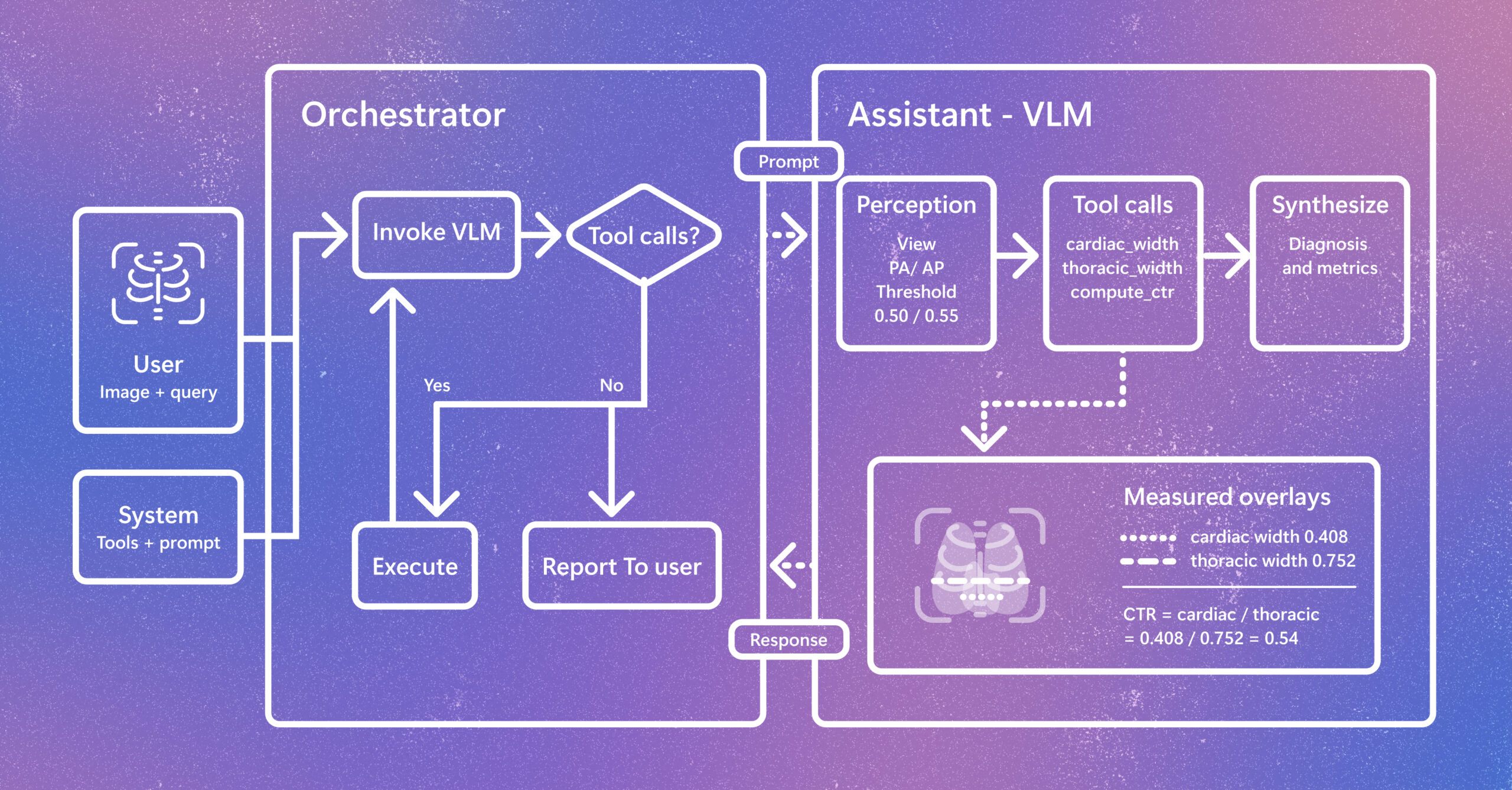
Radiology AI is evolving beyond report generation. CARE-X explores a unified approach that combines flexible reasoning, calibrated predictions, and measurement-based tools for chest X-ray interpretation. The post Introducing CARE-X: Towards Clinically Useful Radiology VLMs with Auxiliary Supervision, Reward-Aligned Learning, and Tool-Augmented Measurement appeared first on Microsoft Research.