Skip to content

Principled MAP estimation for inverse problems: bridging the gap between convergence and performance

Sep 2026 · 0 citations · 42 references
Computer Science

TL;DR

This paper designs an algorithm that combines denoisers at decreasing noise levels with a schedule tailored to ensure convergence, and proves that it surpasses convergent methods while competing with state-of-the-art empirical ones.

Abstract

Pretrained denoisers provide a powerful way to incorporate image priors into restoration algorithms. Plug-and-Play and RED approaches exploit fixed-noise-level denoisers within first-order optimization schemes, with convergence guarantees, but often struggle to achieve high-quality reconstruction on severely ill-posed inverse problems. In contrast, recent state-of-the-art approaches leverage denoisers derived from flow- or diffusion-based generative models and evaluate them along a sequence of decreasing noise levels. While these methods achieve strong empirical performance, their convergence theory remains limited. In this paper, we bridge this gap by specifically designing an algorithm that combines denoisers at decreasing noise levels with a schedule tailored to ensure convergence. From a Bayesian perspective, we prove that our method converges to a $\textit{Maximum a Posteriori}$ (MAP) estimate, under suitable assumptions. Subsequently, we apply our method to various ill-posed inverse problems and show that it surpasses convergent methods while competing with state-of-the-art empirical ones.

View source

Similar papers

#machine learning Preprint Sep 2026

Convergent Plug-and-Play Image Restoration with Annealed Noise Levels

This work establishes convergence guarantees for a broad family of Plug-and-Play algorithms with annealed noise level, spanning deterministic methods (RED and PnP--PGD) and stochastic methods (SNORE, equivariant RED, and a variant of PnP--Flow) and proves asymptotic stationarity of the iterates with respect to this obj...

Samuel Hurault · 0 citations
2026

Dual-Domain-Based Plug-and-Play Image Restoration

Plug-and-play (PnP) methods, which embed powerful image denoisers into classical optimization algorithms, have achieved remarkable performance on a variety of imaging inverse problems. However, most existing PnP frameworks impose regularization only in the spatial domain. In many practical settings, measurement noise i...

Wen-Jian Du, Jia Li · 0 citations
#machine learning Preprint Sep 2026

CLIMB-flow: Coupled Linear Inverse posterior sampling via Multiscale-Based flow

Diffusion models are now widely used in Bayesian inverse problems in imaging as priors, where latent diffusion models are often used for larger scale problems to keep the computational complexity and model-size manageable. Unfortunately, the auto-encoder based compression results in loss of spatial detail. In addition,...

Ze-Qiu Yu, Rui Yuan, Mathews Jacob · 0 citations
Preprint Sep 2026

Mixed-Noise Plug-and-Play with Infimal Convolution Fidelities and Multiple Priors

Plug-and-Play (PnP) algorithms are a class of iterative methods for inverse imaging. Within an optimization algorithm, they combine a flexible fidelity term, encoding the forward operator, and a pretrained image denoiser, in order to deal with more severe corruptions such as blurring or downsampling when reconstructing...

Zi-Qi Qin, Hong-Wei Tan, A. Biguri et al. · 0 citations
#machine learning Preprint Oct 2026

Backward-Consistent Diffusion Sampling for Sparsely Observed PDE Inverse Problems

Recovering Partial Differential Equation (PDE) coefficient fields from extremely sparse observations is a severely ill-posed inverse problem for which generative machine learning methods (e.g., diffusion models) have become a leading way to encode the prior. Recent state-of-the-art diffusion solvers lift these priors t...

Yi Pan, Muhammad H. Ashiq, Chan-Yong Jung et al. · 0 citations
Preprint Sep 2026

Plug-and-Play Methods Provably Converge Even with Improperly Trained Denoisers: Convergence by Architectural Design

Plug-and-Play (PnP) methods replace proximal operators with learned denoisers, which produce state-of-the-art reconstruction quality, but sacrifice the variational interpretation and convergence guarantees of proximal methods. Learned Proximal Networks (LPNs) address this problem by designing the denoiser architecture...

H. Pritchard, Rahul Parhi · 0 citations

Related blog posts

Microsoft Research Blog Aug 11, 2026

Introducing CARE-X: Towards Clinically Useful Radiology VLMs with Auxiliary Supervision, Reward-Aligned Learning, and Tool-Augmented Measurement

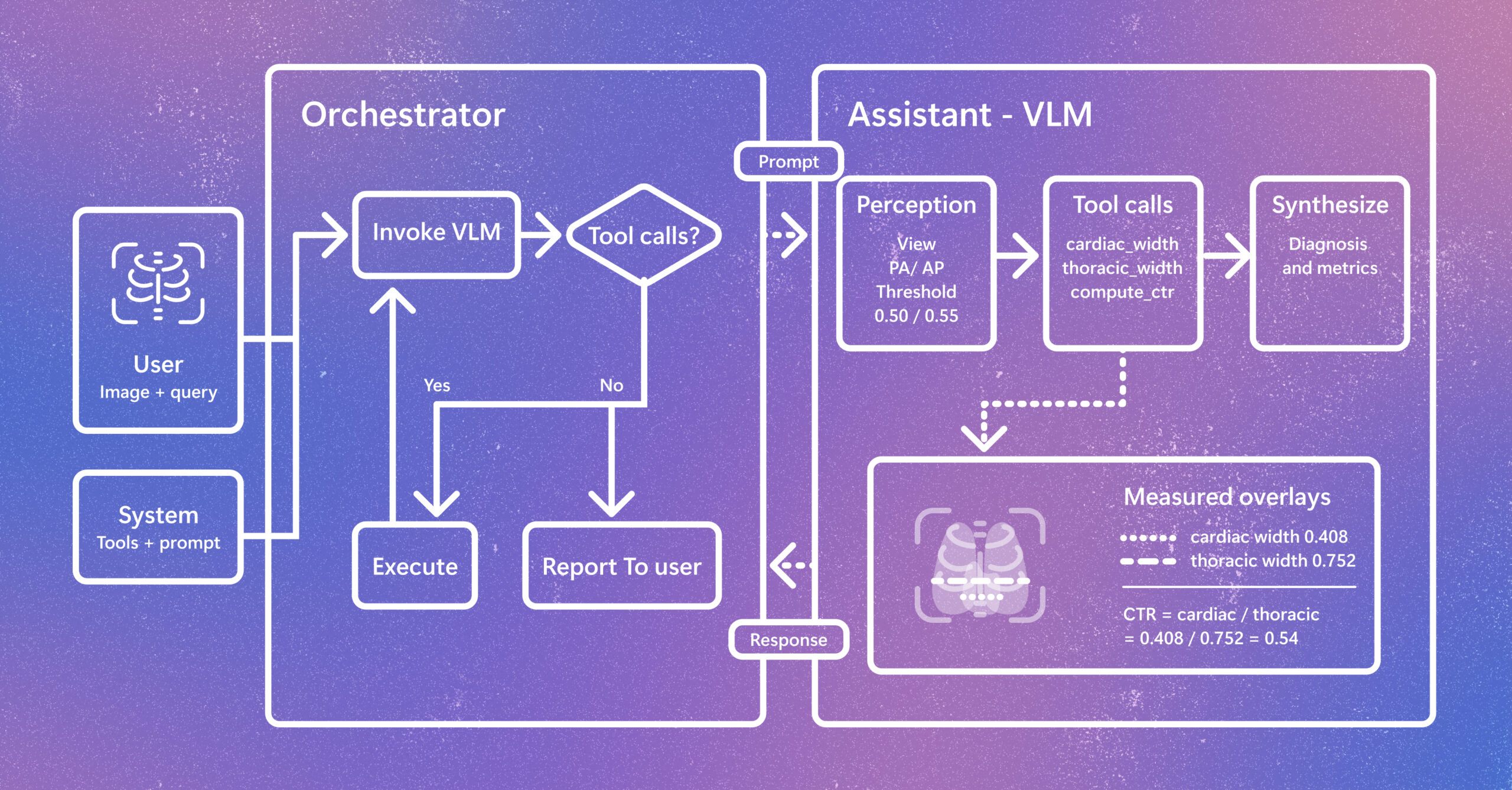
Radiology AI is evolving beyond report generation. CARE-X explores a unified approach that combines flexible reasoning, calibrated predictions, and measurement-based tools for chest X-ray interpretation. The post Introducing CARE-X: Towards Clinically Useful Radiology VLMs with Auxiliary Supervision, Reward-Aligned Learning, and Tool-Augmented Measurement appeared first on Microsoft Research.

MIT News · Artificial Intelligence Oct 23, 2026

Q&A: How AI came to model the “messy” human mind

Assistant Professor Benjamin Lindquist studies how engineers deliberately injected randomness into early AI, giving rise to deep-learning models that sometimes hallucinate.

We use cookies to run the site and, with your consent, for analytics and to show ads. See our Cookie Policy.