Vision-language-action (VLA) models generalize broadly across robotic manipulation tasks, but complex environments require balancing task success with unintended contact. Runtime shields can correct individual actions, but they leave the underlying policy unchanged, so repeated disagreements may create a persistent policy-shield mismatch that blocks task progress. To address this challenge, we introduce FailBank, a four-stage self-evolving framework that converts runtime feedback into persistent policy improvement. During collection, a fixed CBF-based safety module serves as an observe-only teacher, producing counterfactual corrections while the policy remains in control. Outcome-aware admission then converts useful proposals into corrective targets and retains successful uncorrected actions as quiet anchors for guarded LoRA updates. We evaluate FailBank on the VLA-Arena benchmark across two difficulty levels and two VLA backbones. Compared with the base policies, FailBank improves the joint success-cost operating point. Across the two backbones, FailBank improves task success rate by 8.5 and 6.9 percentage points, while reducing policy-induced cumulative cost by 35.6\% and 23.8\%, respectively. Compared with runtime shielding, FailBank raises task success rate by 25.4 and 9.5 percentage points, while maintaining comparable policy-induced cumulative cost. These results show that runtime feedback can serve as persistent policy supervision rather than only as a temporary action constraint.

GAOKAO-Bench is introduced, an intuitive benchmark that employs questions from the Chinese GAOKAO examination as test samples, including both subjective and objective questions that contribute a robust evaluation benchmark for future large language models and offers valuable insights into the advantages and limitations...
Xiaotian Zhang, Chun-yan Li, Yi Zong et al.· arXiv.org· 216 citations· ⚡17
An algorithm is proposed which leverages disentangled semantic factors to generate adversarial perturbation by altering controlled semantic attributes to fool the learner towards various "adversarial" targets.
Haonan Qiu, Chaowei Xiao, Lei Yang et al.· arXiv.org· 208 citations· ⚡17
This work proposes a HALO that directly maximizes the utility of generations instead of maximizing the log-likelihood of preferences, and suggests that the best loss depends on the inductive biases most appropriate for a given setting, an oft-overlooked consideration.
This work investigates the possibilities of using LLMs in a resume screening setting via a document retrieval framework that simulates job candidate selection and finds that the MTEs are biased, significantly favoring White-associated names in 85% of cases and female-associated names in only 11.1% of cases.
This work shows that orders of magnitude enhancement in performance could be obtained by a combination of hardware improvements and tight quantum-HPC integration and introduces high-performance architectures for quantum-probabilistic computing with custom-designed accelerators to tackle today's industry-scale classical...
Masoud Mohseni, Artur Scherer, K. Johnson et al.· arXiv.org· 121 citations· ⚡9
This paper presents a comprehensive overview of the Ultralytics YOLO family, emphasizing architectural evolution, benchmarking, deployment, and emerging directions from YOLOv5 through YOLO27, and examines detection, segmentation, depth, classification, pose, oriented detection, tracking, export, quantization, and deplo...
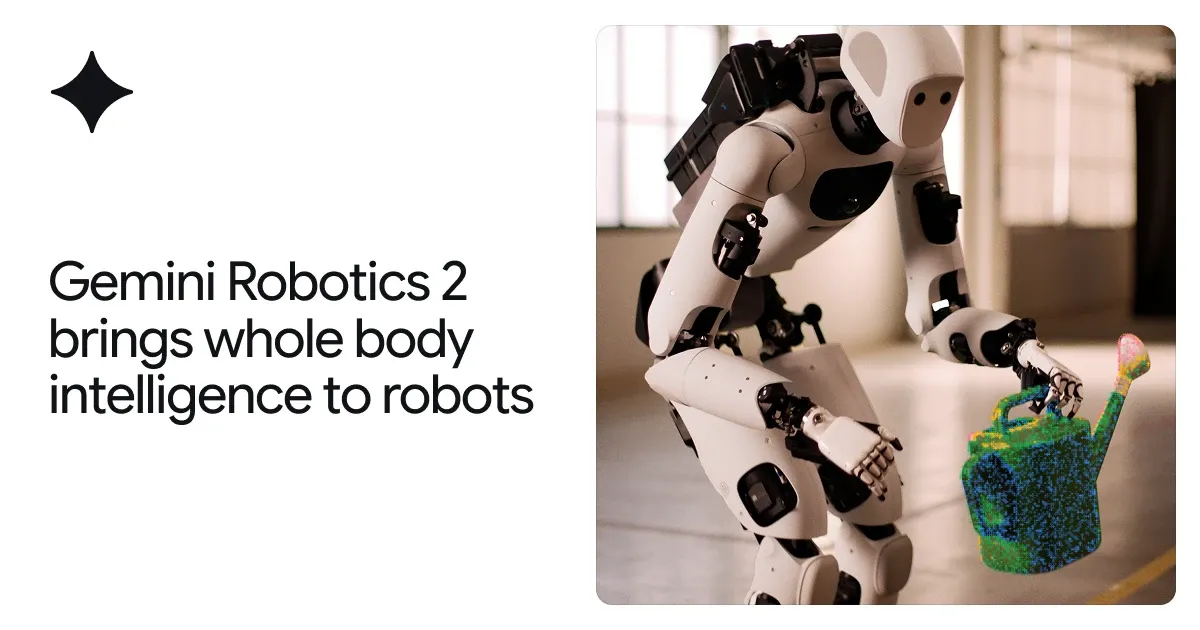
From feet to fingertips — we are teaching robots intelligent whole-body control, fine dexterity, and teamwork to complete a broad range of complex tasks.