Reasoning-enabled VLA policies expose chain-of-thought (CoT) traces that appear to explain and guide their actions, creating a potential interface for runtime safety through reasoning monitoring and correction. In this work, we define and operationalize two evaluation axes for assessing when this interface can improve embodied behavior: correctability, which measures whether unreliable reasoning can be detected and improved during generation, and actionability, which measures whether reasoning corrections produce behaviorally meaningful changes in the intended direction. To enable correctability, we introduce Token-level Reward for Utility-Steered Chain-of-Thought (TRUST), an offline-trained value model that predicts eventual reasoning correctness from partial prefixes and uses these estimates to monitor and selectively steer reasoning generation in frozen VLA policies. On the Alpamayo 1.5 driving VLA, TRUST monitors correctness with 88.9% accuracy and improves reasoning correctness from 75.9% to 90.0%. On a baseline-defined challenging subset in AlpaSim, TRUST reduces collision rate by 30.4% and maximum trajectory error by 11.5% relative to the unsteered policy, outperforming a compute-matched Best-of-4 baseline. On the DeepThinkVLA manipulation VLA, TRUST improves the correctness of grasp-state claims from 69.3% to 90.2% and action-choice claims from 68.8% to 85.9%, yet closed-loop task performance on LIBERO-Plus remains largely unchanged. Empirical analysis reveals intent-consistent behavioral effects in Alpamayo 1.5 but limited effects in DeepThinkVLA, helping interpret these different task-level outcomes. Together, our results show that gains in reasoning correctness do not automatically imply gains in embodied performance, motivating evaluation of correctability and actionability when using CoT as a runtime safety interface.

GAOKAO-Bench is introduced, an intuitive benchmark that employs questions from the Chinese GAOKAO examination as test samples, including both subjective and objective questions that contribute a robust evaluation benchmark for future large language models and offers valuable insights into the advantages and limitations...
Xiaotian Zhang, Chun-yan Li, Yi Zong et al.· arXiv.org· 216 citations· ⚡17
This work proposes a HALO that directly maximizes the utility of generations instead of maximizing the log-likelihood of preferences, and suggests that the best loss depends on the inductive biases most appropriate for a given setting, an oft-overlooked consideration.
This work investigates the possibilities of using LLMs in a resume screening setting via a document retrieval framework that simulates job candidate selection and finds that the MTEs are biased, significantly favoring White-associated names in 85% of cases and female-associated names in only 11.1% of cases.
This work shows that orders of magnitude enhancement in performance could be obtained by a combination of hardware improvements and tight quantum-HPC integration and introduces high-performance architectures for quantum-probabilistic computing with custom-designed accelerators to tackle today's industry-scale classical...
Masoud Mohseni, Artur Scherer, K. Johnson et al.· arXiv.org· 121 citations· ⚡9
This paper presents a comprehensive overview of the Ultralytics YOLO family, emphasizing architectural evolution, benchmarking, deployment, and emerging directions from YOLOv5 through YOLO27, and examines detection, segmentation, depth, classification, pose, oriented detection, tracking, export, quantization, and deplo...
A novel threat is unveiled in which attackers steer the RAG system's response by injecting malicious passages into its knowledge base, enabling the attacker to steer the response without altering the user input or modifying the RAG weights.
Jiaqi Xue, Meng Zheng, Yebowen Hu et al.· arXiv.org· 109 citations· ⚡8
Related blog posts
MIT News · Artificial Intelligence· news.mit.eduJul 30, 2026
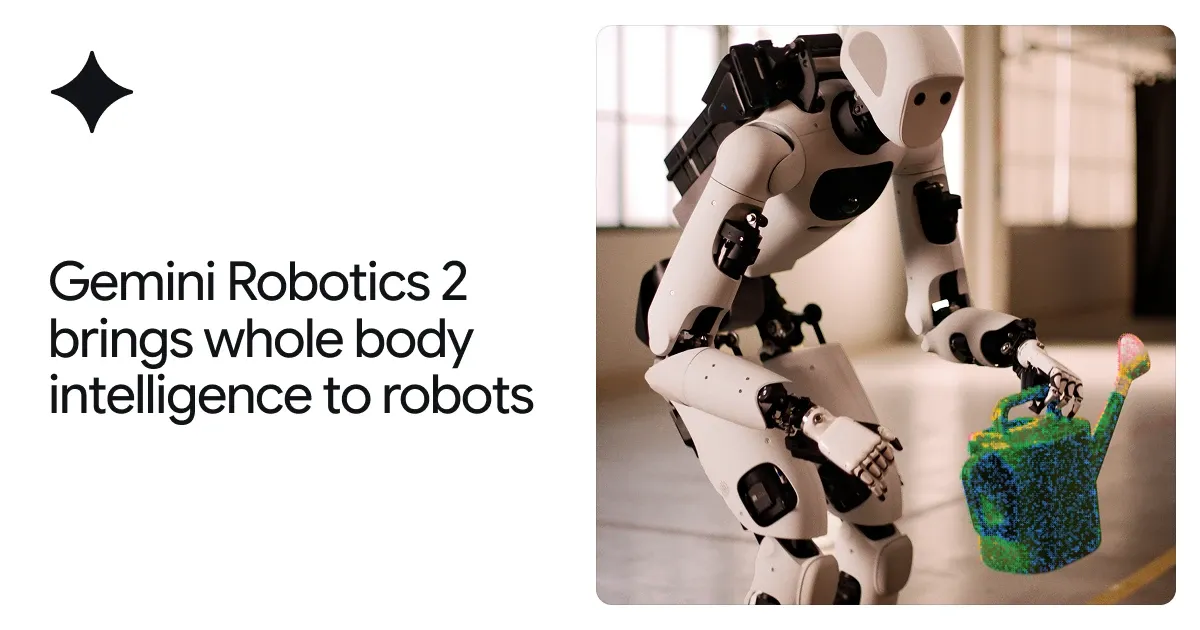
From feet to fingertips — we are teaching robots intelligent whole-body control, fine dexterity, and teamwork to complete a broad range of complex tasks.
MIT News · Artificial Intelligence· news.mit.eduOct 13, 2026
Machine-learning networks can learn without detailed instructions from a designer. Those that do may offer insight into how the brain reorganizes itself during learning.