Skip to content

Do MLLM Judges Judge the Edit? Auditing Bias in Image Editing Evaluation with Verified Quality Preservation

Oct 2026 · 0 citations · 60 references
Computer Science

Abstract

Multimodal large language models (MLLMs) are increasingly used as automated judges for instruction-based image editing and as reward signals for model training. However, systematically auditing whether these judges are influenced by cues irrelevant to editing quality is challenging because visual interventions may themselves alter the quality being evaluated. A judgment shift can therefore be attributed to bias only when the intervention is verified to preserve the underlying editing quality. To address this challenge, we introduce EditJudgeBias, a counterfactual benchmark with verified quality preservation, comprising 1,196 real editing samples and 13 cues injected across four evaluation sites. We verify quality preservation for the requested edit using calibrated multimodal validators, controls, and human inspection. We then audit five MLLM judges along three complementary dimensions: invariance to quality-preserving cues, agreement with human judgments, and stability of pairwise preferences. Importantly, observed shifts are evaluated against each judge's own zero-dose and re-query noise floors rather than against zero. Experiments show that quality-preserving cues move every judge beyond its own noise. Fabricated majority opinions increase ratings, irrelevant visual elements cause larger shifts than whole-image manipulations, and swapping candidate order reverses up to 60.9% of pairwise decisions. Edit-region cues also tend to reduce human agreement. The three measures characterize judges differently, showing that robustness cannot be captured by a single metric.

View source

Similar papers

#artificial intelligence Preprint Oct 2026

PRISM: Calibrating Black-Box Judges with Counterfactual Probes

Large language models are increasingly used as judges to reduce reliance on costly human evaluation, yet their scores can systematically disagree with human judgments. We ask whether responses to an explicitly imposed evaluative bias can help correct a judge's implicit scoring biases. We introduce PRISM (Probe-based Re...

Kakei Yamamoto, So Kuroki · 0 citations
Preprint Aug 2026

A Judge Should Know What Changed:Construct Validity for LLM-as-a-Judge Evaluation

The results show that high judge agreement can coexist with weak sensitivity to changes in the construct being evaluated, motivating joint reporting of invariance and sensitivity and auditing the validation set itself.

Jian-Lin Chen, Wen-Hui Chen, Zi-Yao Lin et al. · 4 citations
#computer vision Preprint Sep 2026

When Visual Quality Misleads: Intent Recognition under Rendered Avatar Distortions

A controlled behavioral study of rendered 3D avatars across a pristine condition and fourteen geometric, photometric, temporal, and combined distortions reveals a quality--accuracy dissociation where distortion families affect appearance and communication differently.

Ning-Hsuan Chang, Kai Ma, Yu-Chih Chen · 0 citations
Book Open access Oct 2026

LLM-as-Judge for OCR Quality Assessment in Digital Libraries: A Reference-Free Approach

Optical character recognition (OCR) quality assessment has depended on reference-based metrics (CER/WER), which require costly transcription. We ask: can an LLM supply a reference-free, text-only signal for OCR readability? Using 90 stratified passages from 53 scans of 17 English works in RETAS, we score OCR text with...

Qiu-Ying Li · 0 citations
#artificial intelligence Preprint Oct 2026

When the Judge Acts: Auditing VLM-Guided Image Selection on Culturally Situated Prompts

Vision-language models (VLMs) increasingly act as judges that pick the best of several generated images, so their choices decide what users see. Such judges are usually validated by score agreement with human ratings, not by the images they return. We audit VLM judges as decision-makers: on 300 culturally situated prom...

Huichan Seo · 0 citations
Book Open access Nov 2026

TrustLift: When Images Make False Claims Look True

Multimodal verification systems may assign high confidence to misleading claims when an associated image is visually plausible but does not provide valid evidence. This paper introduces TrustLift, a lightweight framework for detecting such false-reassurance errors and selectively referring risky cases for review. The m...

Alexey S. Borodulin, I. Masich, V. Tynchenko et al. · 0 citations

Related blog posts

Microsoft Research Blog Aug 11, 2026

Introducing CARE-X: Towards Clinically Useful Radiology VLMs with Auxiliary Supervision, Reward-Aligned Learning, and Tool-Augmented Measurement

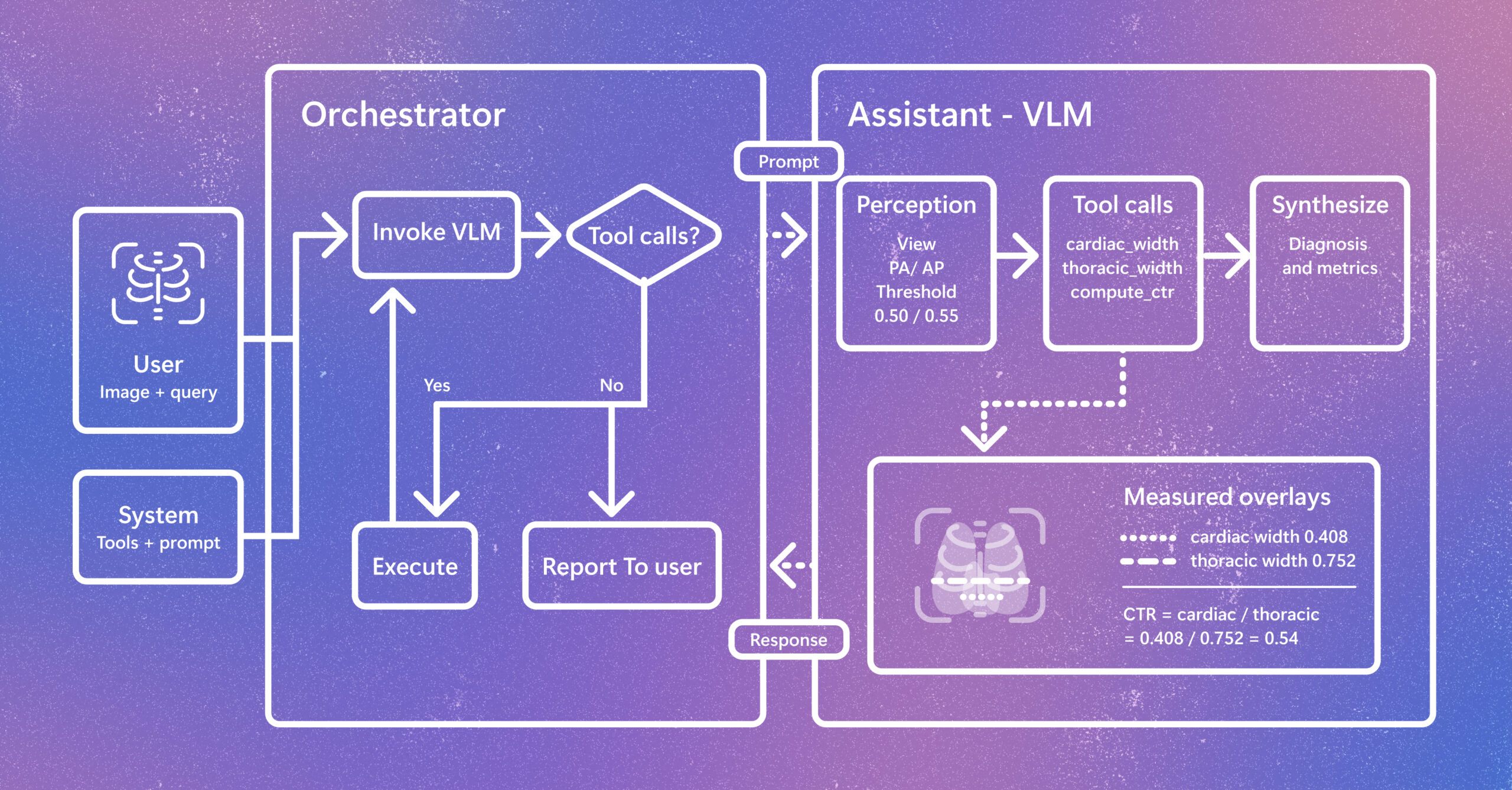
Radiology AI is evolving beyond report generation. CARE-X explores a unified approach that combines flexible reasoning, calibrated predictions, and measurement-based tools for chest X-ray interpretation. The post Introducing CARE-X: Towards Clinically Useful Radiology VLMs with Auxiliary Supervision, Reward-Aligned Learning, and Tool-Augmented Measurement appeared first on Microsoft Research.

MIT News · Artificial Intelligence Oct 23, 2026

Q&A: How AI came to model the “messy” human mind

Assistant Professor Benjamin Lindquist studies how engineers deliberately injected randomness into early AI, giving rise to deep-learning models that sometimes hallucinate.

We use cookies to run the site and, with your consent, for analytics and to show ads. See our Cookie Policy.