Nov 2026· IEEE Transactions on Parallel and Distributed Systems· Vol 37, pp. 2508-2523· 0 citations· 90 references
Abstract
Graph Neural Networks (GNNs) have achieved widespread success from social networks to AI-for-Science. Most existing GNN frameworks adopt scatter-first (edge-centric) or gather-first (vertex-centric) scheduling paradigms for message passing. However, these paradigms are closely tied to traditional CUDA-core execution model in terms of data access patterns, scheduling granularity, and compute mapping, limiting their ability to fully leverage the superior matrix computation capabilities of Tensor Core Units (TCUs) on modern GPUs. To this end, we propose UltraGNN, the first sparse-operator-aware framework designed to efficiently accelerate both topology-driven and dynamic-weight GNN models on TCUs. UltraGNN introduces a novel subgraph-centric scheduling paradigm, which reformulates message generation and aggregation as TCU-friendly sparse matrix multiplications. To enable efficient support for dynamic-weight GNN architectures on TCUs, UltraGNN incorporates a transpose-friendly sparse storage format explicitly designed to facilitate fast gradient computation and memory-efficient training and inference. UltraGNN adopts PyTorch as its frontend, delivering an out-of-the-box user experience. Extensive experimental results on the H100 and RTX 4090 GPUs demonstrate that UltraGNN sets a new state-of-the-art in GNN acceleration, achieving geometric mean speedups of 2.47× and 5.46× over DGL on GAT and GATv2 models, respectively.

This publication proposes a definition and a classification of agile software development approaches and analyses ten software development methods that can be characterized as being "agile" against the defined criterion.
P. Abrahamsson, O. Salo, Jussi Ronkainen et al.· arXiv.org· 727 citations· ⚡54
The study shows that agile practices improve both informal and formal communication, but indicates that, in larger development situations involving multiple external stakeholders, a mismatch of adequate communication mechanisms can sometimes even hinder the communication.
M. Pikkarainen, Jukka Haikara, O. Salo et al.· Empirical Software Engineeri...· 401 citations· ⚡48
The results indicate that software engineering work practices are chosen opportunistically, adapted and configured to provide value under the constrains imposed by the startup context.
Nicolò Paternoster, Carmine Giardino, M. Unterkalmsteiner et al.· Information and Software Tec...· 394 citations· ⚡54
It is proved that any global minimizer of the trajectory balance objective can define a policy that samples exactly from the target distribution, and empirically demonstrate the benefits of the trajectories balance objective for GFlowNet convergence, diversity of generated samples, and robustness to long action sequenc...
Esmeralda S. Whitammer, Moksh Jain, Emmanuel Bengio et al.· Neural Information Processin...· 302 citations· ⚡60
Related blog posts
MIT News · Artificial Intelligence· news.mit.eduAug 3, 2026
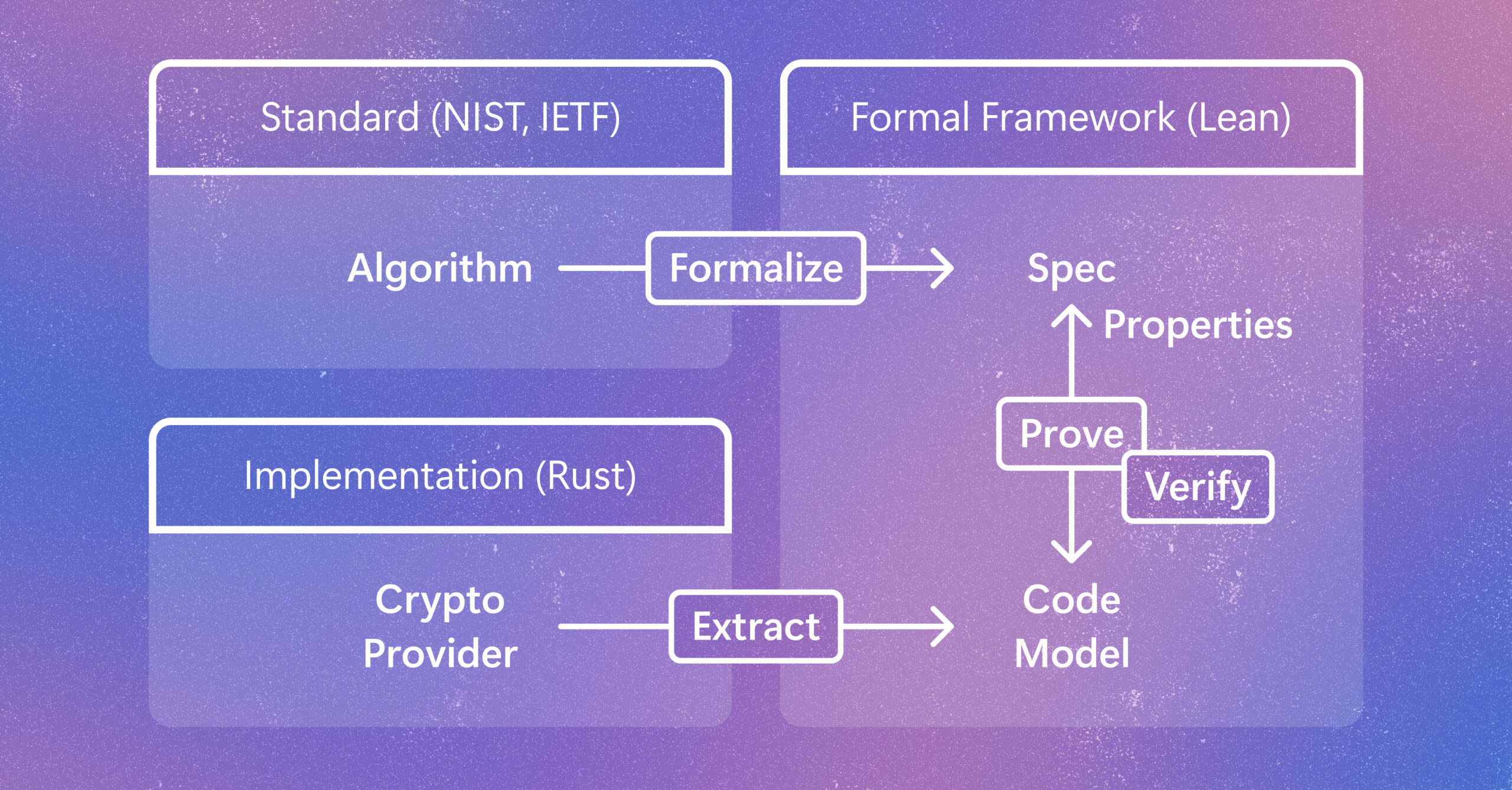
Cryptographic code supports vital protections in modern computing systems. Learn how a new method helps verify code as developers write it while preserving speed and adaptability as it gets implemented and evolves. The post Verifying Rust cryptography in SymCrypt, from standards to code appeared first on Microsoft Research.
MIT News · Artificial Intelligence· news.mit.eduJul 6, 2026
PhD student Rachel Sava, winner of the Envisioning the Future of Computing Prize, explores transformative improvements and dystopian risks of neural technology.
MIT News · Artificial Intelligence· news.mit.eduJun 29, 2026
In a new Keller Gallery exhibition, Alexandros Haridis SM ’17, PhD ’22 traces centuries of ideas about aesthetic judgment and explores how design can make complex computational systems visible.
We use cookies to run the site and, with your consent, for analytics and to show ads.
See our Cookie Policy.