A scale-recursive rectified flow is proposed that generates broad patterns before local details and guides sampling-step allocation by comparing ensemble variability with prediction error across spatial scales and achieved better probabilistic accuracy with shorter sampling time than a nonrecursive flow using more steps.

Abstract
Fine-resolution precipitation estimates support flood risk assessment and water management, but coarse satellite products cannot resolve rainfall within each grid cell. Generative models address this ambiguity by producing ensembles of plausible high-resolution rainfall fields. Among these models, rectified flows generate samples by iteratively transforming random noise into rainfall fields. Reducing the number of sampling steps accelerates generation but can make ensemble members too similar, understating uncertainty. We propose a scale-recursive rectified flow that generates broad patterns before local details and guides sampling-step allocation by comparing ensemble variability with prediction error across spatial scales. Validation scores and rainfall power spectra constrain the allocation to avoid excessive amplification. In satellite-to-radar downscaling over the contiguous United States, our analysis identified broad rainfall patterns as the main source of insufficient ensemble variability under reduced sampling budgets. Allocating more steps to the coarse flow improved probabilistic accuracy and rain detection across training seeds at fixed architecture and computational cost. The proposed model also achieved better probabilistic accuracy with shorter sampling time than a nonrecursive flow using more steps.

Localized extreme precipitation is a major trigger of urban flash floods and landslides, yet producing nowcasts that combine fine spatial detail with probabilistic uncertainty remains challenging. Here we introduce exPreCast-ENS, a conditional residual diffusion framework that transforms the deterministic 4 km radar no...
Dohyun Park, Changhoon Song, Teng-Yuan Chang et al.· 1 citation
Results indicate that cross-attention conditioning offers advantages over simple concatenation for probabilistic precipitation downscaling, and that pre-trained foundation model representations may offer benefits in data-limited settings.
Victor Nascimento Ribeiro, Jorge Guevara, J. Moraga et al.· 0 citations
This study presents an integrated framework for estimating Probable Maximum Precipitation (PMP)‐equivalent return levels under climate change, addressing two critical challenges: sampling uncertainty for rare events and the validation of bias correction under different global warming scenarios. Leveraging large regio...
Md. Robiul Islam, M. Najafi, Alex J. Cannon· Water Resources Research· 0 citations
Extreme rainfall events are increasing in intensity and frequency as climate change accelerates. While kilometer-scale precipitation forecasts are critical for supporting local decision-making, the limited availability of high-resolution precipitation observations hinders their accuracy, especially in under-resourced r...
Pierre Lemaire, Luca Schmidt, W. Suijker et al.· arXiv.org· 0 citations
This work introduces PCSDiff, a cascaded task-decoupled diffusion framework targeting 10-day precipitation bias correction and downscaling, which achieves low-latency rolling forecasting for practical meteorological operations.
Yuze Sun, Shi-Yi Wang, Jian-Cheng Pan et al.· 0 citations
Related blog posts
MIT News · Artificial Intelligence· news.mit.eduOct 28, 2026
Professor Paris Smaragdis develops computers with superhuman hearing for applications like speech recognition, music understanding, and environmental monitoring.
Exploring how generative AI could make machine vision more accessible to businesses. The post GenEye in a Box: Making Machine Vision Something You Can Just Ask For appeared first on GPT-Lab.
Microsoft Research Blog· microsoft.comAug 11, 2026
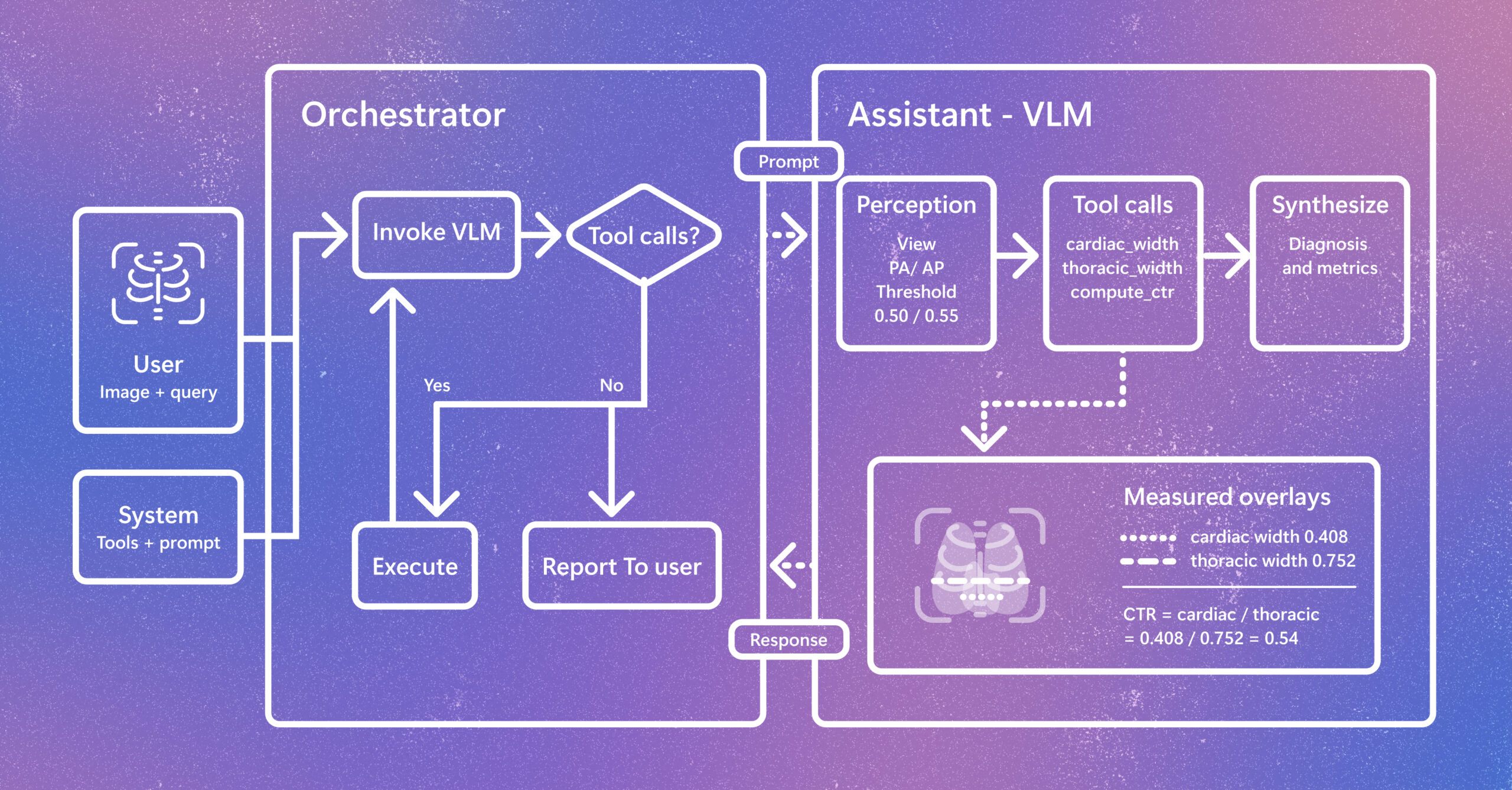
Radiology AI is evolving beyond report generation. CARE-X explores a unified approach that combines flexible reasoning, calibrated predictions, and measurement-based tools for chest X-ray interpretation. The post Introducing CARE-X: Towards Clinically Useful Radiology VLMs with Auxiliary Supervision, Reward-Aligned Learning, and Tool-Augmented Measurement appeared first on Microsoft Research.