TimeNet provides the data and systems foundation needed to move beyond task- and dataset-specific TFMs toward models that can learn jointly across heterogeneous domains, modalities, temporal scales, and forms of supervision from a common data model.
Abstract
Temporal Foundation Models (TFMs) aim to generalize across domains, datasets, and tasks. Yet, their development remains constrained by fragmented, task-specific data formats, annotations, and processing pipelines. We introduce TimeNet, an open-source data standard and scalable infrastructure that decouples temporal data from task definitions and represents signals, metadata, annotations, and supervision in a shared, extensible data model. TimeNet supports multimodal signals with regular, irregular, or ordinal time axes and expresses different task families (including classification, forecasting, temporal localization, question answering, generation, and editing) as reusable views over the same recordings. This shared representation enables heterogeneous time-series datasets to be combined for large-scale model training across domains, modalities, and tasks. We demonstrate TimeNet by transcoding datasets with 1.5M task instances spanning diverse domains, modalities, temporal scales, and forms of supervision, while retaining practical I/O performance relative to native formats. TimeNet enables an existing TFN training pipeline to support joint training on a configurable number of heterogeneous datasets through configuration changes alone. We show this capability by training TFM across multiple datasets and tasks, obtaining a 14% F1 score improvement compared with models trained on individual datasets. These results show that TimeNet provides the data and systems foundation needed to move beyond task- and dataset-specific TFMs toward models that can learn jointly across heterogeneous domains, modalities, temporal scales, and forms of supervision from a common data model.
Kairos is introduced, a video dataset for video-language modeling with time-resolved annotations that supports fine-grained evaluation, long-range modeling and reasoning, instruction data construction, representation learning, and video generation.
Ruibo Ming, Lei Sun, De-Heng Zhang et al.· 0 citations
Time-series data generated continuously across industrial, environmental, and especially health domains produce multimodal signals whose scale and heterogeneity make their processing and interpretation particularly challenging. Time-Series Language Models (TSLMs) promise scalable interpretation of these signals, yet re...
Max Rosenblattl, Milana Gurbanova, Karl Aurel Deck et al.· 0 citations
Time and event expression extraction are fundamental temporal reasoning tasks, but the problem remains difficult due to annotation ambiguity, domain sensitivity, and unstable model behavior. Existing evaluations focus on in-domain performance, offering limited insight into reliability under distribution shifts. We eval...
Fahmid Shahriar Iqbal, Ritam Dutt, Soumitra Das et al.· Findings of the Association...· 0 citations
Time-series analysis is increasingly studied in multimodal settings, yet most benchmarks pair temporal signals with text or with visualizations derived from the same signal. This leaves open whether multimodal large language models (MLLMs) can integrate time series with real-world visual evidence. We introduce MMTA (mu...
Zi-Yang Zhang, Shen-Yi Li, Yi-Lin Wang et al.· 0 citations
This work compares data-driven knowledge distillation (DDKD) against zero-shot inference and fine-tuning on out-of-domain D2T data, and introduces structure-preserving augmentation via structural subsampling and perturbation in cross-domain D2T generation.
Yifei Song, Kun Efimov-Zhang, Claire Gardent· 0 citations
Adapting LLMs to specialized domains critically depends on high-quality training data, making dataset construction a decisive factor in domain performance. This survey reviews methods for constructing domain-adaptation training datasets through a structured, data-centric analysis. Based on a comparative analysis of rep...
Xin-Yuan Qiu, Ke-Lan Ren, Xiao-Long Cui et al.· Journal of King Saud Univers...· 0 citations
Related blog posts
MIT News · Artificial Intelligence· news.mit.eduOct 13, 2026
Machine-learning networks can learn without detailed instructions from a designer. Those that do may offer insight into how the brain reorganizes itself during learning.
MIT News · Artificial Intelligence· news.mit.eduSep 29, 2026
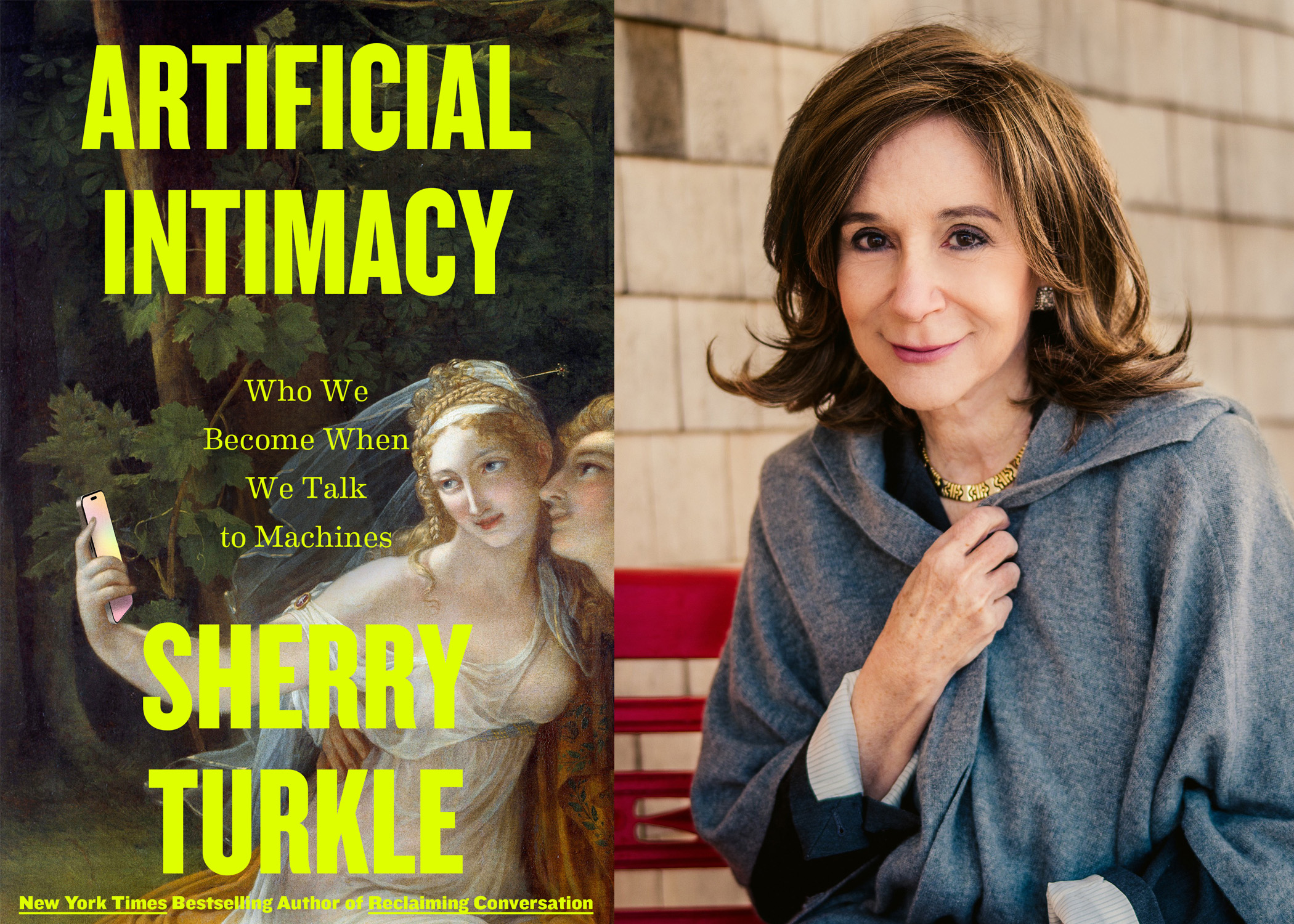
Professor Sherry Turkle’s new book, “Artificial Intimacy,” offers a withering critique of chatbots and the antisocial dynamics she believes they encourage.