Vision-language-action (VLA) policies commonly learn action chunks through a fixed left-to-right (LTR) factorization, although the same expert trajectory distribution admits many valid chain-rule factorizations. We identify factorization order as an overlooked regularization choice and introduce causally anchored permutation (CAP), which samples action reveal orders with a tunable chronological prefix. Its auxiliary objective trains one shared policy to predict actions from different known subsets of the same expert chunk, while deployment retains deterministic LTR control. We call this conditional-set augmentation: it creates multiple conditional prediction problems from one expert chunk without adding demonstrations. This discourages reliance on the single chronological prefix used by ordinary teacher forcing. Controlled experiments show that CAP consistently outperforms standard LTR training on LIBERO and LIBERO-Plus, with the same advantage appearing in cross-dataset CALVIN evaluation. A diagnostic that measures the expected squared difference between a chunk's joint log likelihood under two reveal orders verifies that CAP training internalizes agreement across reveal orders. These findings position sampled subset-conditioned auxiliary objectives as a general recipe for constructing VLA regularizers, illustrated by an extension to diffusion action generators.

GAOKAO-Bench is introduced, an intuitive benchmark that employs questions from the Chinese GAOKAO examination as test samples, including both subjective and objective questions that contribute a robust evaluation benchmark for future large language models and offers valuable insights into the advantages and limitations...
Xiaotian Zhang, Chun-yan Li, Yi Zong et al.· arXiv.org· 216 citations· ⚡17
An algorithm is proposed which leverages disentangled semantic factors to generate adversarial perturbation by altering controlled semantic attributes to fool the learner towards various "adversarial" targets.
Haonan Qiu, Chaowei Xiao, Lei Yang et al.· arXiv.org· 208 citations· ⚡17
This work proposes a HALO that directly maximizes the utility of generations instead of maximizing the log-likelihood of preferences, and suggests that the best loss depends on the inductive biases most appropriate for a given setting, an oft-overlooked consideration.
This work investigates the possibilities of using LLMs in a resume screening setting via a document retrieval framework that simulates job candidate selection and finds that the MTEs are biased, significantly favoring White-associated names in 85% of cases and female-associated names in only 11.1% of cases.
This work shows that orders of magnitude enhancement in performance could be obtained by a combination of hardware improvements and tight quantum-HPC integration and introduces high-performance architectures for quantum-probabilistic computing with custom-designed accelerators to tackle today's industry-scale classical...
Masoud Mohseni, Artur Scherer, K. Johnson et al.· arXiv.org· 121 citations· ⚡9
This paper presents a comprehensive overview of the Ultralytics YOLO family, emphasizing architectural evolution, benchmarking, deployment, and emerging directions from YOLOv5 through YOLO27, and examines detection, segmentation, depth, classification, pose, oriented detection, tracking, export, quantization, and deplo...
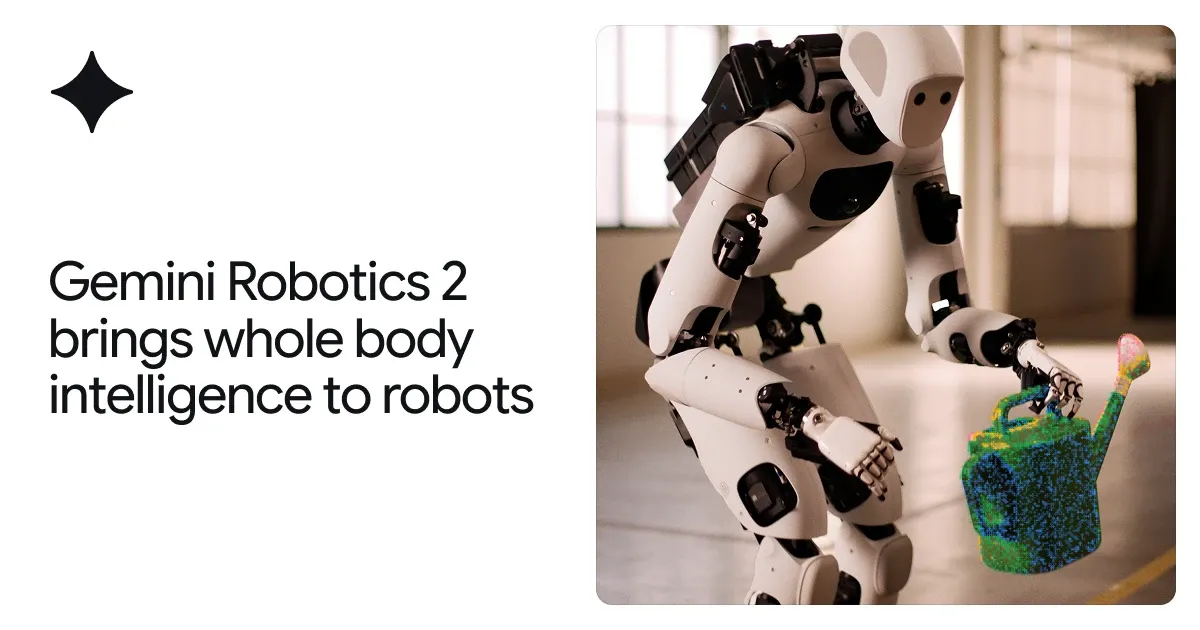
From feet to fingertips — we are teaching robots intelligent whole-body control, fine dexterity, and teamwork to complete a broad range of complex tasks.