Building interactive simulators from real-world observations is a promising way to scale embodied data, but current pipelines still rely heavily on manual environment construction and calibration. We study whether frontier foundation models and coding agents can automate this process end to end. We formulate \emph{autonomous video-to-simulation} as a software engineering task in which an agent observes an embodied video, constructs the corresponding simulated environment and robot behavior, and iteratively refines the result through execution feedback. To evaluate this capability, we introduce \textbf{Video2World}, a benchmark comprising 222 reconstruction instances derived from 189 robot and human demonstration videos. Video2World measures reconstructed worlds along geometric fidelity, dynamic fidelity, and functional correctness, capturing spatial perception, physical reasoning, and executable interaction. Evaluating 9 frontier coding-agent systems reveals a sharp improvement in Task success beginning with Claude Opus 5, rising from below 5\% to over 15\%, while substantial gaps to human-assisted reconstruction remain. We further find that worlds that look better could work worse: better visual fidelity does not always lead to higher task success. This echoes the broader gap between perceptual realism and factual correctness observed in generative models.

This publication proposes a definition and a classification of agile software development approaches and analyses ten software development methods that can be characterized as being "agile" against the defined criterion.
P. Abrahamsson, O. Salo, Jussi Ronkainen et al.· arXiv.org· 727 citations· ⚡54
The study shows that agile practices improve both informal and formal communication, but indicates that, in larger development situations involving multiple external stakeholders, a mismatch of adequate communication mechanisms can sometimes even hinder the communication.
M. Pikkarainen, Jukka Haikara, O. Salo et al.· Empirical Software Engineeri...· 401 citations· ⚡48
The results indicate that software engineering work practices are chosen opportunistically, adapted and configured to provide value under the constrains imposed by the startup context.
Nicolò Paternoster, Carmine Giardino, M. Unterkalmsteiner et al.· Information and Software Tec...· 394 citations· ⚡54
The possibility of inferring high-dimensional data inference in a model that consists of a prior and an auxiliary differentiable constraint given some additional information is considered, thereby allowing a range of potential applications in adapting models to new domains and tasks.
Alexandros Graikos, Esmeralda S. Whitammer, N. Jojic et al.· Neural Information Processin...· 316 citations· ⚡15
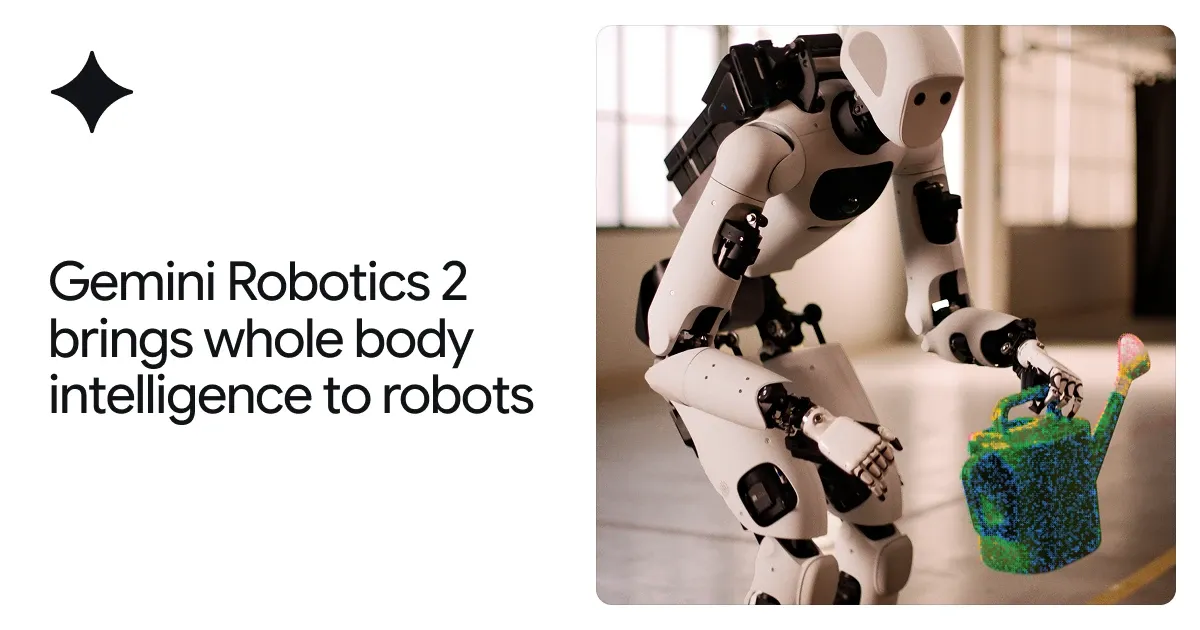
From feet to fingertips — we are teaching robots intelligent whole-body control, fine dexterity, and teamwork to complete a broad range of complex tasks.
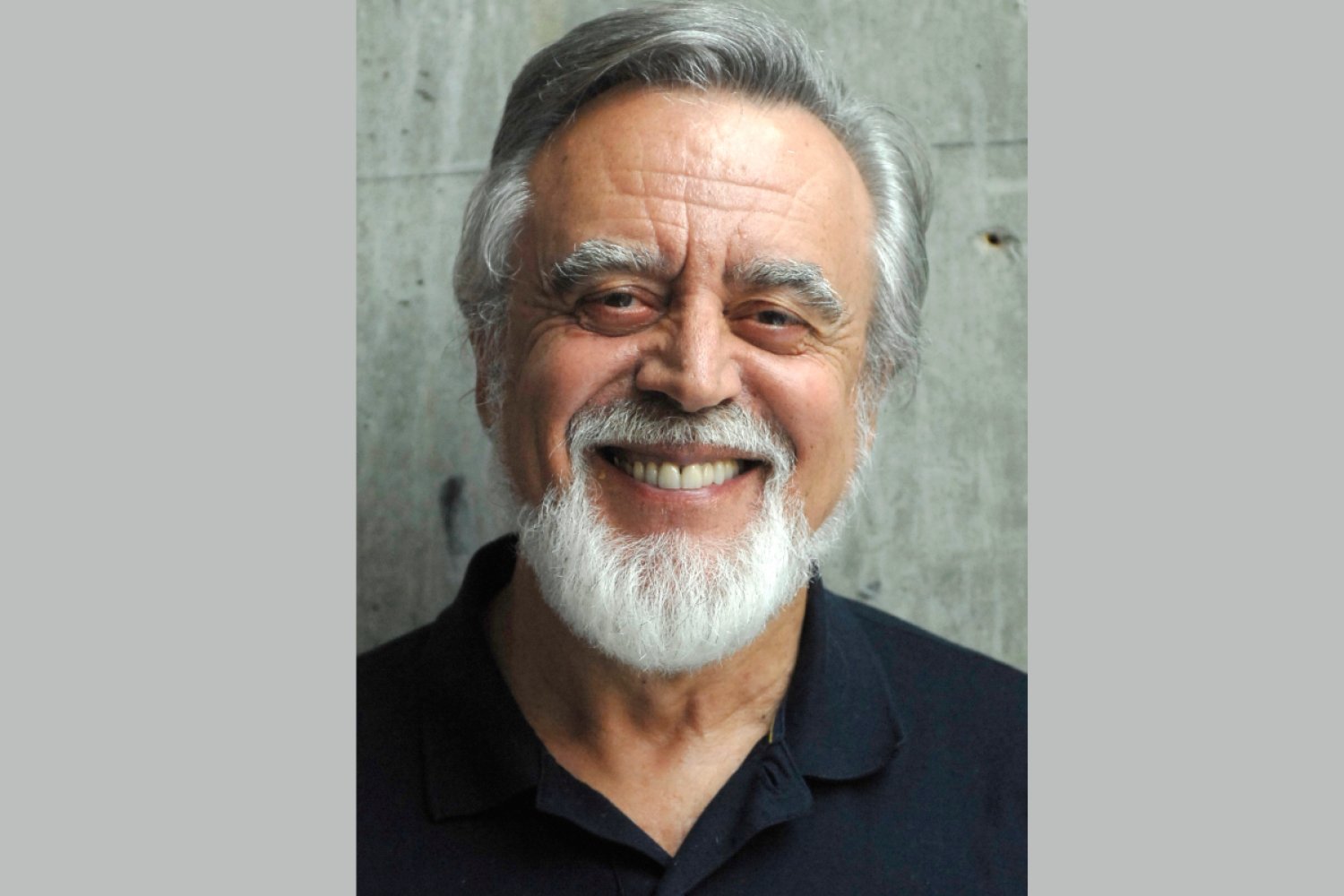
Known for his clear and elegant writing style, Bertsekas shaped fields from control and optimization to large-scale computation and artificial intelligence.
We use cookies to run the site and, with your consent, for analytics and to show ads.
See our Cookie Policy.