Reinforcement learning (RL) has become a standard tool for post-training language models on reasoning tasks, where the policy is updated by reward feedback while exploring the space of responses. Despite its empirical success, theoretical understanding of RL post-training remains limited, in particular of why on-policy exploration combined with a neural reward model is effective. In this paper, we address this question by modeling the reward as a hierarchical function on the response space: the reward consists of infinitely many local components, each of which becomes relevant only after the preceding ones have been resolved. We show that a natural Transformer-based actor--critic algorithm, which alternates between sampling from the current KL-regularized policy, fitting a Transformer critic to the observed rewards, and updating the policy, achieves the minimax optimal rates in the query budget and in the regularization strength up to logarithmic factors, and is minimax optimal for a fixed number of prompts. In contrast, we prove that sampling from the fixed reference distribution, as in offline reward modeling, can limit regret decay to a logarithmic rate. These results show that on-policy exploration progressively zooms in on the region where the reward is concentrated, and quantify its benefit for RL post-training.
It is found that Llama 3 delivers comparable quality to leading language models such as GPT-4 on a plethora of tasks, and performs competitively with the state-of-the-art on image, video, and speech recognition tasks.
This paper investigates developing real-world perception for active agents, proposes Gibson Environment for this purpose, and showcases a set of perceptual tasks learned therein.
F. Xia, Amir Zamir, Zhi-Yang He et al.· 2018 IEEE/CVF Conference on...· 1,069 citations· ⚡112
This publication proposes a definition and a classification of agile software development approaches and analyses ten software development methods that can be characterized as being "agile" against the defined criterion.
P. Abrahamsson, O. Salo, Jussi Ronkainen et al.· arXiv.org· 727 citations· ⚡54
The study shows that agile practices improve both informal and formal communication, but indicates that, in larger development situations involving multiple external stakeholders, a mismatch of adequate communication mechanisms can sometimes even hinder the communication.
M. Pikkarainen, Jukka Haikara, O. Salo et al.· Empirical Software Engineeri...· 401 citations· ⚡48
The results indicate that software engineering work practices are chosen opportunistically, adapted and configured to provide value under the constrains imposed by the startup context.
Nicolò Paternoster, Carmine Giardino, M. Unterkalmsteiner et al.· Information and Software Tec...· 394 citations· ⚡54
Related blog posts
MIT News · Artificial Intelligence· news.mit.eduNov 6, 2026
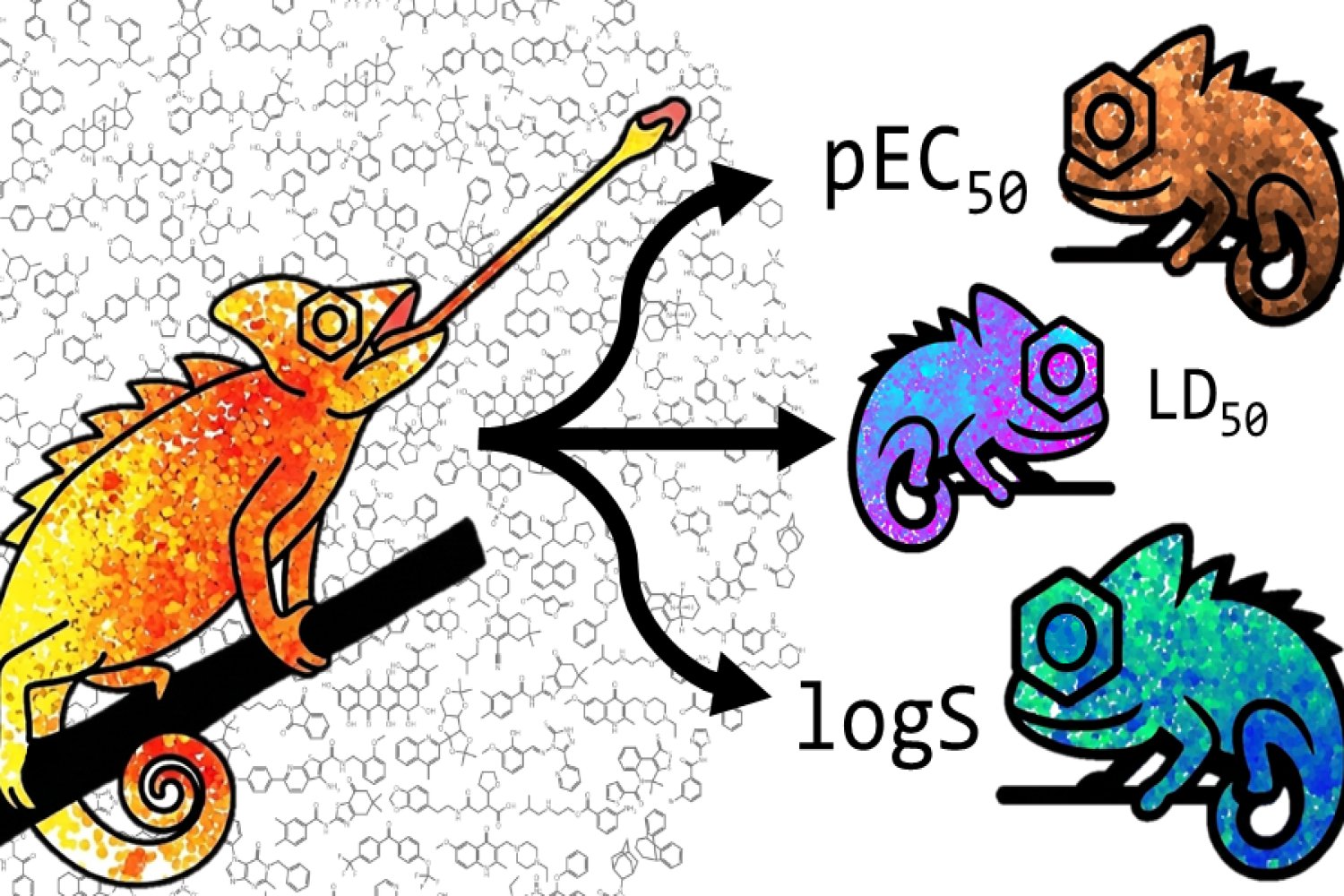
A machine-learning approach called CheMeleon provides a practical way to develop new drugs or other molecules with much less detailed, expensive experimentation.
Learn how Google DeepMind and GovTech Singapore uses lightweight on-device Gemma models to intercept conversational scams in private chats with zero cloud data egress.