Handcrafted preprocessing is widely employed in automated dermoscopic analysis to suppress imaging artifacts and enhance lesion visibility. Nevertheless, its actual contribution to modern real-time models remains unclear, particularly when evaluation protocols do not adequately control correlations among images of the same lesion. This study presents a leakage-controlled, lesion-disjoint evaluation of dermoscopic preprocessing and augmentation for joint multi-class lesion classification and instance segmentation using a fixed nano-scale YOLO26 segmentation model (YOLO26n-seg). From HAM10000 (10,015 images), quality control yields 10,013 valid image-mask pairs from 7,468 unique lesions, partitioned into mutually exclusive sets by lesion identity. With the architecture, resolution, training budget, and evaluation protocol held fixed, we compare minimally processed images plus online augmentation against offline class balancing, DullRazor-CLAHE preprocessing, and raw-processed hybrid views, over three random seeds. On the lesion-disjoint test set, the raw baseline achieves a mask mAP$_{50:95}$ of $0.5636 \pm 0.0234$, a Dice score of $0.9356 \pm 0.0024$, and a macro-F1 score of $0.6917 \pm 0.0202$. Offline augmentation does not improve the mean performance, while the combined and hybrid strategies reduce both class-aware segmentation and classification accuracy. At only 2.69 million parameters, the model runs at approximately 50 frames per second. Under a leakage-controlled, lesion-disjoint protocol with all non-input factors held fixed, minimally processed dermoscopic images combined with standard online augmentation deliver a better accuracy-efficiency trade-off than increasingly complex deterministic preprocessing, which yields no consistent joint benefit across three seeds on HAM10000.

It is found that Llama 3 delivers comparable quality to leading language models such as GPT-4 on a plethora of tasks, and performs competitively with the state-of-the-art on image, video, and speech recognition tasks.
This paper investigates developing real-world perception for active agents, proposes Gibson Environment for this purpose, and showcases a set of perceptual tasks learned therein.
F. Xia, Amir Zamir, Zhi-Yang He et al.· 2018 IEEE/CVF Conference on...· 1,069 citations· ⚡112
This publication proposes a definition and a classification of agile software development approaches and analyses ten software development methods that can be characterized as being "agile" against the defined criterion.
P. Abrahamsson, O. Salo, Jussi Ronkainen et al.· arXiv.org· 727 citations· ⚡54
The study shows that agile practices improve both informal and formal communication, but indicates that, in larger development situations involving multiple external stakeholders, a mismatch of adequate communication mechanisms can sometimes even hinder the communication.
M. Pikkarainen, Jukka Haikara, O. Salo et al.· Empirical Software Engineeri...· 401 citations· ⚡48
The results indicate that software engineering work practices are chosen opportunistically, adapted and configured to provide value under the constrains imposed by the startup context.
Nicolò Paternoster, Carmine Giardino, M. Unterkalmsteiner et al.· Information and Software Tec...· 394 citations· ⚡54
Related blog posts
MIT News · Artificial Intelligence· news.mit.eduOct 28, 2026
Professor Paris Smaragdis develops computers with superhuman hearing for applications like speech recognition, music understanding, and environmental monitoring.
Exploring how generative AI could make machine vision more accessible to businesses. The post GenEye in a Box: Making Machine Vision Something You Can Just Ask For appeared first on GPT-Lab.
Microsoft Research Blog· microsoft.comAug 11, 2026
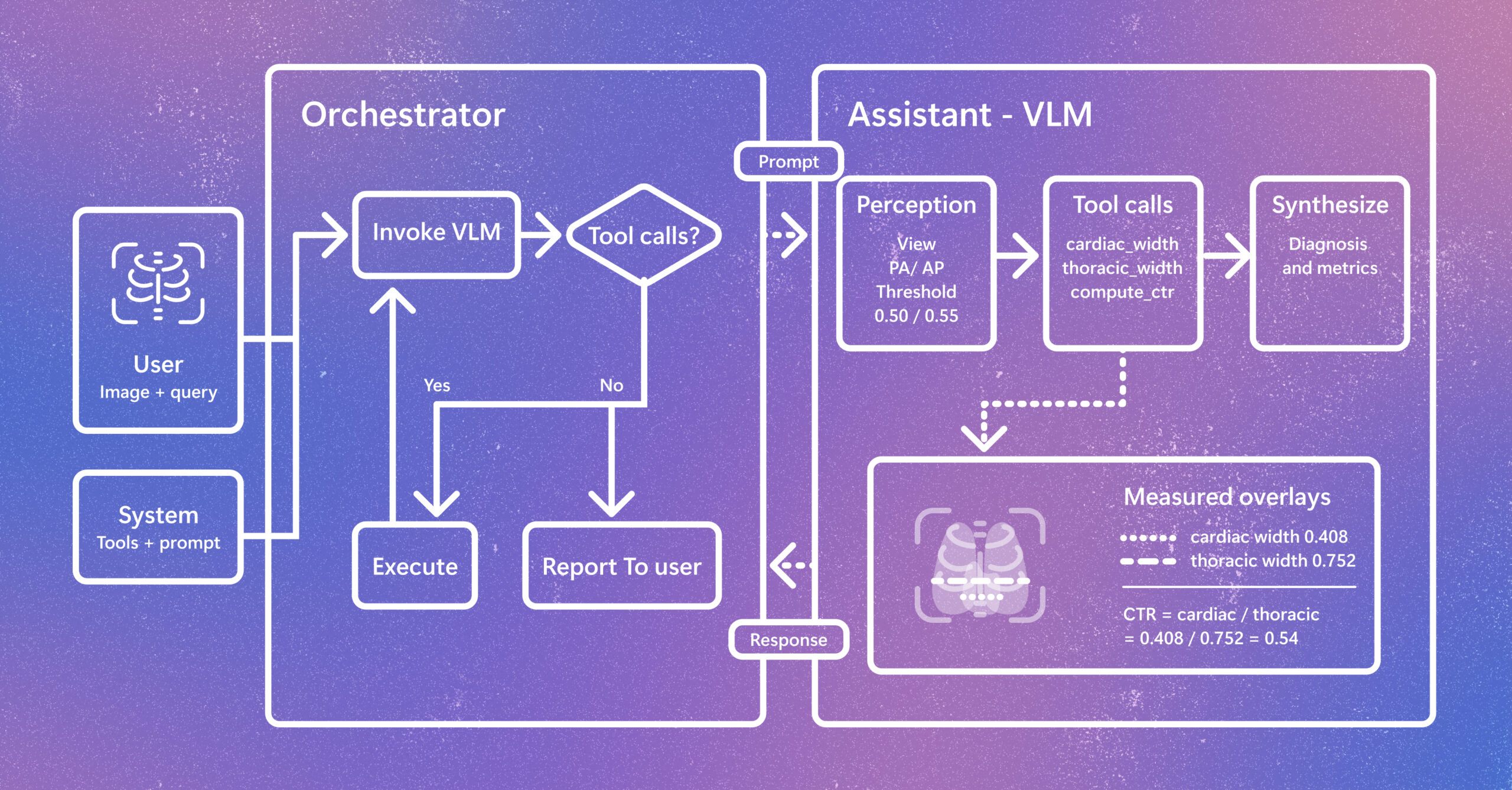
Radiology AI is evolving beyond report generation. CARE-X explores a unified approach that combines flexible reasoning, calibrated predictions, and measurement-based tools for chest X-ray interpretation. The post Introducing CARE-X: Towards Clinically Useful Radiology VLMs with Auxiliary Supervision, Reward-Aligned Learning, and Tool-Augmented Measurement appeared first on Microsoft Research.