Skip to content

HCPN-GCN: Scaling Hierarchical Prototype Networks with Cone Geometry for Continual Graph Learning

Sep 2026 · 0 citations · 17 references
Computer Science

TL;DR

HCPN-GCN is proposed, a graph-aware extension of HPN that replaces the original linear feature extractors with Graph Convolutional Networks (GCNs) and introduces cone-based prototypes with a diversity regularization objective, which produces richer graph-aware representations while compactly modeling the embedding space, reducing prototype proliferation without sacrificing discriminability.

Abstract

Continual Graph Learning (CGL) aims to incrementally learn from graph-structured data while preserving knowledge acquired from previous tasks. A major challenge in this setting is catastrophic forgetting, where learning new tasks degrades performance on previously learned ones. Hierarchical Prototype Networks (HPNs) address this problem through a prototype-based memory mechanism that avoids storing historical data, but their reliance on linear feature extractors limits their ability to exploit graph topology, while point-based prototypes often lead to inefficient prototype growth on structurally diverse graphs. In this work, we propose HCPN-GCN, a graph-aware extension of HPN that replaces the original linear feature extractors with Graph Convolutional Networks (GCNs) and introduces cone-based prototypes with a diversity regularization objective. The proposed design produces richer graph-aware representations while compactly modeling the embedding space, reducing prototype proliferation without sacrificing discriminability. Experimental results on six continual graph learning benchmarks demonstrate that HCPN-GCN consistently improves average classification accuracy over the original HPN and representative continual learning baselines while maintaining near-zero forgetting. Furthermore, our analysis shows that the proposed model learns substantially richer class-level prototype hierarchies using approximately $30\times$ fewer atomic prototypes than the original HPN, providing a more compact and effective memory representation for continual graph learning.

View source

Similar papers

#machine learning Preprint Oct 2026

MAGIC: Topology-Aware Analytic Graph Few-Shot Class-Incremental Learning

Graph few-shot class-incremental learning (GFSCIL) requires a model to continually recognize emerging classes from only a few labeled nodes while preserving previously acquired knowledge. Beyond the catastrophic forgetting inherited from conventional graph continual learning, GFSCIL presents two distinctive challenges:...

Jun-Lin Chen, Yu-Han Wang, Xue-Fei Wang et al. · 0 citations
#machine learning Preprint Sep 2026

A Lightweight Plastic-Memory Framework for Graph Few-Shot Class-Incremental Learning

This paper proposes a novel lightweight plastic-memory framework specifically designed for few-shot incremental learning on graphs, featuring an innovative evolving micro-clustering structure that dynamically updates representations of class prototypes, sub-prototypes, and their interaction weights.

Zi-Han Mei, Zhi-Li Qin, Tongze Zhang et al. · 0 citations
#graph neural networks Review Open access Sep 2026

Graph Self-Supervised Learning: A Hybrid Approach Combining Contrastive and Generative Paradigms

Graph-structured data is ubiquitous, yet labeled graph data remains scarce and expensive, limiting the effectiveness of supervised graph neural networks (GNNs). To address this, self-supervised learning (SSL) has emerged as a promising paradigm to pre-train GNNs on unlabeled graphs. However, existing SSL methods typica...

Rong-Kun Li · 0 citations
#machine learning Preprint Sep 2026

The Universal Classifier for Graph Learning

While foundation models have revolutionized natural language processing and computer vision by leveraging universal vocabularies, Graph Machine Learning (GML) remains fractured due to the absence of a unified feature and structural representation across diverse domains. Existing works claiming to be Graph Foundation Mo...

Ben Finkelshtein, André Linhares, Petar Veličković et al. · 0 citations
#artificial intelligence Preprint Sep 2026

ProtoGuide: Prototype-Driven Guidance for Class-Conditional Graph Generation

ProtoGuide is introduced, a post-hoc, backbone-agnostic framework that recovers an analogous mechanism for discrete diffusion models and raises macro classification accuracy and outperforms DiGress's built-in conditional training under the authors' configuration.

Salvatore Romano, Marco Grassia, Pietro Liò et al. · 0 citations

Related blog posts

Microsoft Research Blog Aug 11, 2026

Introducing CARE-X: Towards Clinically Useful Radiology VLMs with Auxiliary Supervision, Reward-Aligned Learning, and Tool-Augmented Measurement

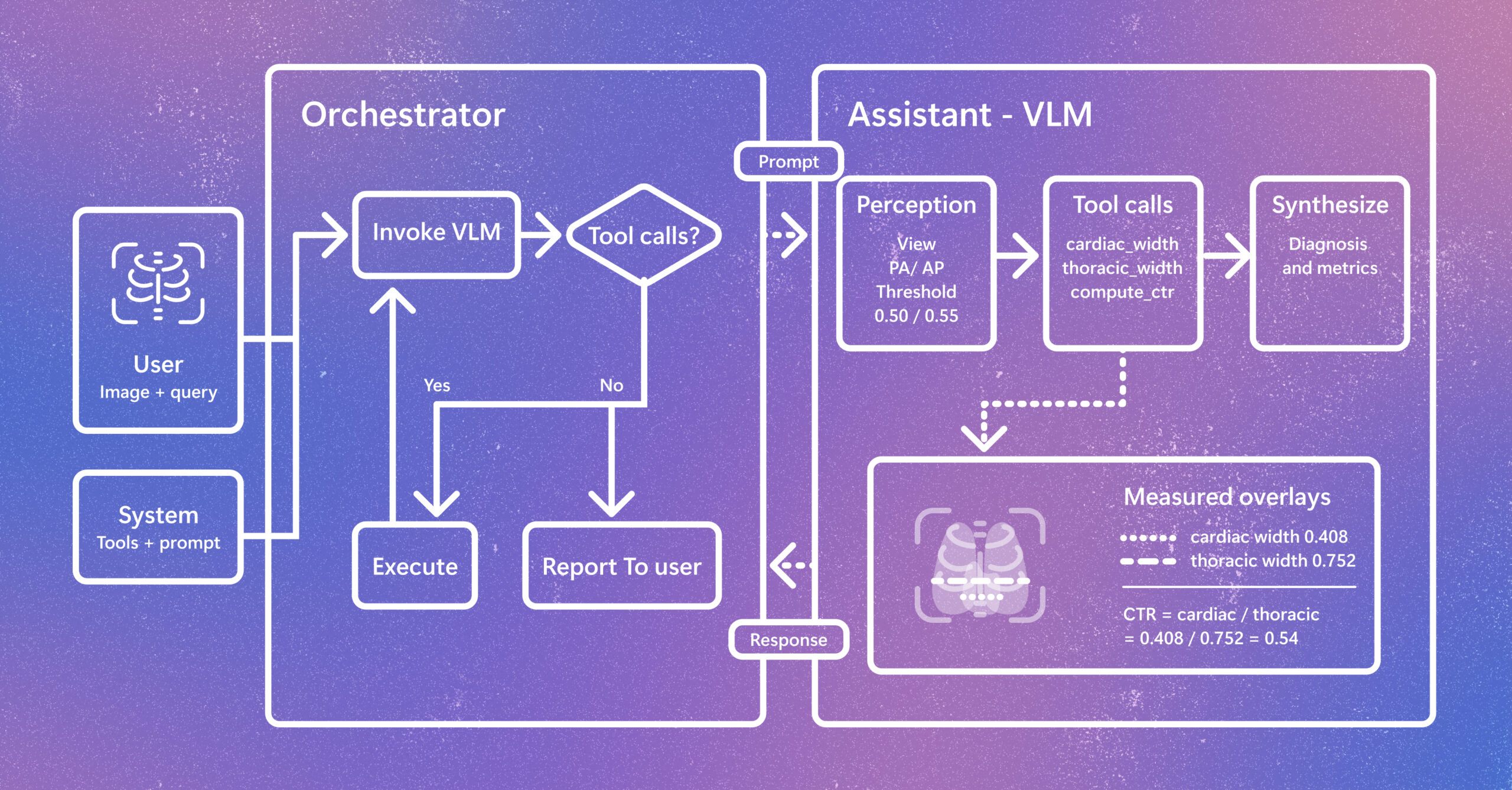
Radiology AI is evolving beyond report generation. CARE-X explores a unified approach that combines flexible reasoning, calibrated predictions, and measurement-based tools for chest X-ray interpretation. The post Introducing CARE-X: Towards Clinically Useful Radiology VLMs with Auxiliary Supervision, Reward-Aligned Learning, and Tool-Augmented Measurement appeared first on Microsoft Research.

MIT News · Artificial Intelligence Oct 23, 2026

Q&A: How AI came to model the “messy” human mind

Assistant Professor Benjamin Lindquist studies how engineers deliberately injected randomness into early AI, giving rise to deep-learning models that sometimes hallucinate.

We use cookies to run the site and, with your consent, for analytics and to show ads. See our Cookie Policy.