Skip to content

Generative AI Model Assisted Multimodal Semantic Vehicular Edge Computing for Collaborative Perception

Nov 2026 · IEEE Transactions on Mobile Computing · Vol 25, pp. 21557-21573 · 0 citations · 45 references

Abstract

Vehicular edge computing (VEC) plays a pivotal role in enabling cooperative perception for connected autonomous vehicles (CAVs), providing comprehensive environmental awareness for safe vehicle control and road safety. However, collaborative perception in VEC faces significant challenges arising from stringent bandwidth constraints, communication latency, and high computational demands. In this paper, we propose a novel multimodal semantic vehicular edge computing (SVEC) architecture for cooperative perception to address these challenges. In the proposed SVEC framework, multimodal sensor data is intelligently selected for task-oriented sharing, and data modalities are adaptively transformed in response to dynamic communication and computing resource constraints. The selected information is then transmitted using advanced semantic encoding and decoding techniques, significantly reducing bandwidth consumption. To compensate for potential information loss introduced by semantic compression, we design a generative AI–based enhancement mechanism to preserve high perception fidelity. We further formulate a joint optimization problem to maximize the vehicles’ quality of experience (QoE) for cooperative perception. To solve this problem, we develop a diffusion-based multi-agent reinforcement learning algorithm that improves exploration efficiency and jointly optimizes vehicle policies in high-dimensional and complex state spaces. Extensive simulation results show that the proposed scheme significantly outperforms the benchmarks, reducing the average system latency by about 28%, decreasing the average system cost by about 19%, and lowering the semantic perception error by up to 40%, while achieving the highest average rewards and average QoE.

View source

Similar papers

Aug 2026

Joint Optimization of Vehicular Edge Computing and DeepJSCC Semantic Communication with Multi-Objective Awareness

This article studies a Vehicular Edge Computing (VEC) system where connected vehicles generate image-based semantic tasks and process them locally or offload them to roadside units (RSUs). We jointly optimize RSU association, transmit power, local computing/edge offloading, and deep joint source-channel coding (DeepJSC...

Jie Xu, Man-Gang Xie, Hui Sun et al. · 0 citations
2026

Deep Reinforcement Learning for Semantic-Aware AoI Minimization in UAV-Assisted Communication Networks

Unmanned Aerial Vehicles (UAVs) are envisioned as key enablers for time-sensitive data collection in 6G cognitive networks. Semantic communication offers a promising solution to overcome bandwidth scarcity by transmitting only essential information. However, the heavy computational burden of semantic extraction is ofte...

Zhi-Long Kou, Xiang-Dong Jia, Jun Lan et al. · 0 citations
Preprint Oct 2026

Adaptive Semantic Communication with Residual Quantization for Resilient Vehicular Networks

Vehicular networks require timely visual information exchange to support safety-critical applications such as cooperative perception and hazard awareness, yet transmitting high-dimensional camera data over bandwidth-limited and dynamic wireless links remains challenging. In this paper, we propose an adaptive semantic c...

Xuanhao Luo, Rui Gao, Sandeep Sreenivasan et al. · 0 citations
#edge computing Open access Sep 2026

INTELLIGENT BANDWIDTH ALLOCATION FOR COOPERATIVE PERCEPTION IN EDGE–IOT VEHICULAR SYSTEMS: LEARNING WHAT TO SHARE UNDER COMMUNICATION BUDGETS

The objective is to decide what to share under a single hard ego-side communication budget, and the allocator reaches 97% of full-fusion accuracy at lower energy than the baseline in all 243 parameterisations tested, and in 240 of 243 on total energy, where the helpers' compute dominates.

Akinwole Obafemi · 0 citations
Review 2026

From LLMs to Agentic and Embodied AI for Next-Generation Intelligent Vehicular Communications: A Comprehensive Survey

The internet of vehicles (IoV) is rapidly evolving into an artificial intelligence (AI)-driven, multi-agent collaborative ecosystem, yet traditional communication paradigms struggle to address the challenges posed by dynamic network topologies, stringent resource constraints, and heterogeneous service demands. To bridg...

Qiong Wu, Wen-Jun Zhang, Ping-Yi Fan et al. · 5 citations

Related blog posts

MIT News · Artificial Intelligence Oct 15, 2026

AI model decodes the language cells use to communicate

A new computational approach reveals how cells communicate to assemble into tissues. This could accelerate stem cell engineering, improve disease models, and inform therapies.

Microsoft Research Blog Sep 29, 2026

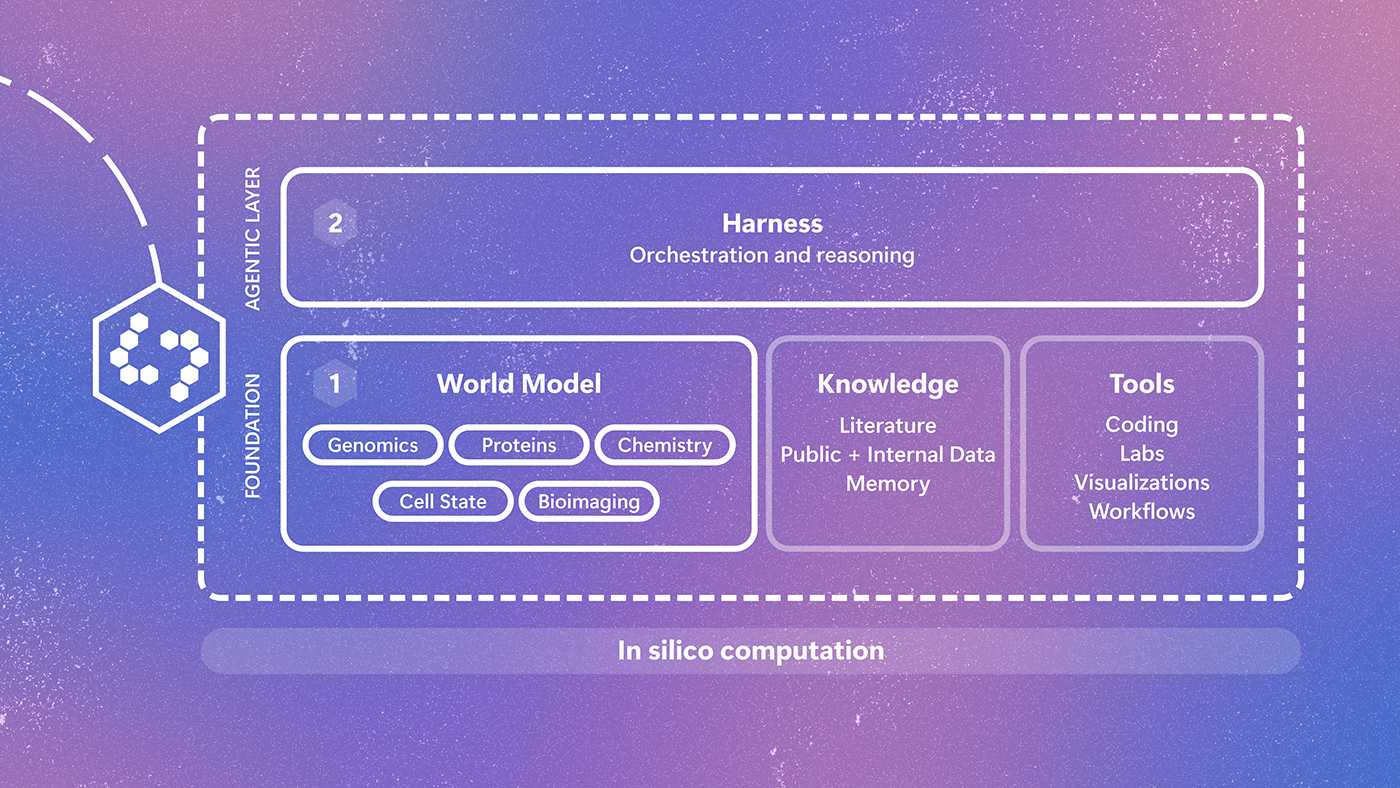
Introducing Quine: An AI research system designed for the complexity of biology

Biology doesn't operate in silos, and neither should the AI representation of it. Quine is an early-stage research effort to create a multimodal world model of biology. By connecting insights across biological scales and modalities, Quine helps scientists computationally search a space far larger than intuition allows and prioritize hypotheses before they reach the lab. Experimental results provide important feedback, helping researchers sharpen future research directions. The post Introducing Q…

MIT News · Artificial Intelligence Jul 14, 2026

Helping AI models to meet the real world

Through research and entrepreneurship, Professor Devavrat Shah is helping to design methods that can handle constant decision-making using limited computational resources.

We use cookies to run the site and, with your consent, for analytics and to show ads. See our Cookie Policy.