Privacy-Preserving Technologies in DataNetwork Security and Intrusion Detection
Abstract
The rapid growth of Internet of Things (IoT) networks has increased the need for intrusion detection mechanisms that provide accurate threat detection while preserving privacy, resisting malicious clients, and limiting communication overhead. Existing Federated Learning (FL)-based intrusion detection systems (IDS) remain challenged by heterogeneous non-IID client data, exposure of model updates, adversarial client participation, and frequent model transmission. To address these limitations, this paper proposes FLZT-IDS (Federated Learning with Zero-Trust for Intrusion Detection in IoT). The framework employs gradient-deviation monitoring to mitigate the effects of heterogeneous client updates, while Graph Neural Networks (GNN) and an Attention-based BiLSTM capture relational and temporal attack patterns, respectively. Secure Aggregation with Local Differential Privacy (SALDP) protects transmitted model updates, whereas dynamic trust-based client filtering limits the contribution of potentially malicious participants. An adaptive communication mechanism transmits local updates only when the model change exceeds a predefined threshold, thereby reducing unnecessary communication. Experiments on CICIDS2017 and Edge-IIoTset show that FLZT-IDS achieves 97.8% and 96.2% accuracy, respectively. Compared with FL-IDS, the adaptive communication and trust-filtering mechanisms reduce cumulative communication overhead by more than 30% after 100 communication rounds. Under model-poisoning experiments with 30% malicious clients, FLZT-IDS maintains accuracies of 89.3% on CICIDS2017 and 87.1% on Edge-IIoTset, demonstrating improved robustness under the evaluated adversarial setting.
The results indicate that software engineering work practices are chosen opportunistically, adapted and configured to provide value under the constrains imposed by the startup context.
Nicolò Paternoster, Carmine Giardino, M. Unterkalmsteiner et al.· Information and Software Tec...· 394 citations· ⚡54
This state-of-practice investigation was performed using a literature review followed by a multiple-case study approach and presents how inconsistency between managerial strategies and execution can lead to failure by means of a behavioral framework.
Carmine Giardino, Xiaofeng Wang, P. Abrahamsson· International Conference on...· 175 citations· ⚡19
This study conducts a case survey study based on the secondary data of the major pivots happened in 49 software startups, and demonstrates that customer need pivot is the most common among all pivot types.
Sohaib Shahid Bajwa, Xiaofeng Wang, Anh Nguyen-Duc et al.· Empirical Software Engineeri...· 127 citations· ⚡15
It is found that roles of MVPs in startups were not fully aware by entrepreneurs, and entrepreneurs should consider a systematic approach to fully explore the value of MVP, as a multiple facet product (MFP).
Anh Nguyen-Duc, P. Abrahamsson· International Conference on...· 93 citations· ⚡9
It is found that what perceived as biggest challenges by software startups do vary across different life cycle stages, even though its significance decreases when the learning focuses of the startups move from problem to solution and their products mature.
Xiaofeng Wang, Henry Edison, Sohaib Shahid Bajwa et al.· International Conference on...· 62 citations· ⚡6
Agile methods continue to gain popularity. In particular, the Scrum method appears to be on the verge of becoming a de-facto standard in the industry, leading the so called Agile movement. While there are success stories and recommendations, there is little scientifically valid evidence of the challenges in the adoptio...
A. Marchenko, P. Abrahamsson· Agile Conference· 59 citations· ⚡11
Related blog posts
MIT News · Artificial Intelligence· news.mit.eduOct 13, 2026
Machine-learning networks can learn without detailed instructions from a designer. Those that do may offer insight into how the brain reorganizes itself during learning.
Microsoft Research Blog· microsoft.comJul 13, 2026
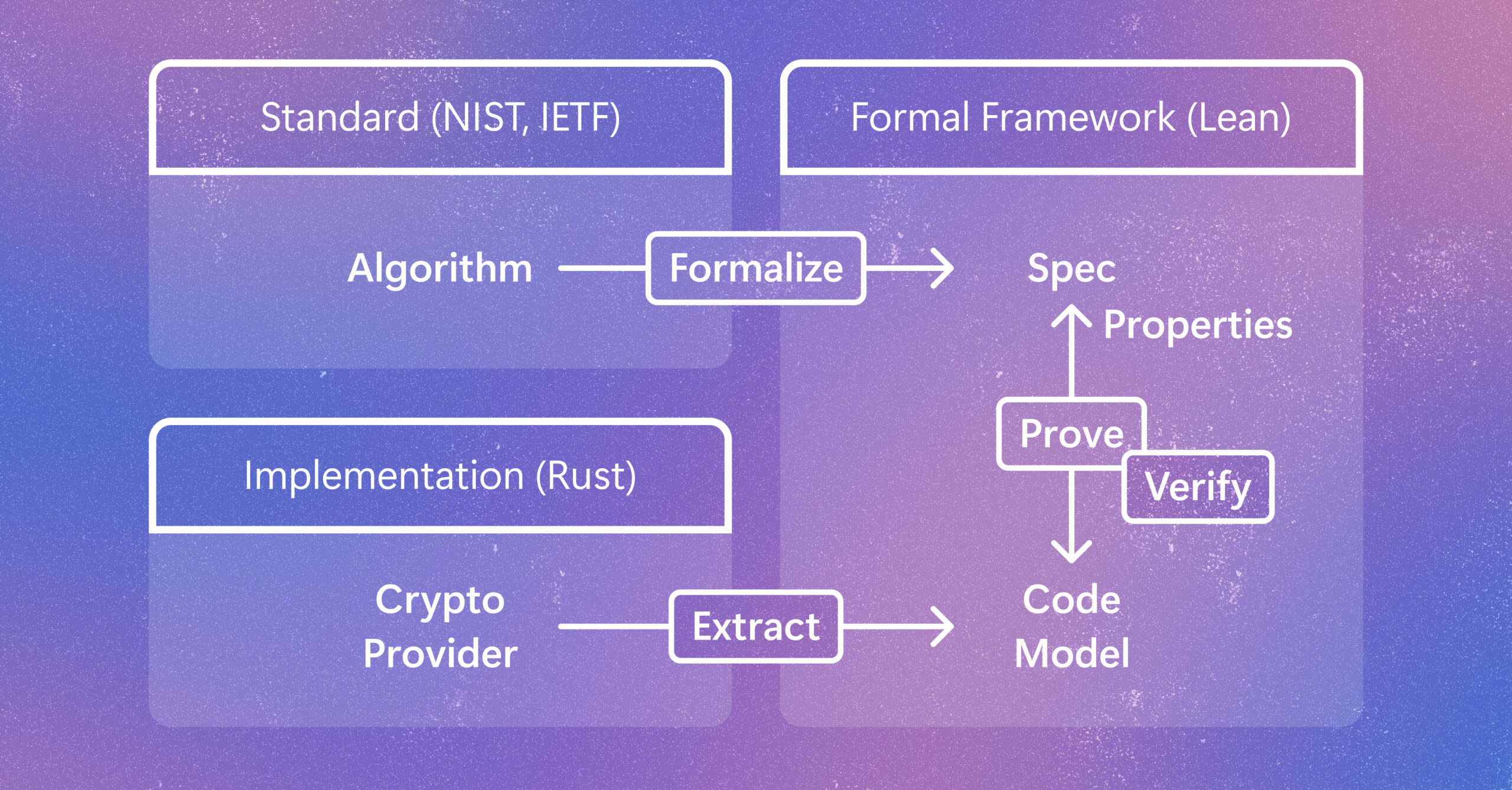
Cryptographic code supports vital protections in modern computing systems. Learn how a new method helps verify code as developers write it while preserving speed and adaptability as it gets implemented and evolves. The post Verifying Rust cryptography in SymCrypt, from standards to code appeared first on Microsoft Research.