Vision-language-action (VLA) policies issue sparse targets whose arrival at the robot controller is delayed and irregular, so a reasonable predicted action can still produce abrupt motion near people. Remedies are evaluated on different streams, delays and metrics. JitterVLA replays identical commands and arrival traces through alternative controllers, isolating the controller's effect. We apply it to synthetic reaches, hand trajectories from 20 people, three open VLA pipelines (838 episodes) and a physical UR3. Interpolation lowered modeled p99 jerk for every source, by 83% (615 to 106 m/s^3) on human motion with 200 ms delay, at a 2.0 cm tracking cost, and the effect replicated on 598 new episodes; jerk-limited generation lowered jerk further at a larger cost. Entropy-discontinuity associations had opposite, replicated signs in two pipelines, and entropy gating helped in one but not the other. On the UR3, interpolation lowered accelerometer-derived jerk by 3.0-14.0% in all six exploratory pairs, while a position-derived metric did not resolve the contrast. JitterVLA supports screening before human-centred studies; code and data will be released.
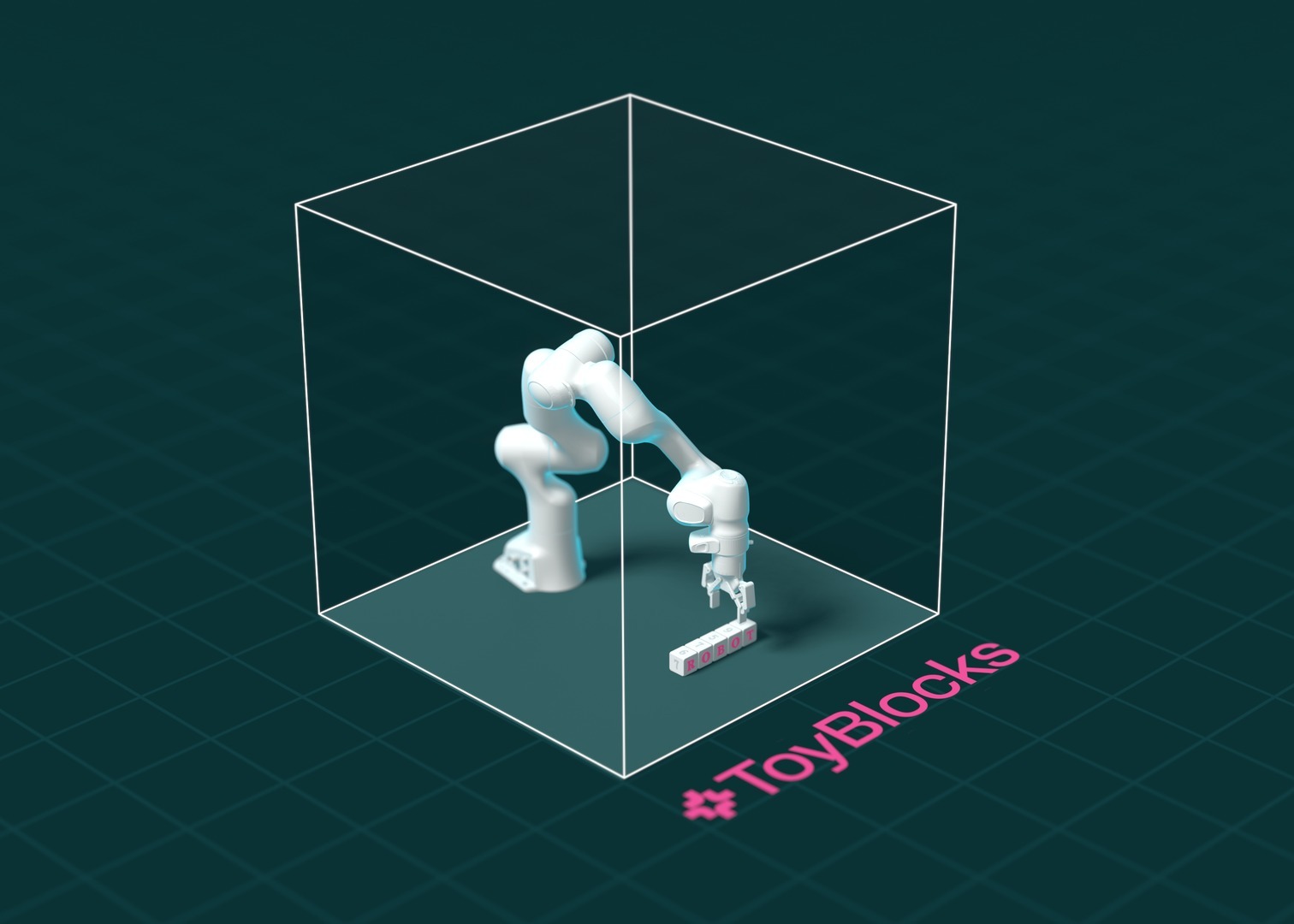
This paper investigates developing real-world perception for active agents, proposes Gibson Environment for this purpose, and showcases a set of perceptual tasks learned therein.
F. Xia, Amir Zamir, Zhi-Yang He et al.· 2018 IEEE/CVF Conference on...· 1,069 citations· ⚡112
This publication proposes a definition and a classification of agile software development approaches and analyses ten software development methods that can be characterized as being "agile" against the defined criterion.
P. Abrahamsson, O. Salo, Jussi Ronkainen et al.· arXiv.org· 727 citations· ⚡54
The study shows that agile practices improve both informal and formal communication, but indicates that, in larger development situations involving multiple external stakeholders, a mismatch of adequate communication mechanisms can sometimes even hinder the communication.
M. Pikkarainen, Jukka Haikara, O. Salo et al.· Empirical Software Engineeri...· 401 citations· ⚡48
The results indicate that software engineering work practices are chosen opportunistically, adapted and configured to provide value under the constrains imposed by the startup context.
Nicolò Paternoster, Carmine Giardino, M. Unterkalmsteiner et al.· Information and Software Tec...· 394 citations· ⚡54
The possibility of inferring high-dimensional data inference in a model that consists of a prior and an auxiliary differentiable constraint given some additional information is considered, thereby allowing a range of potential applications in adapting models to new domains and tasks.
Alexandros Graikos, Esmeralda S. Whitammer, N. Jojic et al.· Neural Information Processin...· 316 citations· ⚡15
Professor Paris Smaragdis develops computers with superhuman hearing for applications like speech recognition, music understanding, and environmental monitoring.
MIT News · Artificial Intelligence· news.mit.eduOct 23, 2026
Assistant Professor Benjamin Lindquist studies how engineers deliberately injected randomness into early AI, giving rise to deep-learning models that sometimes hallucinate.
MIT News · Artificial Intelligence· news.mit.eduOct 7, 2026
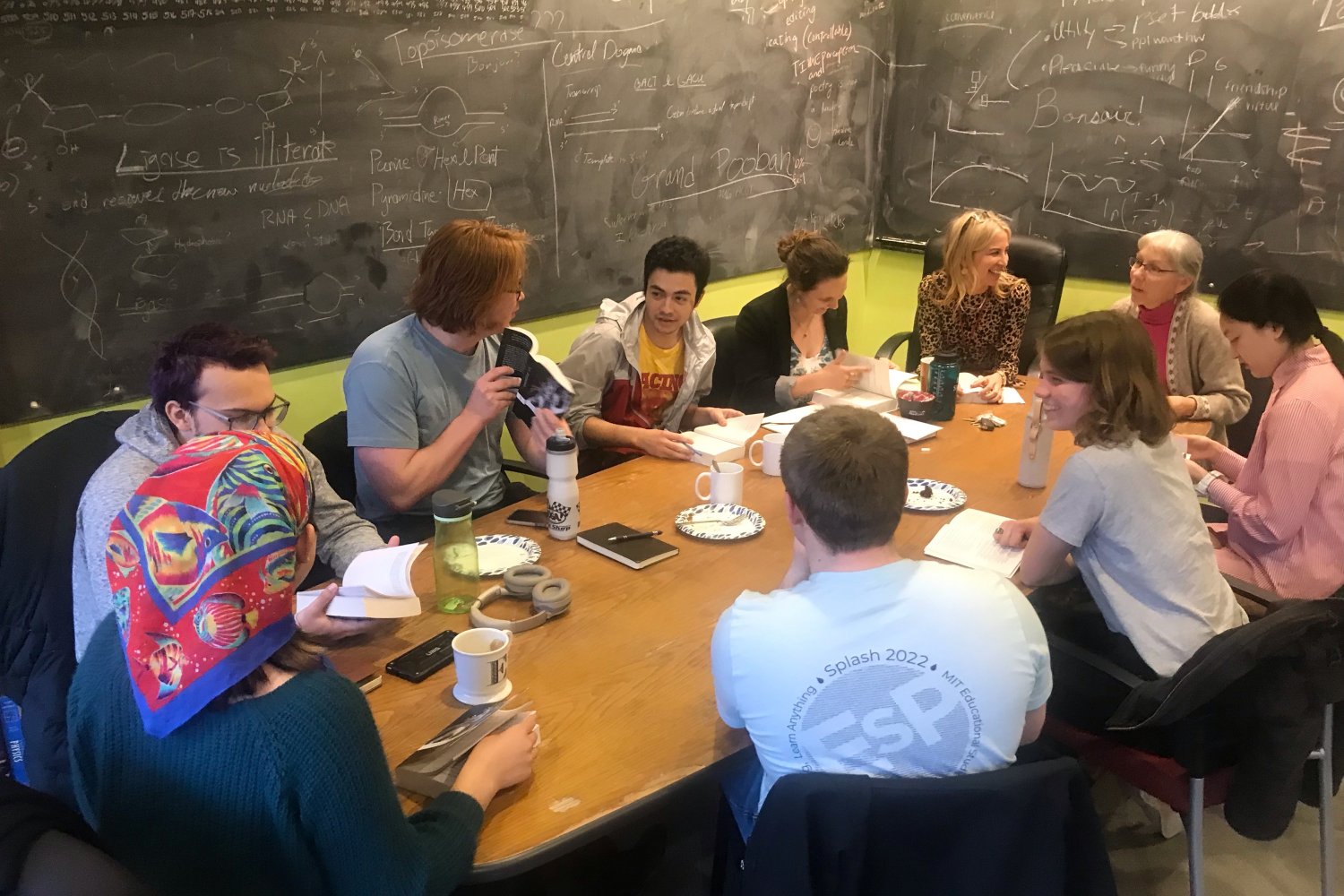
Students in MIT’s Concourse program delve deeply into the human condition, debate challenging questions, and learn to develop judgment about issues that can’t be quantified.
We use cookies to run the site and, with your consent, for analytics and to show ads.
See our Cookie Policy.