Skip to content

$\mathcal{N}_0$-Foundation: Towards the Age of Tactile Intelligence

Aug 2026 · 2 citations · ⚡ 2 influential · 92 references
Computer Science

TL;DR

A paradigm for tactile-enabled embodied manipulation, which integrates tactile sensing hardware, large-scale multimodal data, tactile representation learning, and standardized evaluation is presented, aiming at supporting future work on tactile-enabled embodied manipulation.

Abstract

We present $\mathcal{N}_0$-Foundation, a paradigm for tactile-enabled embodied manipulation, which integrates tactile sensing hardware, large-scale multimodal data, tactile representation learning, and standardized evaluation. First, we engineer the infrastructure for scalable data collection, including a vision-based tactile sensor, a tactile Universal Manipulation Interface (UMI), and a synchronized visuo-tactile data collection system supporting both robot embodiments and UMI-based demonstrations. Leveraging this infrastructure, we construct NeoData, which contains more than 30000 hours of synchronized visual and tactile demonstrations, spanning six embodiments, 450 tasks, and billions of paired RGB and tactile frames collected through a mixture of real-robot teleoperation and UMI-based demonstrations. To facilitate open research, we further release OpenNeoData, a 5000-hour open-source subset of NeoData. The dataset addresses a central limitation of existing manipulation corpora, critical for deformable-object manipulation, precise assembly, delicate force control, and sustained surface interaction. Capitalizing on the large-scale, heterogeneous tactile measurements, we propose NeoForce, a visuo-tactile representation model that learn transferable tactile representations across different sensor designs. To enable systematic evaluation of tactile embodied models built upon our infrastructure, datasets and tactile representations, we further propose a comprehensive benchmark, which combines the real-world NeoReal suite and the simulated NeoSim suite for standardized evaluation. Experiments across both suites show that policies benefit from the physical contact state rather than from the device-specific appearance of the tactile signal. We release the dataset, the representation, and the benchmark, aiming at supporting future work on tactile-enabled embodied manipulation.

View source

Similar papers

Preprint Aug 2026

$N_0$-Foundation: Towards the Age of Tactile Intelligence

We present $N_0$-Foundation, a paradigm for tactile-enabled embodied manipulation, which integrates tactile sensing hardware, large-scale multimodal data, tactile representation learning, and standardized evaluation. First, we engineer the infrastructure for scalable data collection, including a vision-based tactile se...

NeoteAI Team, Fudan Teai Team · 4 citations
Preprint Sep 2026

TACTIC: Understanding Tactile Encoders and Conditioning for Contact-rich Robot Manipulation Policies

Tactile information is essential for contact-rich manipulation tasks in robotics. Vision-based tactile sensors make it particularly easy to design end-to-end manipulation policies with tactile sensing, as they enable the use of existing encoders from computer vision. However, this has led to a huge variety of architect...

Seongjin Bien, Débora Oliveira Makowski, Carlo Kneissl et al. · 0 citations
Preprint Sep 2026

STAR: Sparse Tactile Representation Learning in Vision-Tactile-Language-Action Models for Dexterous Manipulation

Dexterous manipulation requires coordinated multi-finger control and effective tactile feedback, yet learning these capabilities remains challenging due to the lack of large-scale real-world data and the difficulty of extracting effective representations from sparse tactile signals. We build a robot platform and teleop...

Xiang-Cheng Liu, Tian-Hao Wu, Le Zheng et al. · 1 citation
Conference Aug 2026

Empowering embodied intelligence via a flexible sensing system integrating multi-dimensional tactile information

Enabling robots to assess physical suitability through contact, termed here Embodied Understanding, remains an open challenge because current vision-based models lack the tactile feedback necessary to perceive real physical properties. However, mainstream Visual-Language Models suffer from disembodiment. Without tactil...

Herong Wang, Lin Fan, Yong Tian et al. · 0 citations
#artificial intelligence Preprint Sep 2026

Unified Visual-Tactile-Action Modeling from Human Demonstrations for Dexterous Manipulation

A Unified Visual-Tactile-Action Model is proposed that maps both embodiments into aligned tactile and action representations and jointly predicts future action and tactile trajectories and achieves an average success rate of 70%, outperforming the strongest visual-tactile baseline, which achieves 29%, and an architectu...

Wen-Qiao Li, Qian-You Zhao, Jia-Wen Hao et al. · 0 citations

Related blog posts

Microsoft Research Blog Aug 11, 2026

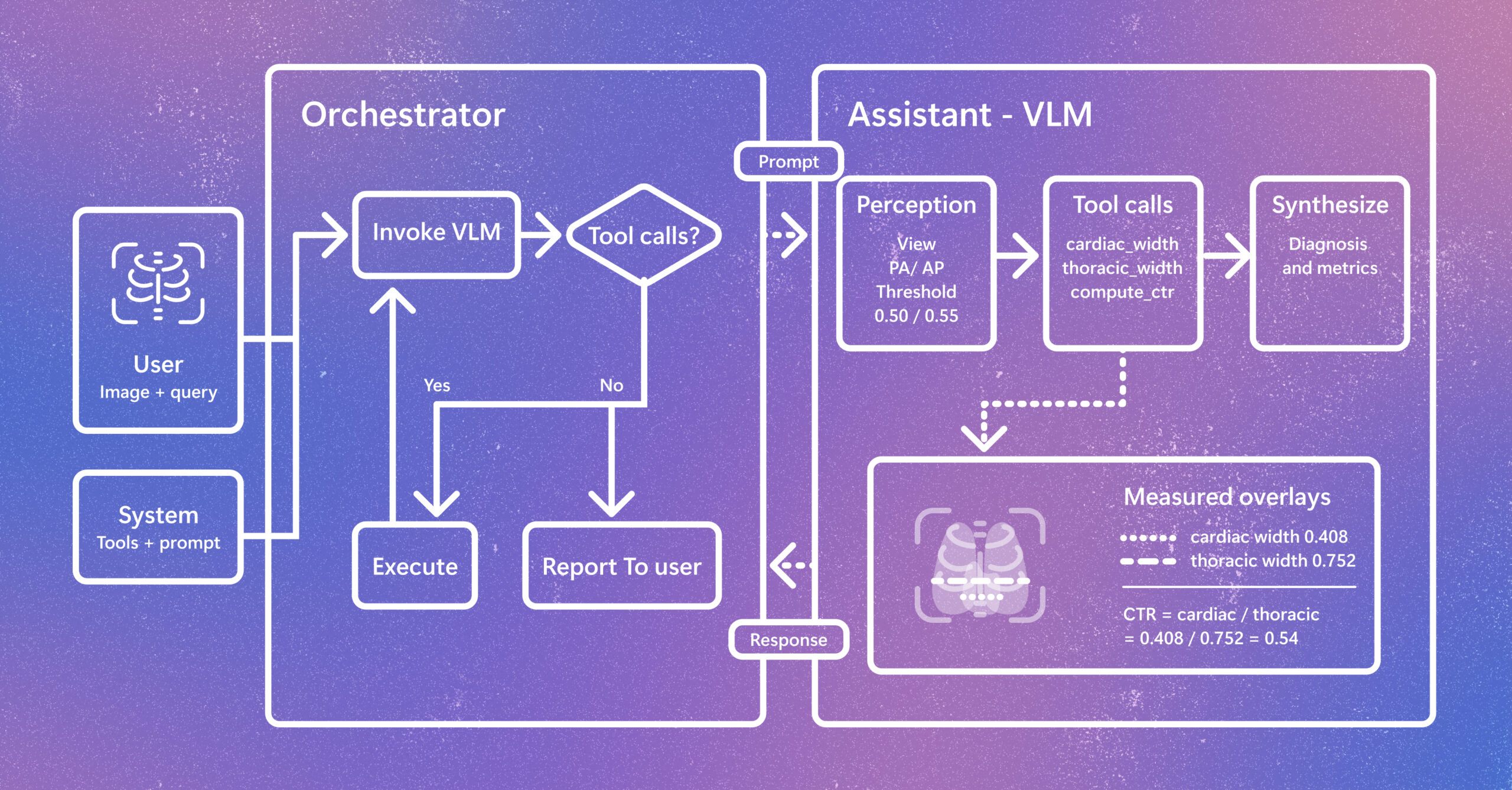
Introducing CARE-X: Towards Clinically Useful Radiology VLMs with Auxiliary Supervision, Reward-Aligned Learning, and Tool-Augmented Measurement

Radiology AI is evolving beyond report generation. CARE-X explores a unified approach that combines flexible reasoning, calibrated predictions, and measurement-based tools for chest X-ray interpretation. The post Introducing CARE-X: Towards Clinically Useful Radiology VLMs with Auxiliary Supervision, Reward-Aligned Learning, and Tool-Augmented Measurement appeared first on Microsoft Research.

We use cookies to run the site and, with your consent, for analytics and to show ads. See our Cookie Policy.