Rapid mineral characterization is essential for applications ranging from mineral exploration to industrial ore processing. To this end, Hyperspectral Imaging (HSI) has emerged as a promising sensing modality thanks to its fine spectral resolution, enabling mineral discrimination in both close-range and remote sensing settings. However, the scarcity of publicly available datasets with reliable ground-truth labels hinders the development and evaluation of HSI-based mineral identification methods. We release Minerals in the Wild, a multi-purpose dataset comprising 1,132 rock specimens collected across Europe. For each specimen, we provide an HSI acquisition together with an elemental characterization obtained via an XRF sensor. We define the task of elemental characterization on our dataset and propose a pruning mechanism that removes distant signatures from the USGS dictionary prior to a convex optimization approach for matching HSI pixels with USGS spectral signatures. Finally, we empirically show that our approach outperforms simpler baselines.
Cobalt-rich ferromanganese crusts are an important deep-sea mineral resource, and the ore grade is a key indicator for evaluating their resource potential. Conventional ore-grade assessment relies on representative samples and extensive laboratory analyses, posing significant challenges due to limited sampling opportun...
Shi-Juan Yan, Yi-Ping Luo, De-Wen Du et al.· Remote Sensing· 0 citations
Accurate identification of minerals is the fundamental task in the protection of rock cultural relics, directly determining the scientific validity and effectiveness of research on weathering mechanisms, disease prediction, and the development of protective materials. However, remote sensing technology is constrained b...
Li-Xin Peng, Hai-Qing Yang, Xiao-Yu Zhou et al.· Spectrochimica Acta Part A -...· 0 citations
Hyperspectral imaging (HSI) is a key capability for detecting chemical signatures of gases, liquids, or solids in remote sensing applications. Detection becomes challenging when targets are partially or fully occluded by objects in the scene. Three-dimensional scene understanding methods, including Neural Radiance Fiel...
Sophia Zorek, Scout Jarman, Adra Carr et al.· Applications of Machine Lear...· 0 citations
Hyperspectral remote sensing provides dense spectral measurements that are indispensable for material-level Earth observation, yet the construction of a general-purpose hyperspectral foundation model remains difficult. Two bottlenecks are especially limiting. First, large hyperspectral corpora rarely provide high spati...
Li Pang, Xin-Qiao Wu, Jing Yao et al.· 0 citations
Lithological mapping of arid Precambrian basement underpins mineral exploration across the Arabian-Nubian Shield (ANS), where rugged, poorly accessible exposures make field campaigns slow and costly, and where serpentinites, ophiolitic mélange, granitoids and hydrothermal alteration of economic interest occur in close...
Noureldin Laban, Safaa M. Hassan, H. Zeyada et al.· Geoscience Letters· 0 citations
The blind hyperspectral unmixing of altered minerals holds significant indicative importance for the exploration of sandstone-type uranium deposits. Nevertheless, the distinctive backscattering and multiphase characteristics are typically underestimated by existing methods, resulting in limited accuracy in the unmixing...
Rui Xu, Hou-Zhen Wei, Zhi-Guang Yang et al.· Minerals· 0 citations
Exploring how generative AI could make machine vision more accessible to businesses. The post GenEye in a Box: Making Machine Vision Something You Can Just Ask For appeared first on GPT-Lab.
Microsoft Research Blog· microsoft.comAug 11, 2026
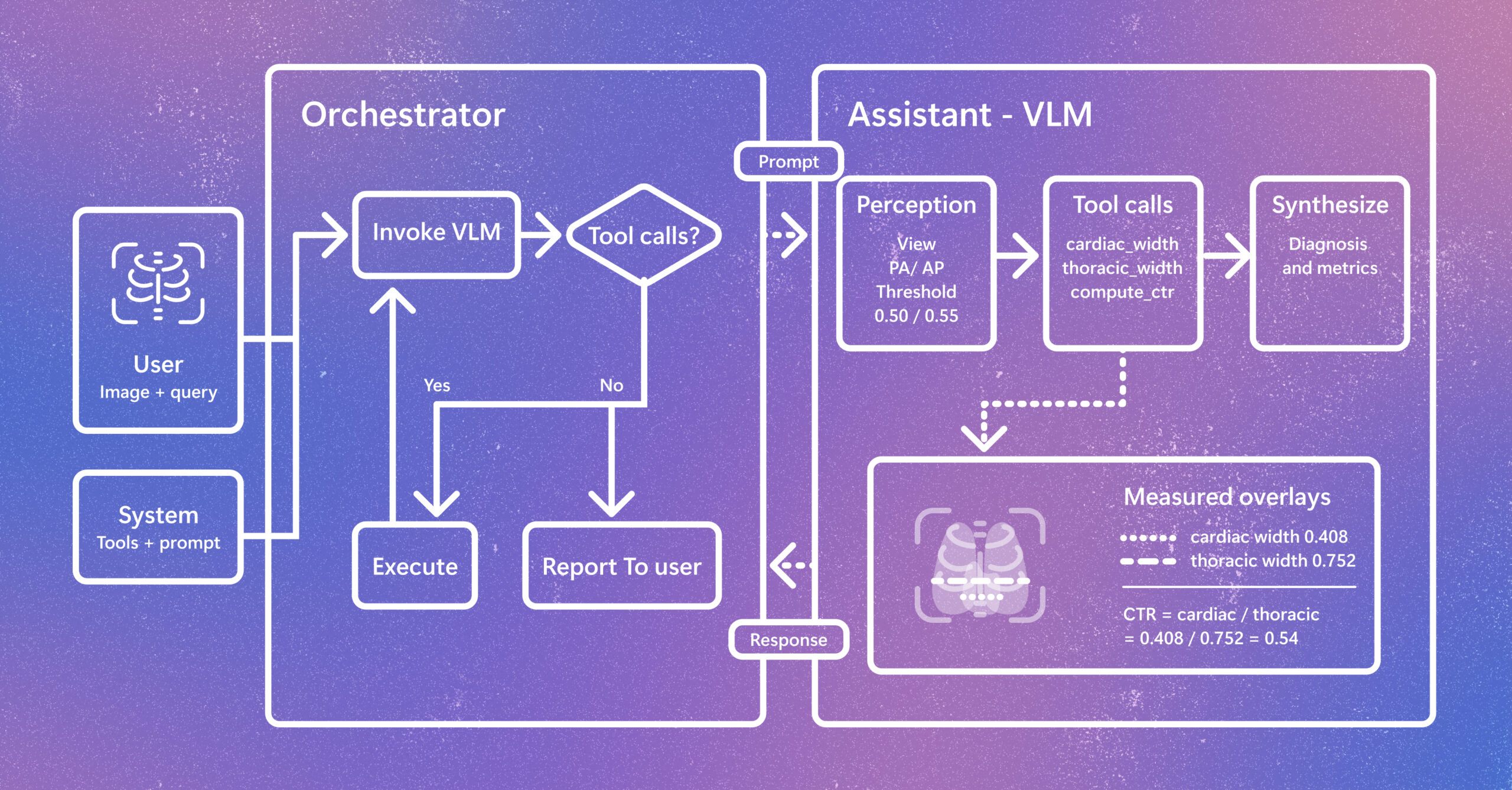
Radiology AI is evolving beyond report generation. CARE-X explores a unified approach that combines flexible reasoning, calibrated predictions, and measurement-based tools for chest X-ray interpretation. The post Introducing CARE-X: Towards Clinically Useful Radiology VLMs with Auxiliary Supervision, Reward-Aligned Learning, and Tool-Augmented Measurement appeared first on Microsoft Research.
Assistant Professor Benjamin Lindquist studies how engineers deliberately injected randomness into early AI, giving rise to deep-learning models that sometimes hallucinate.
We use cookies to run the site and, with your consent, for analytics and to show ads.
See our Cookie Policy.