Skip to content

When Chatbots Accommodate: Auditing the Response Policies of AI Companions in Vulnerable Conversations

Jun 2026 · 0 citations · 58 references
Computer Science

TL;DR

The AI Companion Vulnerability-Response Taxonomy is introduced, a grounded, paired taxonomy of user vulnerability and chatbot response designed for analyzing extended companion chatbot interactions and reveals distinct response profiles of AI companions in conversations with vulnerable users.

Abstract

Millions turn to AI companion chatbots during loneliness, grief, and personal crises. How these companion platforms respond in such moments can shape the trajectory of a user's vulnerable state. Yet existing model audits evaluate reactions to pre-defined crisis prompts and miss the response policy that governs sustained real-world interaction. We address these gaps with two key contributions. First, we introduce the AI Companion Vulnerability-Response Taxonomy, a grounded, paired taxonomy of user vulnerability and chatbot response designed for analyzing extended companion chatbot interactions. Second, we apply Maximum Causal Entropy Inverse Reinforcement Learning to ~47k turns of real-world user conversations with GPT-4.1, Character.AI, and Replika to infer each platform's short-horizon response policy: the probability of each response category given the user's current vulnerability state. Our findings reveal distinct response profiles of AI companions in conversations with vulnerable users: GPT-4.1 reaches for advice, Character.AI spreads its response across different strategies, and Replika consistently asks questions and stays present. Over four weeks of repeated interaction, GPT-4.1 asks progressively fewer follow-up questions when users are distressed and increasingly sets boundaries or refers users out rather than pushing back. Within each platform, exploratory comparisons across user groups suggest that response policies also differ with users'pre-existing psychological risks and their bonds with the companion. Estimated model response policies are invisible to shallow behavioral audits, providing a new lens for auditing chatbots in the wild and enabling more realistic safety evaluation.

View source

Similar papers

#artificial intelligence Open access Sep 2026

How User-AI Mistreatment Occurs and Matters in Conversational Systems?

It is found that user hostility varies 13-fold across models, driven largely by who each model attracts rather than by model behaviour: first-turn hostility spreads far wider than post-response hostility, and more than fifteenfold separates the extremes even after deduplicating opening prompts.

Fan-Qi Zeng, Sadid A. Hasan, Chao-Cheng He · 0 citations
Preprint Aug 2026

AI Watchdog: Agent Interfaces for Detecting and Defending Against Manipulative Dark Patterns in AI Conversations

It is suggested that explicit recognition of conversational dark patterns and behavioral resistance to AI steering may be distinct outcomes, motivating further investigation of timely, low-friction defensive interfaces.

Rachel Poonsiriwong, Chayapatr Archiwaranguprok, Constanze Albrecht et al. · 0 citations
Book Open access Sep 2026

Simulating Diverse User Behavioral Stereotypes for Evaluating Agentic Conversational Recommenders

Agentic Conversational Recommender Systems (ACRSs) are designed to recommend through multi-turn dialogue with users whose needs are not fully formed at the outset. However, their evaluation almost exclusively relies on user simulators that instantiate users with clear, pre-formed needs, reducing the interaction to a re...

Alessandro Petruzzelli, Alessandro Francesco Maria Martina, C. Musto et al. · 1 citation
Conference Aug 2026

AIGuardian: A Parent-Regulated AI Chatbot Interface for Children

Conversational tutors built on large language models (LLMs) personalize instruction effectively, but giving children unsupervised access to them raises three linked problems: exposure to confidently wrong or inappropriate content, the exclusion of parents from the learning loop, and the absence of durable memory across...

Shehbaz Singh Bhullar, Muzammil Khan, K. S. Rani · 0 citations

Related blog posts

Microsoft Research Blog Nov 5, 2026

Formally verifying agent-written full-stack web apps with PDD Kit

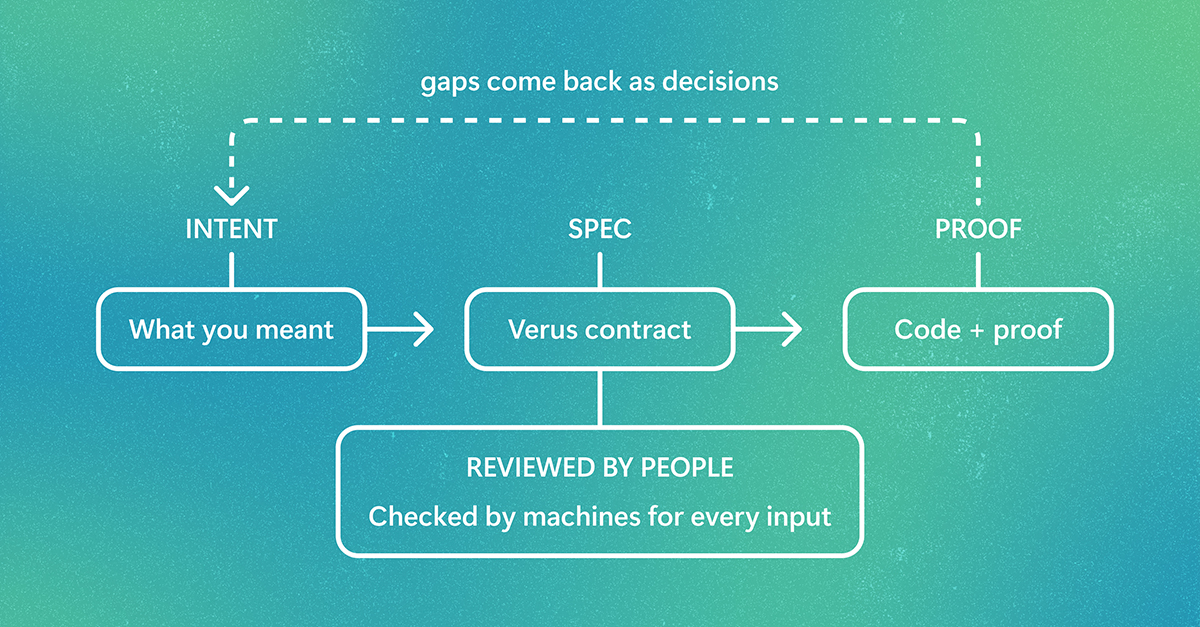
AI agents can generate code at a scale that’s hard for humans to review line-by-line. PDD Kit helps ensure the code is doing what the developer intended by creating formal specifications and testing against them. It converts developer intent into a Verus specification, proves AI-generated code meets it for every input, and uses tests where proofs aren't practical. Developers review intent, not every line. The post Formally verifying agent-written full-stack web apps with PDD Kit appeared first o…

MIT News · Artificial Intelligence Oct 28, 2026

Making machines that can listen

Professor Paris Smaragdis develops computers with superhuman hearing for applications like speech recognition, music understanding, and environmental monitoring.

MIT News · Artificial Intelligence Oct 23, 2026

Reinforcing the value of human understanding at MIT

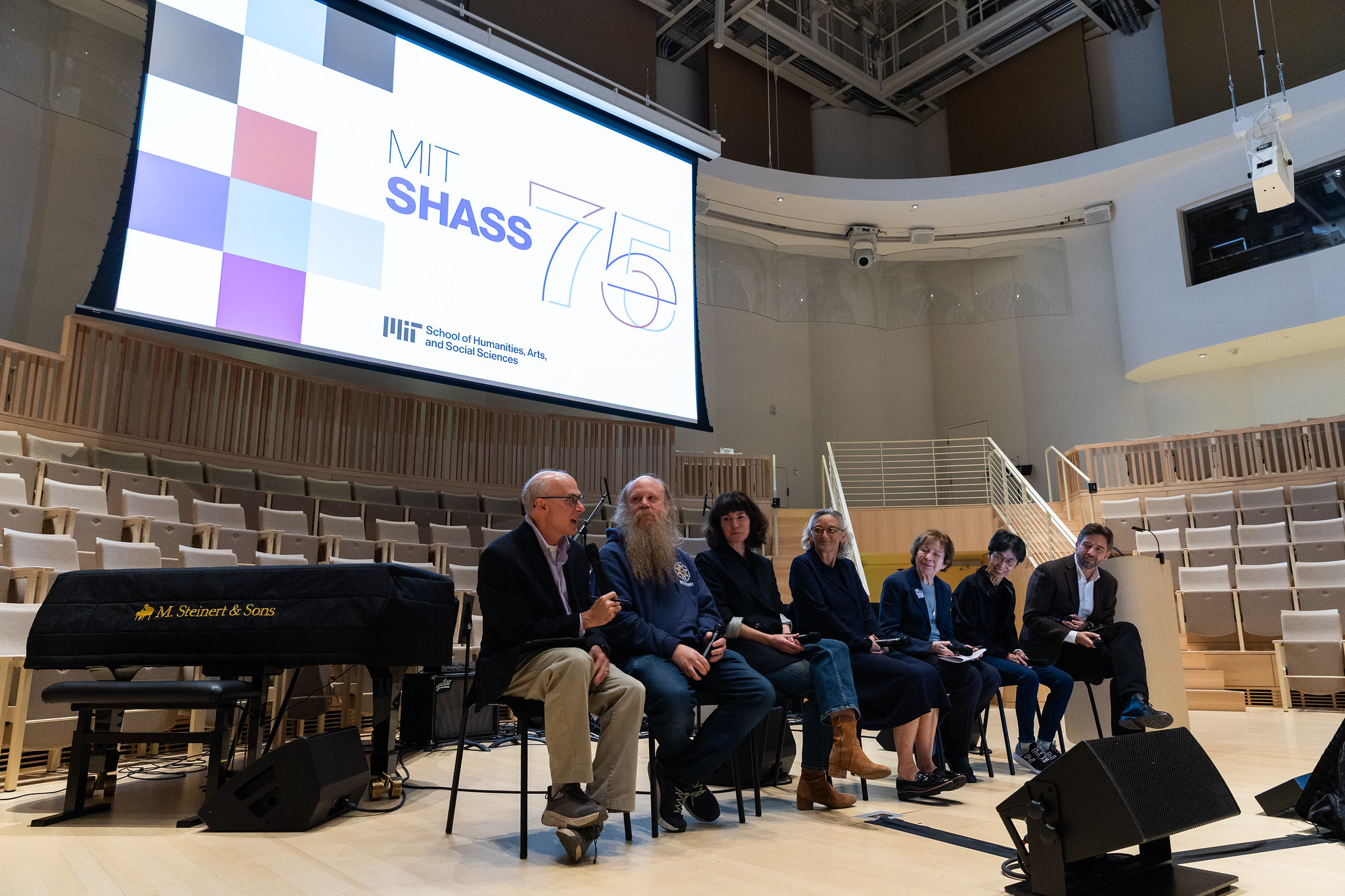
During the School of Humanities, Arts, and Social Sciences’ 75th Anniversary Symposium, President Sally Kornbluth said “MIT has never needed your particular insight and guidance more than we do now.”

We use cookies to run the site and, with your consent, for analytics and to show ads. See our Cookie Policy.