Sep 2026· IEEE Transactions on Knowledge and Data Engineering· Vol 38, pp. 6018-6037· 0 citations· 130 references
Computer Science
Abstract
Algorithmic fairness and explainability are foundational pillars of responsible AI. Although often studied independently, their interplay is increasingly recognized as crucial for diagnosing and mitigating bias in machine learning systems. We first introduce two systematic taxonomies: one for algorithmic fairness and one for explainable AI, to organize the landscape of existing work across diverse tasks (classification, ranking, and recommendation) and data modalities (tabular, graph). Next, we categorize the use of explanations in fairness efforts into three main functions: (a) detecting and understanding the causes of unfairness, (b) defining enhanced fairness metrics, and (c) designing mitigation strategies. In addition, we examine how explanation methods themselves can be biased, underscoring the need to evaluate fairness for explanations. Finally, we identify open research challenges and outline promising directions for future research at the intersection of fairness and explainability.
It is demonstrated that while DP alone can degrade both utility and fairness, applying fairness interventions can partially restore equitable outcomes, and post-processing methods tend to provide more stable fairness–utility trade-offs across privacy budgets and synthesizers.
Vinícius Gabriel Angelozzi, Héber H. Arcolezi· Proceedings on Privacy Enhan...· 1 citation· ⚡1
FairSelect provides a practical framework for systematically identifying fairness strategies that improve subgroup equity while preserving model performance in clinical machine learning.
Nick Souligne, Isabella Mixton-Garcia, V. Subbian· 0 citations
It is demonstrated in controlled experiments that norm-breaking fine-tuning yields norm-divergent actions justified by self-interested rationales, suggesting a systematic shift in patterns of justification.
Long Hoang Nguyen, Brice Valentin Kok-Shun, Guangyu Du et al.· 0 citations
REMI, a framework for the automated localization, explanation, and mitigation of individual discrimination, is presented, which introduces a bidirectional relational explanation framework that learns over paired examples $(x, x')$ to identify regions of the input space where fairness is violated.
Ranit Debnath Akash, Ashish Kumar, Gang Tan et al.· Proceedings of the ACM on So...· 0 citations
This work develops a transition from classification to regression for symbolic regression by first discretizing the task into a fixed number of classes, progressively increasing their number, and finally by using full regression fairness metrics, demonstrating the framework on the Law School Admission Council dataset.
Michel El Saliby, David Ibehej, Nicole Vergara et al.· GECCO Companion· 0 citations
It is mapped how the literature addresses fairness in finance, the metrics employed, the financial contexts considered, and the effectiveness of mitigation techniques, to synthesize existing knowledge, identify methodological gaps, and provide guidance for future research and policy development.
Marcelo Wecchi, Lilian Berton· AI and Ethics· 0 citations
Related blog posts
MIT News · Artificial Intelligence· news.mit.eduOct 23, 2026
In Compton Lecture, the distinguished legal scholar warns of potential “loss of the Enlightenment” while suggesting ways innovations can meet our civic and cultural needs.
Assistant Professor Benjamin Lindquist studies how engineers deliberately injected randomness into early AI, giving rise to deep-learning models that sometimes hallucinate.
Microsoft Research Blog· microsoft.comOct 22, 2026
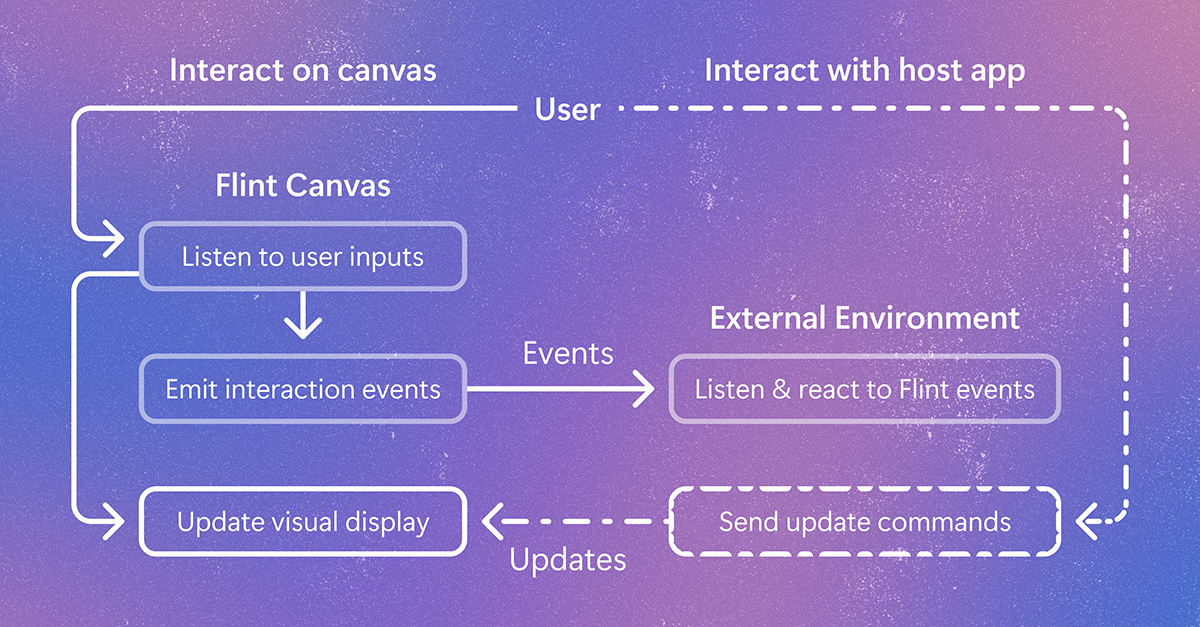
Flint-interactive gives AI agents a language for creating interactive visualizations. Click a chart, filter data, highlight related content, and explore beyond the view the author originally chose. The post Flint-interactive: A language for creating interactive data visualizations appeared first on Microsoft Research.
We use cookies to run the site and, with your consent, for analytics and to show ads.
See our Cookie Policy.