Optimal any-angle path planning in static and dynamic environments
Yiyuan ZouClark Borst
Oct 2026
Artificial IntelligenceRobotics
Abstract
Any-angle path planning extends traditional graph-based path planning by allowing movement between any pair of vertices, rather than being restricted by predefined edges. It can find straighter and shorter paths in continuous space with graphs, making it particularly suitable for navigation in open areas. Many any-angle path-planning algorithms have been proposed, but only a few can guarantee optimal solutions. To address this challenge, this article focuses on optimal any-angle path planning on grids and introduces two general techniques that accelerate computation while preserving optimality in both static and dynamic environments: 1) elliptical forward expansion, which leverages ellipse-based neighborhoods to restrict the search space, and 2) field of view, which replaces traditional line-of-sight methods to speed up visibility checks. To integrate these two techniques, inverted and forward scanning are introduced. Inverted scanning establishes visual connections from open nodes, whereas forward scanning initiates scans from closed nodes. Building on the proposed techniques, Zeta* and Zeta*-SIPP are developed for static and dynamic environments respectively. Zeta*, when combined with forward scanning, is similar to the state-of-the-art algorithm Anya and attains comparable performance. Unlike Anya, Zeta* can be readily extended to other settings. For example, Zeta*-SIPP, which extends Zeta* by integrating Safe Interval Path Planning (SIPP), can find time-optimal any-angle paths in dynamic environments. Benchmarking results show that Zeta*-SIPP achieves more than an order-of-magnitude speedup over the state-of-the-art optimal planner TO-AA-SIPP when using either scanning method. Overall, this research identifies the key requirements for achieving optimal any-angle path planning and introduces a unified approach suitable for different environments.
This paper investigates developing real-world perception for active agents, proposes Gibson Environment for this purpose, and showcases a set of perceptual tasks learned therein.
F. Xia, Amir Zamir, Zhi-Yang He et al.· 2018 IEEE/CVF Conference on...· 1,069 citations· ⚡112
GAOKAO-Bench is introduced, an intuitive benchmark that employs questions from the Chinese GAOKAO examination as test samples, including both subjective and objective questions that contribute a robust evaluation benchmark for future large language models and offers valuable insights into the advantages and limitations...
Xiaotian Zhang, Chun-yan Li, Yi Zong et al.· arXiv.org· 216 citations· ⚡17
An algorithm is proposed which leverages disentangled semantic factors to generate adversarial perturbation by altering controlled semantic attributes to fool the learner towards various "adversarial" targets.
Haonan Qiu, Chaowei Xiao, Lei Yang et al.· arXiv.org· 208 citations· ⚡17
This work proposes a HALO that directly maximizes the utility of generations instead of maximizing the log-likelihood of preferences, and suggests that the best loss depends on the inductive biases most appropriate for a given setting, an oft-overlooked consideration.
This work investigates the possibilities of using LLMs in a resume screening setting via a document retrieval framework that simulates job candidate selection and finds that the MTEs are biased, significantly favoring White-associated names in 85% of cases and female-associated names in only 11.1% of cases.
This work shows that orders of magnitude enhancement in performance could be obtained by a combination of hardware improvements and tight quantum-HPC integration and introduces high-performance architectures for quantum-probabilistic computing with custom-designed accelerators to tackle today's industry-scale classical...
Masoud Mohseni, Artur Scherer, K. Johnson et al.· arXiv.org· 121 citations· ⚡9
Related blog posts
MIT News · Artificial Intelligence· news.mit.eduJul 30, 2026
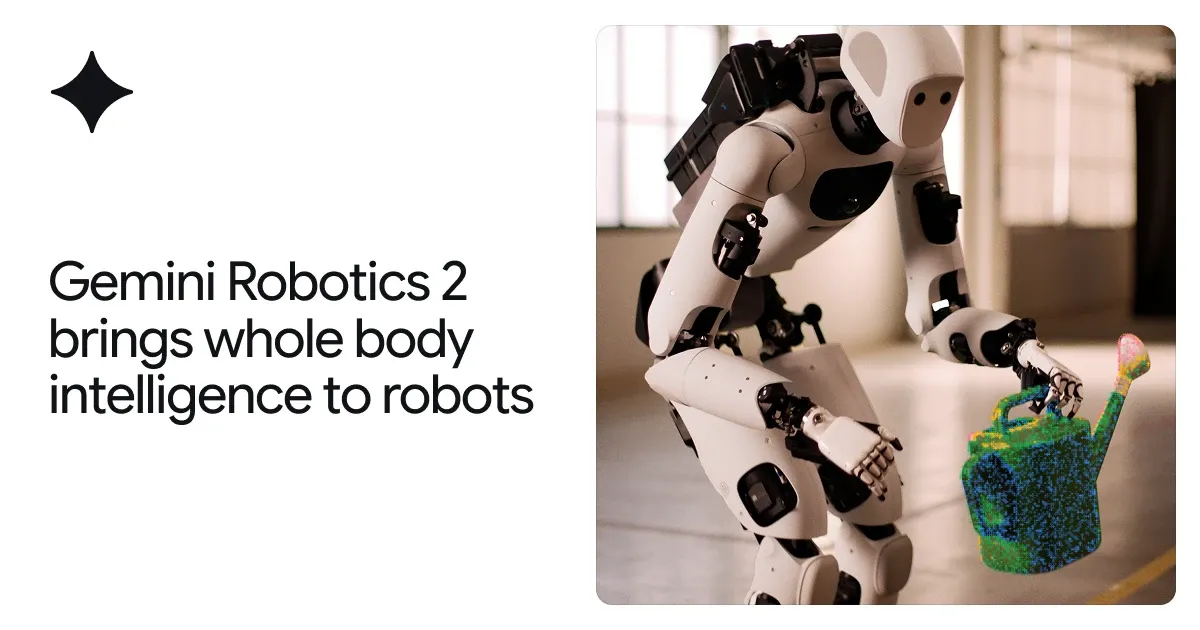
From feet to fingertips — we are teaching robots intelligent whole-body control, fine dexterity, and teamwork to complete a broad range of complex tasks.