Skip to content

Beyond the End-Effector: Learning Whole-Arm Contact Manipulation from Human Demonstrations

Oct 2026 · 0 citations · 56 references
Computer Science

TL;DR

WACL is proposed, a hierarchical framework that describes each whole-arm contact task with three robot-agnostic representations and hands them to a quasi-static surface-contact optimizer: semantic keypoints that summarize the scene, a reference contact trajectory that specifies where and how the arm presses on the object, and safety-aware path constraints that a vision-language model generates from the task description to protect the end-effector's task.

Abstract

Robot manipulation has traditionally relied on end-effector-centric interactions. In contrast, humans routinely exploit whole-arm contacts to improve efficiency, robustness, and adaptability, especially when the hands are occupied or when precise grasping is unnecessary. Enabling similar capabilities in robots remains challenging: the robot must select where on its arm to make contact, generate effective non-prehensile interactions, and satisfy task-specific pose or safety constraints on the end-effector. We propose Whole-Arm Contact Learning (WACL), a hierarchical framework that describes each whole-arm contact task with three robot-agnostic representations and hands them to a quasi-static surface-contact optimizer: semantic keypoints that summarize the scene, a reference contact trajectory that specifies where and how the arm presses on the object, and safety-aware path constraints that a vision-language model generates from the task description to protect the end-effector's task. The robot's kinematic chain enters only in this optimizer, which grounds these representations onto the arm by jointly searching over which link makes contact, where on that link, and the joint configuration that realizes it. This decomposition lets WACL learn the contact trajectory from 10 bare-hand human demonstrations per task collected without teleoperation, while new end-effector constraints change only the optimizer's input rather than any trained component. Real-world experiments on a 7-DoF arm across four whole-arm tasks show that WACL sustains contact under end-effector constraints where a strong link-pose baseline fails (78% vs. 33% success) and generalizes to new constraints without retraining. Website: https://wacl-robot.github.io

View source

Similar papers

#computer vision Review Sep 2017

Agile Software Development Methods: Review and Analysis

This publication proposes a definition and a classification of agile software development approaches and analyses ten software development methods that can be characterized as being "agile" against the defined criterion.

P. Abrahamsson, O. Salo, Jussi Ronkainen et al. · 727 citations · ⚡54
#computer vision Jun 2008

The impact of agile practices on communication in software development

The study shows that agile practices improve both informal and formal communication, but indicates that, in larger development situations involving multiple external stakeholders, a mismatch of adequate communication mechanisms can sometimes even hinder the communication.

M. Pikkarainen, Jukka Haikara, O. Salo et al. · 401 citations · ⚡48
#machine learning Review Open access Oct 2014

Software development in startup companies: A systematic mapping study

The results indicate that software engineering work practices are chosen opportunistically, adapted and configured to provide value under the constrains imposed by the startup context.

Nicolò Paternoster, Carmine Giardino, M. Unterkalmsteiner et al. · 394 citations · ⚡54

Diffusion models as plug-and-play priors

The possibility of inferring high-dimensional data inference in a model that consists of a prior and an auxiliary differentiable constraint given some additional information is considered, thereby allowing a range of potential applications in adapting models to new domains and tasks.

Alexandros Graikos, Esmeralda S. Whitammer, N. Jojic et al. · 316 citations · ⚡15

Related blog posts

Microsoft Research Blog Aug 11, 2026

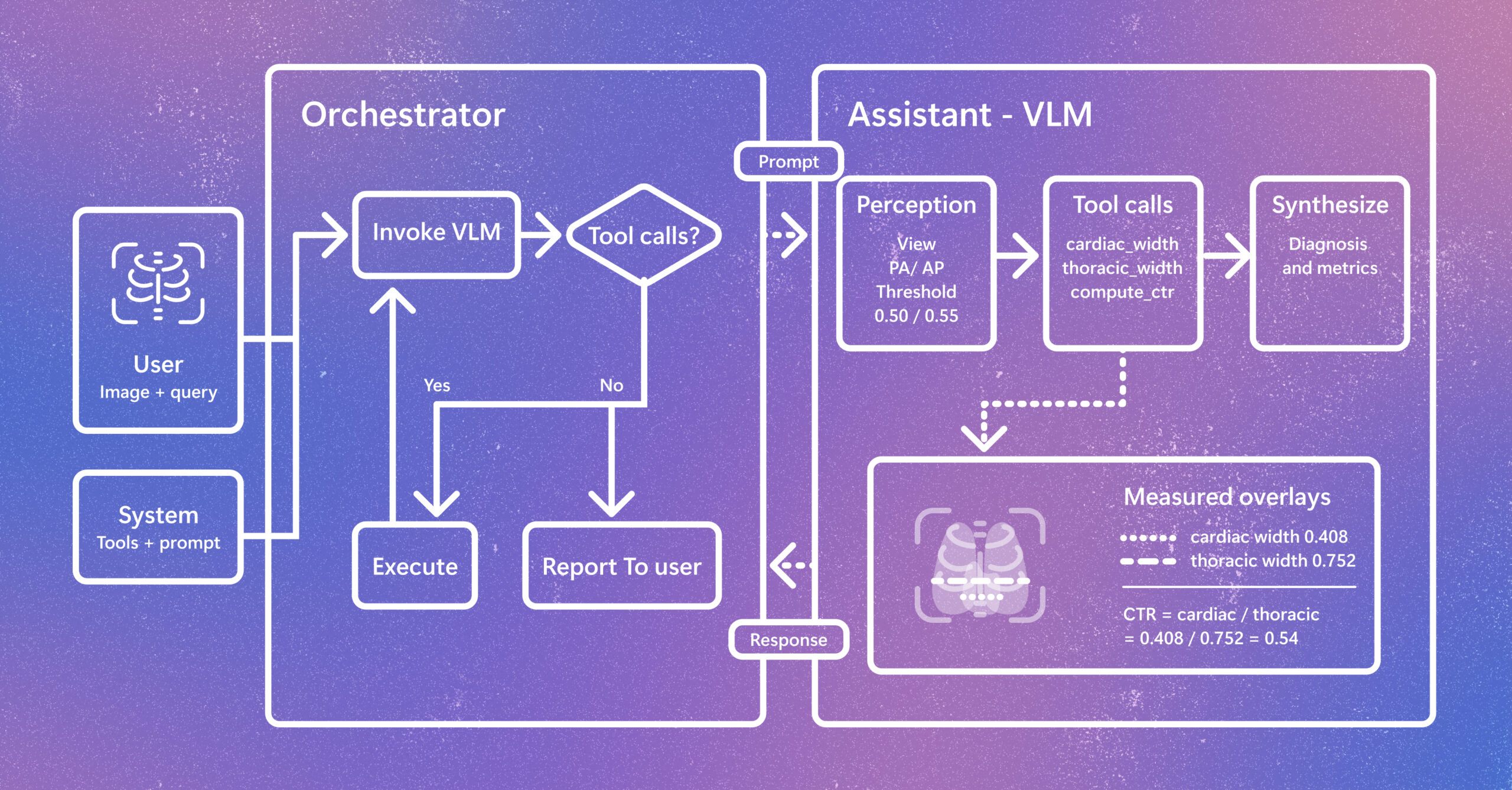
Introducing CARE-X: Towards Clinically Useful Radiology VLMs with Auxiliary Supervision, Reward-Aligned Learning, and Tool-Augmented Measurement

Radiology AI is evolving beyond report generation. CARE-X explores a unified approach that combines flexible reasoning, calibrated predictions, and measurement-based tools for chest X-ray interpretation. The post Introducing CARE-X: Towards Clinically Useful Radiology VLMs with Auxiliary Supervision, Reward-Aligned Learning, and Tool-Augmented Measurement appeared first on Microsoft Research.

We use cookies to run the site and, with your consent, for analytics and to show ads. See our Cookie Policy.