Skip to content
#machine learning #computer vision Preprint Open access

Self-Conditioning Enables Deep Sequential Reasoning in Flow Matching

Zeyang Zhang Linxiang Gao Meiqi Gu Xingyan Chen Minrui Luo Kaifeng Lyu Tianxing He
Oct 2026
Machine Learning Computer Vision

Abstract

Recent work has explored visual reasoning through image generation, where models solve visual-reasoning problems by directly generating solution images. Intuitively, iterative samplers such as flow matching are well suited to this task, since each sampling step may resemble one reasoning step. However, in this work, from a circuit complexity perspective, we show that this intuition is misleading. We prove that as long as the model outputs satisfy certain mild regularity conditions, the trajectory of the vanilla flow-matching sampler can be simulated by a constant number of sequential rounds of parallel model evaluations. Consequently, additional sampling steps cannot increase the expressive power of a constant-depth backbone model under the standard complexity-theoretic model of transformers. We then reveal that self-conditioning, which conditions the model on the previous step's estimate of the final image, plays a previously unrecognized role in removing this bottleneck. Controlled experiments on diverse visual-reasoning tasks show that flow matching with self-conditioning achieves higher accuracy and greater reasoning depth than vanilla flow matching, and its performance improves with more sampling steps. Theoretically, we prove that with self-conditioning, a constant-depth backbone can achieve expressive power equivalent to that of space-bounded Turing machines. Our study suggests a design principle for future visual reasoning research: carry more information between sampling steps, so that additional steps translate into deeper reasoning.


View source

Similar papers

#artificial intelligence Conference Open access Jun 2018

Gibson Env: Real-World Perception for Embodied Agents

This paper investigates developing real-world perception for active agents, proposes Gibson Environment for this purpose, and showcases a set of perceptual tasks learned therein.

F. Xia, Amir Zamir, Zhi-Yang He et al. · 1,069 citations · ⚡112
#computer vision Review Sep 2017

Agile Software Development Methods: Review and Analysis

This publication proposes a definition and a classification of agile software development approaches and analyses ten software development methods that can be characterized as being "agile" against the defined criterion.

P. Abrahamsson, O. Salo, Jussi Ronkainen et al. · 727 citations · ⚡54
#computer vision Jun 2008

The impact of agile practices on communication in software development

The study shows that agile practices improve both informal and formal communication, but indicates that, in larger development situations involving multiple external stakeholders, a mismatch of adequate communication mechanisms can sometimes even hinder the communication.

M. Pikkarainen, Jukka Haikara, O. Salo et al. · 401 citations · ⚡48
#machine learning Review Open access Oct 2014

Software development in startup companies: A systematic mapping study

The results indicate that software engineering work practices are chosen opportunistically, adapted and configured to provide value under the constrains imposed by the startup context.

Nicolò Paternoster, Carmine Giardino, M. Unterkalmsteiner et al. · 394 citations · ⚡54

Diffusion models as plug-and-play priors

The possibility of inferring high-dimensional data inference in a model that consists of a prior and an auxiliary differentiable constraint given some additional information is considered, thereby allowing a range of potential applications in adapting models to new domains and tasks.

Alexandros Graikos, Esmeralda S. Whitammer, N. Jojic et al. · 316 citations · ⚡15

Related blog posts

MIT News · Artificial Intelligence Oct 28, 2026

Making machines that can listen

Professor Paris Smaragdis develops computers with superhuman hearing for applications like speech recognition, music understanding, and environmental monitoring.

Microsoft Research Blog Aug 11, 2026

Introducing CARE-X: Towards Clinically Useful Radiology VLMs with Auxiliary Supervision, Reward-Aligned Learning, and Tool-Augmented Measurement

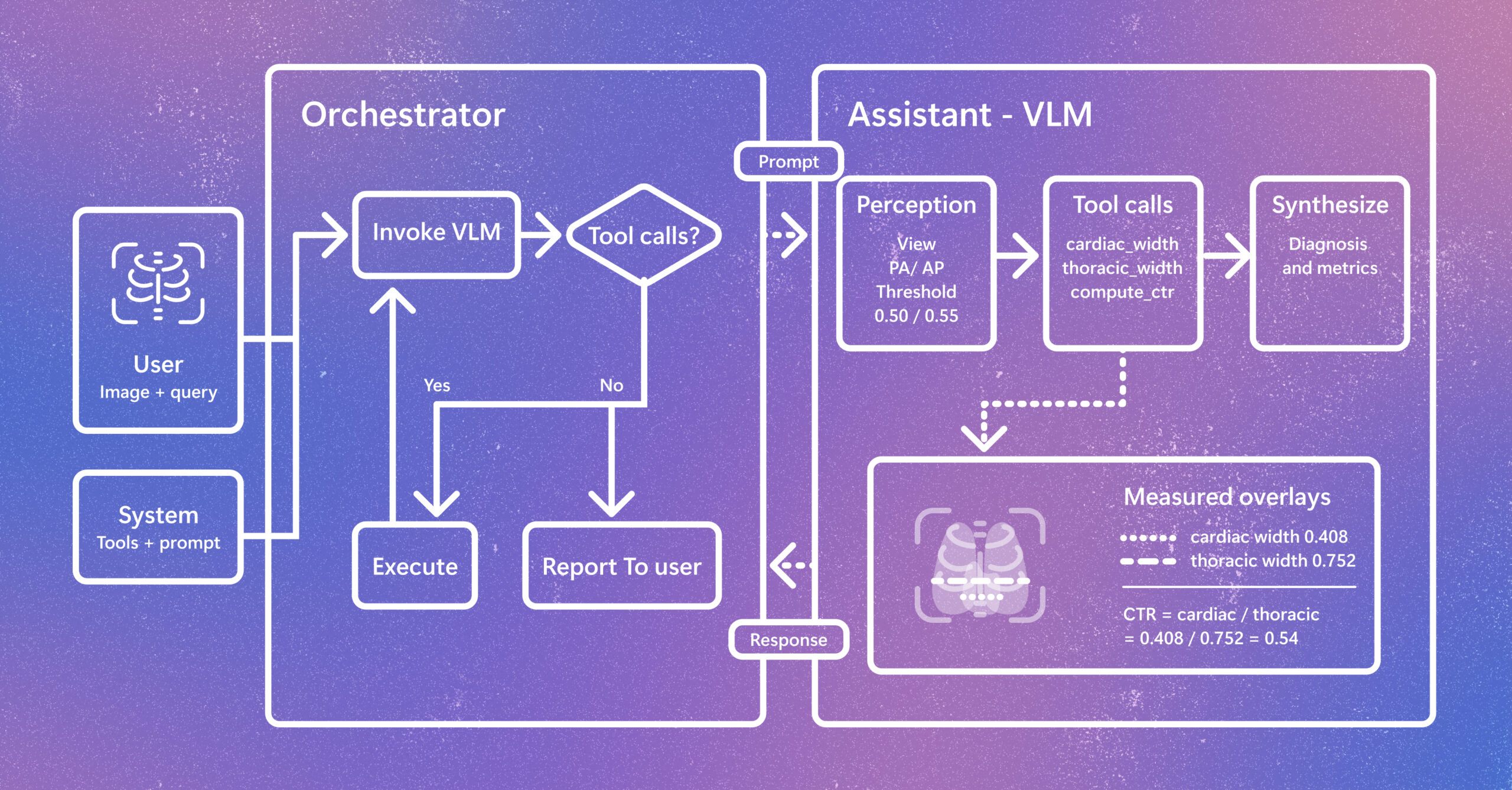
Radiology AI is evolving beyond report generation. CARE-X explores a unified approach that combines flexible reasoning, calibrated predictions, and measurement-based tools for chest X-ray interpretation. The post Introducing CARE-X: Towards Clinically Useful Radiology VLMs with Auxiliary Supervision, Reward-Aligned Learning, and Tool-Augmented Measurement appeared first on Microsoft Research.

We use cookies to run the site and, with your consent, for analytics and to show ads. See our Cookie Policy.