Achieving human-like dexterous manipulation remains a central challenge in robotics. Learning from human hand-object interaction (HOI) datasets offers a promising pathway to diverse dexterous skills, yet existing physics-based approaches train specialist policies for individual trajectories, thereby limiting skill reuse at scale. We introduce DexMimic, a generalist dexterous hand-object tracking policy jointly trained across diverse HOI trajectories. Efficient joint training requires allocating each rollout to both an undertrained phase and a starting state that supports continued tracking. DexMimic realizes this insight through Value-Guided Reset Allocation, which adapts the initialization distribution online to prioritize difficult phases and select reset states with higher expected tracking returns. We further introduce a benchmark spanning training, fine-tuning, and generalization. Experiments show improved tracking success and training efficiency, faster fine-tuning, and the potential for zero-shot generalization to unseen trajectories and objects; larger training sets further improve efficiency and generalization. Finally, we validate DexMimic on a real-world dexterous manipulation platform.

This work reframes physics-based retargeting as a residual learning problem, where it is demonstrated that zero-shot generalization across objects relies on structured state representations and produces a physics-based retargeter, OATH.
S. Sigurdson, Prasanna Sriganesh, Juan Borbon et al.· 0 citations
Reinforcement learning (RL) for dexterous manipulation must discover finger-object contacts and then control the object precisely; the action noise that serves the first goal can interfere with the second. In trajectory-guided settings such as ViViDex, where RL refine hand-object trajectories from human video, our base...
Hao-Yu Wang, Si-Yuan Qian, Yan-Jun Li et al.· 0 citations
X-Reset is proposed, a framework that resolves exploration with human hand-object demonstrations of RL from scratch and scales with the number of training objects, generalizes to unseen objects, can learn from imperfect hand-pose estimates, and transfers behaviors zero-shot from sim-to-real.
Prithwish Dan, Chen-Yang Ma, Wei Zhan· 0 citations
While learning dexterous manipulation from a single human video offers a promising alternative to costly robot demonstrations, many recent methods predominantly imitate demonstrated motions. Such strict motion matching often limits generalization to initial object poses, goal poses, and grasps not shown in the video. A...
J. Lee, Sunghae Kim, Yeonsoo Park et al.· 0 citations
Dexterous manipulation involves not only moving objects, but also arranging the hand around them to maintain useful contacts and enable subsequent actions. Yet many learning-based systems specify goals primarily through object poses or trajectories, leaving hand-object configurations to emerge implicitly. We introduce...
Zhe-Wei Gui, Anthony Bolton, Ji-Yao Zhang et al.· 0 citations
Related blog posts
MIT News · Artificial Intelligence· news.mit.eduJul 30, 2026
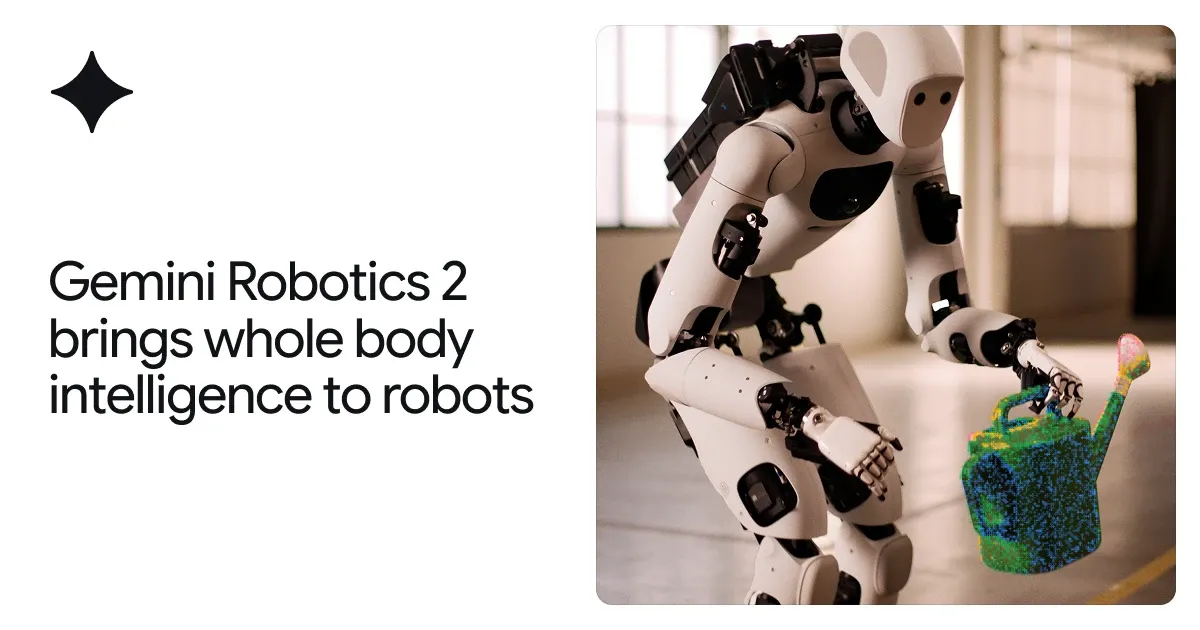
From feet to fingertips — we are teaching robots intelligent whole-body control, fine dexterity, and teamwork to complete a broad range of complex tasks.