Skip to content
#machine learning #computer vision Preprint Open access

International Multi-Centre Validation of Unsupervised Domain Adaptation for Precise Discrimination between Normal and Abnormal Retinal Development

Zhanhan Tu Nikhil Reddy Helen J. Kuht Ha-Jun Yoon Gail D. E. Maconachie Ravi Purohit Prateek Pani Line Kessel Jinu Han Jing Jin Shui-Hua Wang Karthik Bharadwaj Viral Sheth Michael Hisaund Rebecca J. McLean George Garratt Chetan Kantibhai Patel Kanmin Xue Callum Hunt Zisen Zhou Ian De Silva Seema Teli Sonal Shah Vanessa Rodwell Aarti Patel Irene Gottlob Yu-Dong Zhang Zedong Zheng Girish Varma Mervyn G. Thomas
Oct 2026
Machine Learning Computer Vision

Abstract

Arrested retinal development can cause childhood visual impairment, but grading optical coherence tomography scans is difficult to standardise across devices and centres. We developed and evaluated an unsupervised domain adaptation model to classify normal and abnormal retinal development across different OCT systems. This retrospective multicentre study used OCT scans from five centres in four countries and the UK Biobank. Data covered four OCT devices, including table mounted and handheld systems. A ResNet50 based Domain Adversarial Neural Network was trained using labelled images from a source device and unlabelled images from a target device. We evaluated six source to target pairings and compared model performance with seven clinician graders. A separate Heidelberg Spectralis dataset was reserved for external evaluation. Across validation sets, accuracy ranged from 87.75% to 96.06%, sensitivity from 88.68% to 98.38%, and specificity from 78.00% to 98.02%. The best performing model, adapted from TM OCT1 to HH OCT1, achieved 96.06% accuracy and an area under the receiver operating characteristic curve of 0.994, with a 95% confidence interval from 0.981 to 0.999. Several models also maintained discrimination on the unseen Heidelberg device. Unsupervised domain adaptation enabled OCT classification across devices without labelled target device data. The approach may support more consistent assessment of retinal development and large scale analysis of existing imaging datasets.


View source

Similar papers

#artificial intelligence Conference Open access Jun 2018

Gibson Env: Real-World Perception for Embodied Agents

This paper investigates developing real-world perception for active agents, proposes Gibson Environment for this purpose, and showcases a set of perceptual tasks learned therein.

F. Xia, Amir Zamir, Zhi-Yang He et al. · 1,069 citations · ⚡112
#computer vision Review Sep 2017

Agile Software Development Methods: Review and Analysis

This publication proposes a definition and a classification of agile software development approaches and analyses ten software development methods that can be characterized as being "agile" against the defined criterion.

P. Abrahamsson, O. Salo, Jussi Ronkainen et al. · 727 citations · ⚡54
#computer vision Jun 2008

The impact of agile practices on communication in software development

The study shows that agile practices improve both informal and formal communication, but indicates that, in larger development situations involving multiple external stakeholders, a mismatch of adequate communication mechanisms can sometimes even hinder the communication.

M. Pikkarainen, Jukka Haikara, O. Salo et al. · 401 citations · ⚡48
#machine learning Review Open access Oct 2014

Software development in startup companies: A systematic mapping study

The results indicate that software engineering work practices are chosen opportunistically, adapted and configured to provide value under the constrains imposed by the startup context.

Nicolò Paternoster, Carmine Giardino, M. Unterkalmsteiner et al. · 394 citations · ⚡54

Diffusion models as plug-and-play priors

The possibility of inferring high-dimensional data inference in a model that consists of a prior and an auxiliary differentiable constraint given some additional information is considered, thereby allowing a range of potential applications in adapting models to new domains and tasks.

Alexandros Graikos, Esmeralda S. Whitammer, N. Jojic et al. · 316 citations · ⚡15

Related blog posts

MIT News · Artificial Intelligence Oct 28, 2026

Making machines that can listen

Professor Paris Smaragdis develops computers with superhuman hearing for applications like speech recognition, music understanding, and environmental monitoring.

Microsoft Research Blog Aug 11, 2026

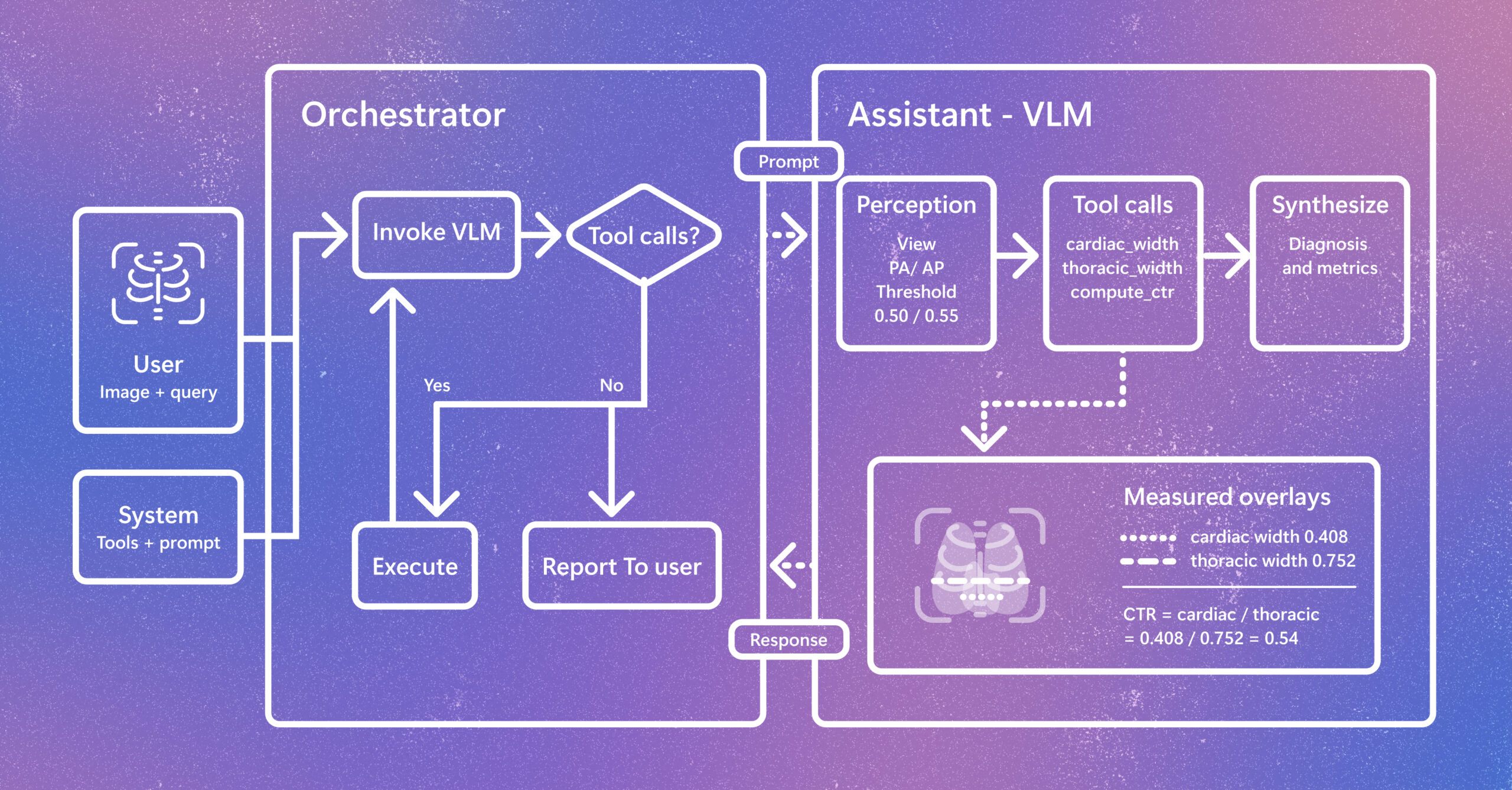
Introducing CARE-X: Towards Clinically Useful Radiology VLMs with Auxiliary Supervision, Reward-Aligned Learning, and Tool-Augmented Measurement

Radiology AI is evolving beyond report generation. CARE-X explores a unified approach that combines flexible reasoning, calibrated predictions, and measurement-based tools for chest X-ray interpretation. The post Introducing CARE-X: Towards Clinically Useful Radiology VLMs with Auxiliary Supervision, Reward-Aligned Learning, and Tool-Augmented Measurement appeared first on Microsoft Research.

We use cookies to run the site and, with your consent, for analytics and to show ads. See our Cookie Policy.