Aug 2026· Zenodo (CERN European Organization for Nuclear Research)
Advanced Memory and Neural Computing
Abstract
This paper proposes a novel approach to computing leveraging dynamic topology neural-spike networks. The core idea centers on mimicking the self-adaptive topology structures found in biological neural networks to achieve higher efficiency and robustness in complex computational tasks. We introduce a programmable hardware platform composed of simulated neurons with dynamic connections and synaptic plasticity. Utilizing machine learning algorithms, specifically reinforcement learning, we continuously optimize the network topology in response to task demands, encompassing node addition, removal, and weight adjustments. This dynamic adaptation allows the network to real-time adjust to fluctuating input data, realizing adaptive computation. The innovation lies in the *dynamic* topology, contrasting with static structures or simplified models in existing neural-spike computing systems. By integrating parallel processing with machine learning optimization, our framework promises enhanced computational efficiency and resilience, representing a significant advancement over conventional neural-spike computing paradigms. The key mathematical framework revolves around representing the network topology as a graph (G = (V, E)), where V is the set of nodes (neurons) and E is the set of edges (connections) with associated weights. The dynamics of the network are governed by the following stochastic differential equations: d*s*i/dt = ∑j∈N(i) *w*ij *s*j + *f*i, where *s*i is the state of neuron *i*, *w*ij is the synaptic weight connecting neuron *i* to neuron *j*, *N(i)* is the set of neurons connected to neuron *i*, and *f*i represents a stochastic input or intrinsic noise. The learning process is formulated as a Markov Decision Process (MDP), and the policy is learned using reinforcement learning algorithms, aiming to maximize the expected reward. The core of the system can be represented as: R = ∑i αi *s*i, where αi is the activation function of neuron *i*. The system is designed to minimize the error between the output and the desired output, using a cost function: E = ∑i || *s*i - *t*i||2.
Agile - denoting "the quality of being agile, readiness for motion, nimbleness, activity, dexterity in motion" - software development methods are attempting to offer an answer to the eager business community asking for lighter weight along with faster and nimbler software development processes. This is especially the case with the rapidly growing and volatile Internet software industry as well as for the emerging mobile application environment. The new agile methods have evoked substantial amount of literature and debates. However, academic research on the subject is still scarce, as most of existing publications are written by practitioners or consultants. The aim of this publication is to begin filling this gap by systematically reviewing the existing literature on agile software development methodologies. This publication has three purposes. First, it proposes a definition and a classification of agile software development approaches. Second, it analyses ten software development methods that can be characterized as being "agile" against the defined criterion. Third, it compares these methods and highlights their similarities and differences. Based on this analysis, future research needs are identified and discussed.
P. Abrahamsson, O. Salo, Jussi Ronkainen et al.· arXiv.org· 728 citations· ⚡54
Context: Software startups are newly created companies with no operating history and fast in producing cutting-edge technologies. These companies develop software under highly uncertain conditions, tackling fast-growing markets under severe lack of resources. Therefore, software startups present a unique combination of characteristics which pose several challenges to software development activities. Objective: This study aims to structure and analyze the literature on software development in startup companies, determining thereby the potential for technology transfer and identifying software development work practices reported by practitioners and researchers. Method: We conducted a systematic mapping study, developing a classification schema, ranking the selected primary studies according their rigor and relevance, and analyzing reported software development work practices in startups. Results: A total of 43 primary studies were identified and mapped, synthesizing the available evidence on software development in startups. Only 16 studies are entirely dedicated to software development in startups, of which 10 result in a weak contribution (advice and implications (6); lesson learned (3); tool (1)). Nineteen studies focus on managerial and organizational factors. Moreover, only 9 studies exhibit high scientific rigor and relevance. From the reviewed primary studies, 213 software engineering work practices were extracted, categorized and analyzed. Conclusion: This mapping study provides the first systematic exploration of the state-of-art on software startup research. The existing body of knowledge is limited to a few high quality studies. Furthermore, the results indicate that software engineering work practices are chosen opportunistically, adapted and configured to provide value under the constrains imposed by the startup context.
Nicolò Paternoster, Carmine Giardino, M. Unterkalmsteiner et al.· Information and Software Tec...· 394 citations· ⚡54
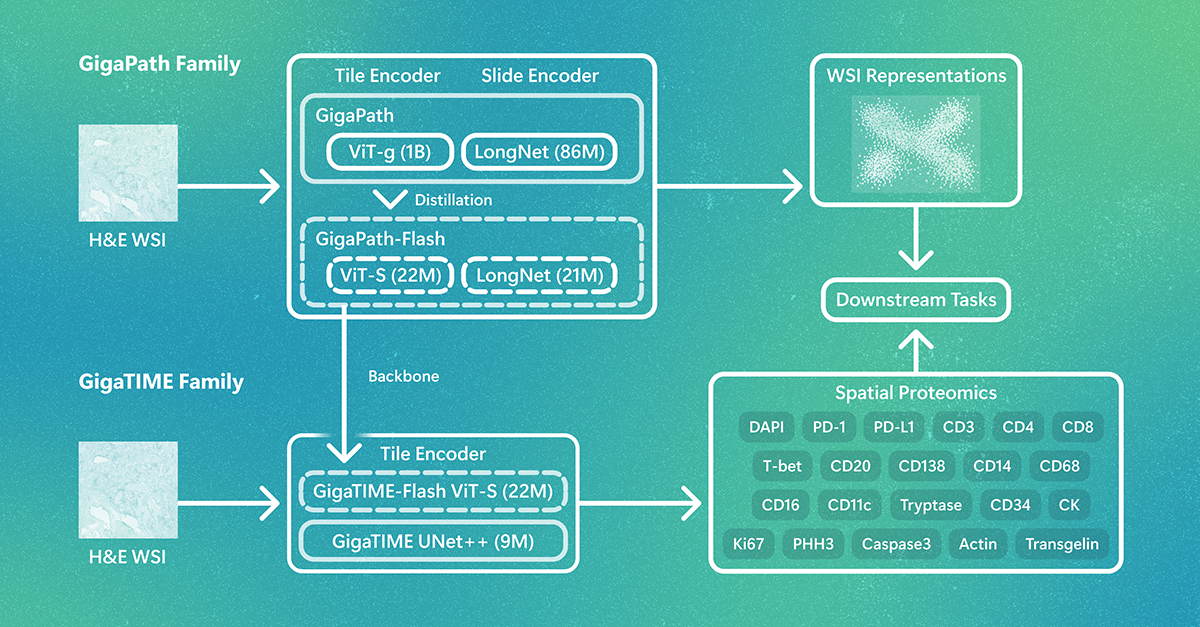
What if pathology foundation models could do more with less? GigaPath-Flash and GigaTIME-Flash cut computational demands while maintaining strong performance, opening the door to larger studies and broader exploration. The post GigaPath-Flash and GigaTIME-Flash: Toward population-scale discovery with efficient pathology foundation models appeared first on Microsoft Research.
MIT News · Artificial Intelligence· news.mit.eduAug 31, 2026
With millions of users across the world, Julia has been used to conduct cutting-edge research and to design new drugs, jet engines, heat pumps, and more.
MIT News · Artificial Intelligence· news.mit.eduAug 27, 2026
A new machine-learning framework aims to improve the success rate of computational protein design while moving away from results that reproduce sequences found in nature.