Skip to content
#edge computing Open access

SESTINA v1.0: Exact Inference, Robust Evaluation, and Adversarial Testing in Six-Player Canadian Fish

Aug 2026 · Zenodo (CERN European Organization for Nuclear Research)
Reinforcement Learning in Robotics

Abstract

Six-player Canadian Fish is a decentralised imperfect-information team game in which every action is public, so the hidden state reduces to the initial deal and the posterior over that deal can be computed exactly. We develop and evaluate SESTINA v1.0, the strongest configuration produced in this project’s FishBot lineage. It combines an approximate Sinkhorn fit to that posterior, started from a fitted policy prior, with a linear ask and declaration policy, a public-history tie-breaking rule that preserves common knowledge among teammates, a half-suit contestation weighting, a deduction-state stall detector in place of an event-count termination rule, and a guarded determinized test-time search. Evaluation follows a protocol registered in advance and run on sealed holdout material, using duplicate deal blocks, deal-clustered bootstrap confidence intervals, replication across two disjoint deal banks as an advance-specified criterion, calibrated detection floors, and mechanical side-channel controls. Against F-cheap, the cheapest configuration genuinely on the v0.6 frontier and the registered comparison target, SESTINA v1.0 achieves a +3.33 percentage-point win-rate edge (95% CI [+2.88, +3.78]) over 48,000 sealed games, with the sign replicating on both banks. The advantage persists under cross-play between independently trained runs and eight rule dialects. Under partner substitution against a v0.5 opponent 6 of 7 changed-partner rows stay positive, but the worst is −0.19 [−1.04, +0.67], which that battery does not resolve against the registered −1.00 collapse threshold. Separately, none of eight independently constructed adversarial searches found a positive edge at the tested budgets. SESTINA v1.0 does not, however, measurably outperform a composite configuration assembled earlier in the same programme (+0.15 pp, 95% CI [−0.29, +0.59]), indicating that the architecture work which followed added no measurable strength. Over a shared 31-member opponent panel SESTINA v1.0’s worst cell is −0.04 pp [−1.41, +1.33], which does not replicate in sign, and it is 3rd of four on minimax regret. Four candidate mechanisms failed to produce measurable improvement at this resolution. At the calibrated resolution of this evaluation the tested policy class appears locally flat, and we state what evidence a near-optimality claim would require.

View source

Similar papers

#computer vision Review Sep 2017

Agile Software Development Methods: Review and Analysis

Agile - denoting "the quality of being agile, readiness for motion, nimbleness, activity, dexterity in motion" - software development methods are attempting to offer an answer to the eager business community asking for lighter weight along with faster and nimbler software development processes. This is especially the case with the rapidly growing and volatile Internet software industry as well as for the emerging mobile application environment. The new agile methods have evoked substantial amount of literature and debates. However, academic research on the subject is still scarce, as most of existing publications are written by practitioners or consultants. The aim of this publication is to begin filling this gap by systematically reviewing the existing literature on agile software development methodologies. This publication has three purposes. First, it proposes a definition and a classification of agile software development approaches. Second, it analyses ten software development methods that can be characterized as being "agile" against the defined criterion. Third, it compares these methods and highlights their similarities and differences. Based on this analysis, future research needs are identified and discussed.

P. Abrahamsson, O. Salo, Jussi Ronkainen et al. · 728 citations · ⚡54
#machine learning Review Open access Oct 2014

Software development in startup companies: A systematic mapping study

Context: Software startups are newly created companies with no operating history and fast in producing cutting-edge technologies. These companies develop software under highly uncertain conditions, tackling fast-growing markets under severe lack of resources. Therefore, software startups present a unique combination of characteristics which pose several challenges to software development activities. Objective: This study aims to structure and analyze the literature on software development in startup companies, determining thereby the potential for technology transfer and identifying software development work practices reported by practitioners and researchers. Method: We conducted a systematic mapping study, developing a classification schema, ranking the selected primary studies according their rigor and relevance, and analyzing reported software development work practices in startups. Results: A total of 43 primary studies were identified and mapped, synthesizing the available evidence on software development in startups. Only 16 studies are entirely dedicated to software development in startups, of which 10 result in a weak contribution (advice and implications (6); lesson learned (3); tool (1)). Nineteen studies focus on managerial and organizational factors. Moreover, only 9 studies exhibit high scientific rigor and relevance. From the reviewed primary studies, 213 software engineering work practices were extracted, categorized and analyzed. Conclusion: This mapping study provides the first systematic exploration of the state-of-art on software startup research. The existing body of knowledge is limited to a few high quality studies. Furthermore, the results indicate that software engineering work practices are chosen opportunistically, adapted and configured to provide value under the constrains imposed by the startup context.

Nicolò Paternoster, Carmine Giardino, M. Unterkalmsteiner et al. · 394 citations · ⚡54

Related blog posts

Microsoft Research Blog Aug 31, 2026

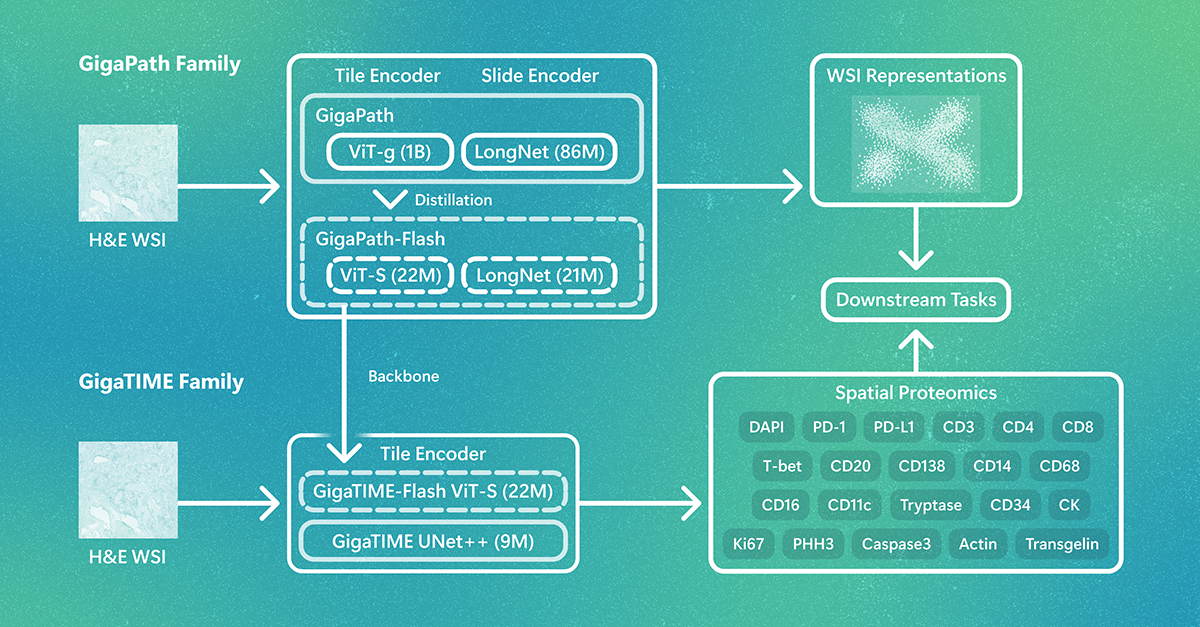
GigaPath-Flash and GigaTIME-Flash: Toward population-scale discovery with efficient pathology foundation models

What if pathology foundation models could do more with less? GigaPath-Flash and GigaTIME-Flash cut computational demands while maintaining strong performance, opening the door to larger studies and broader exploration. The post GigaPath-Flash and GigaTIME-Flash: Toward population-scale discovery with efficient pathology foundation models appeared first on Microsoft Research.

MIT News · Artificial Intelligence Aug 27, 2026

Looking beyond natural sequences

A new machine-learning framework aims to improve the success rate of computational protein design while moving away from results that reproduce sequences found in nature.
